SunHive Collective Community Space

Norman, Oklahoma

Completed: May 2025

Funding: SunHive Collective, Ideal Homes,  OU Gibbs College of Architecture.

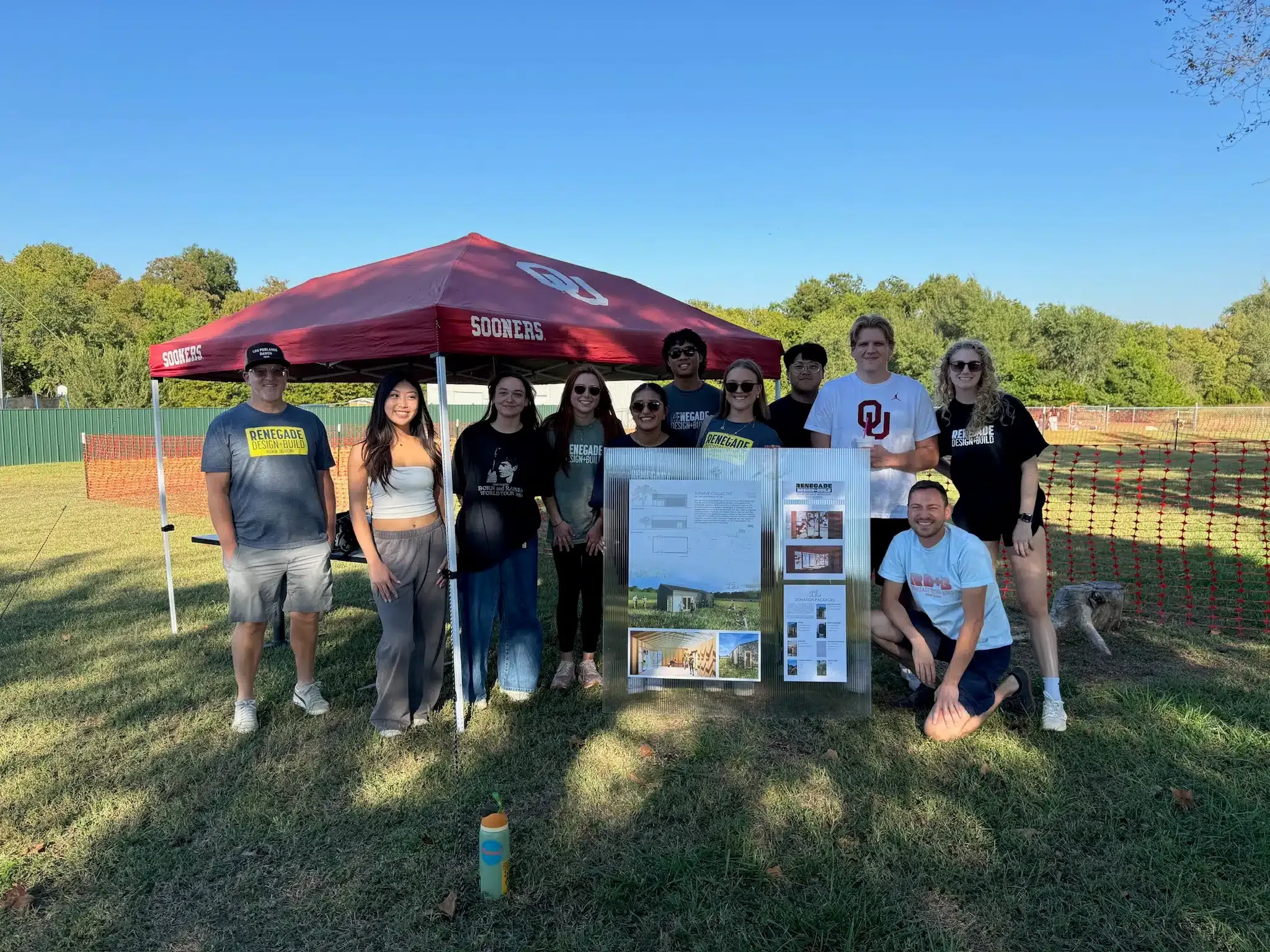
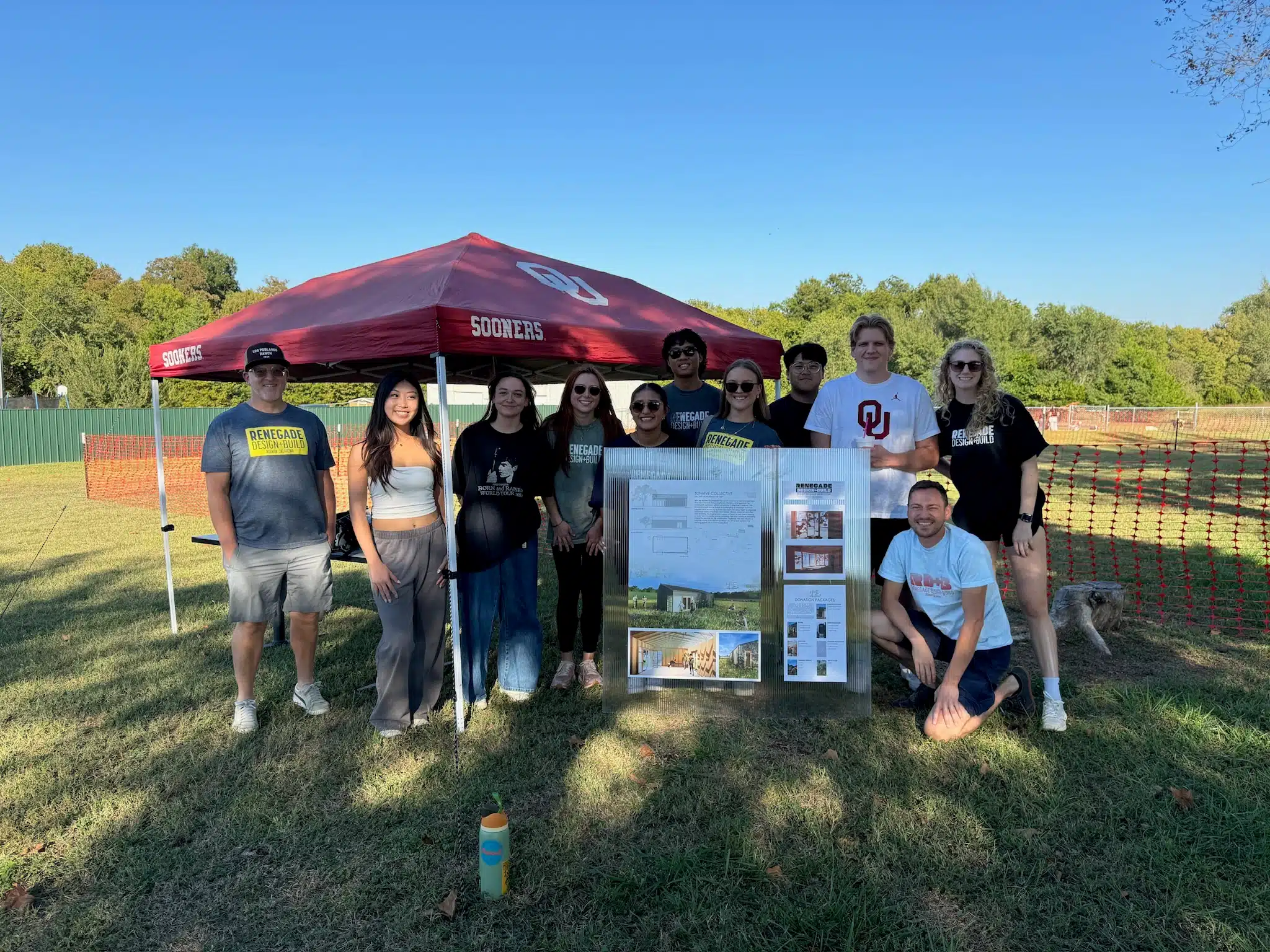
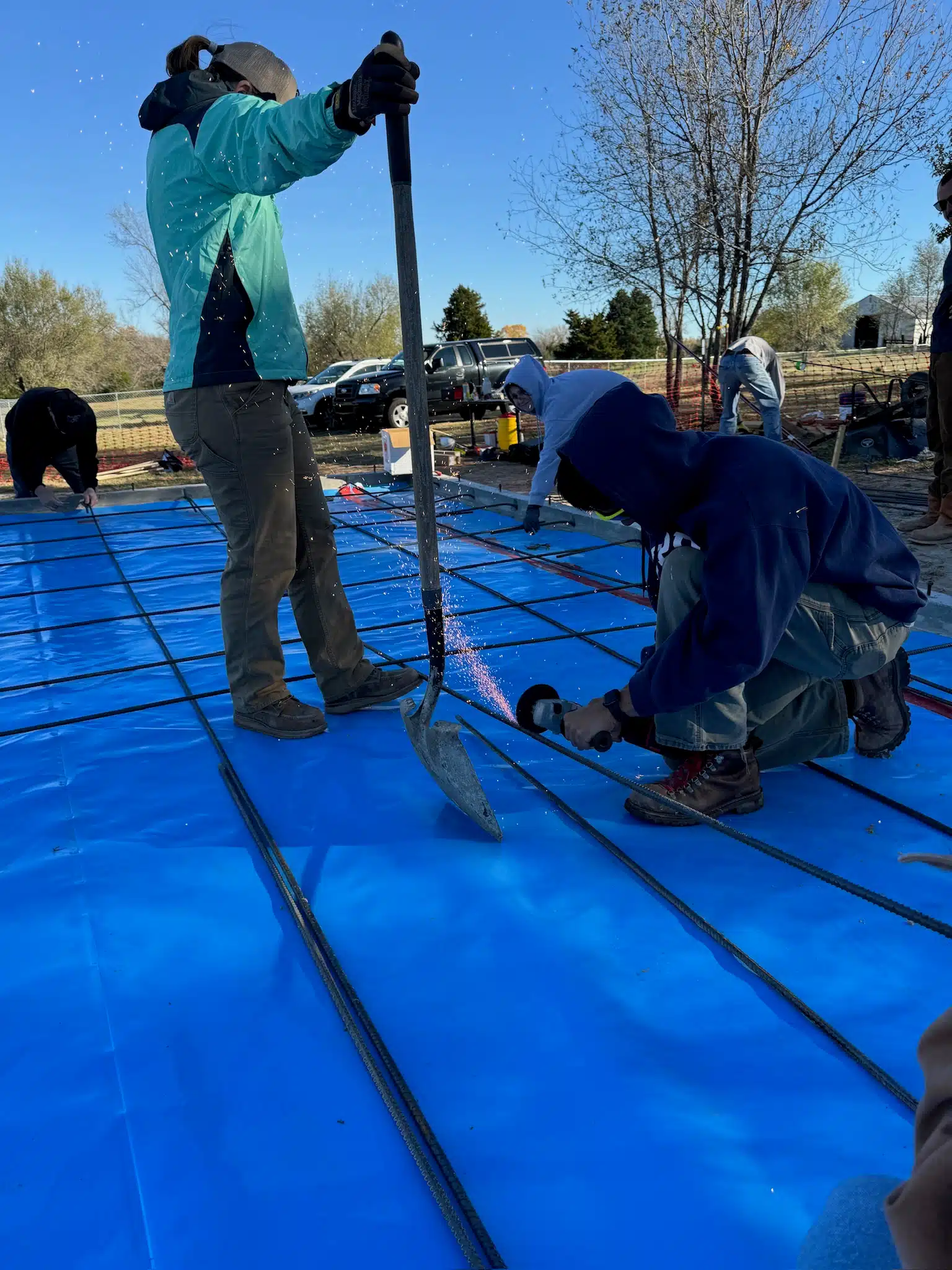
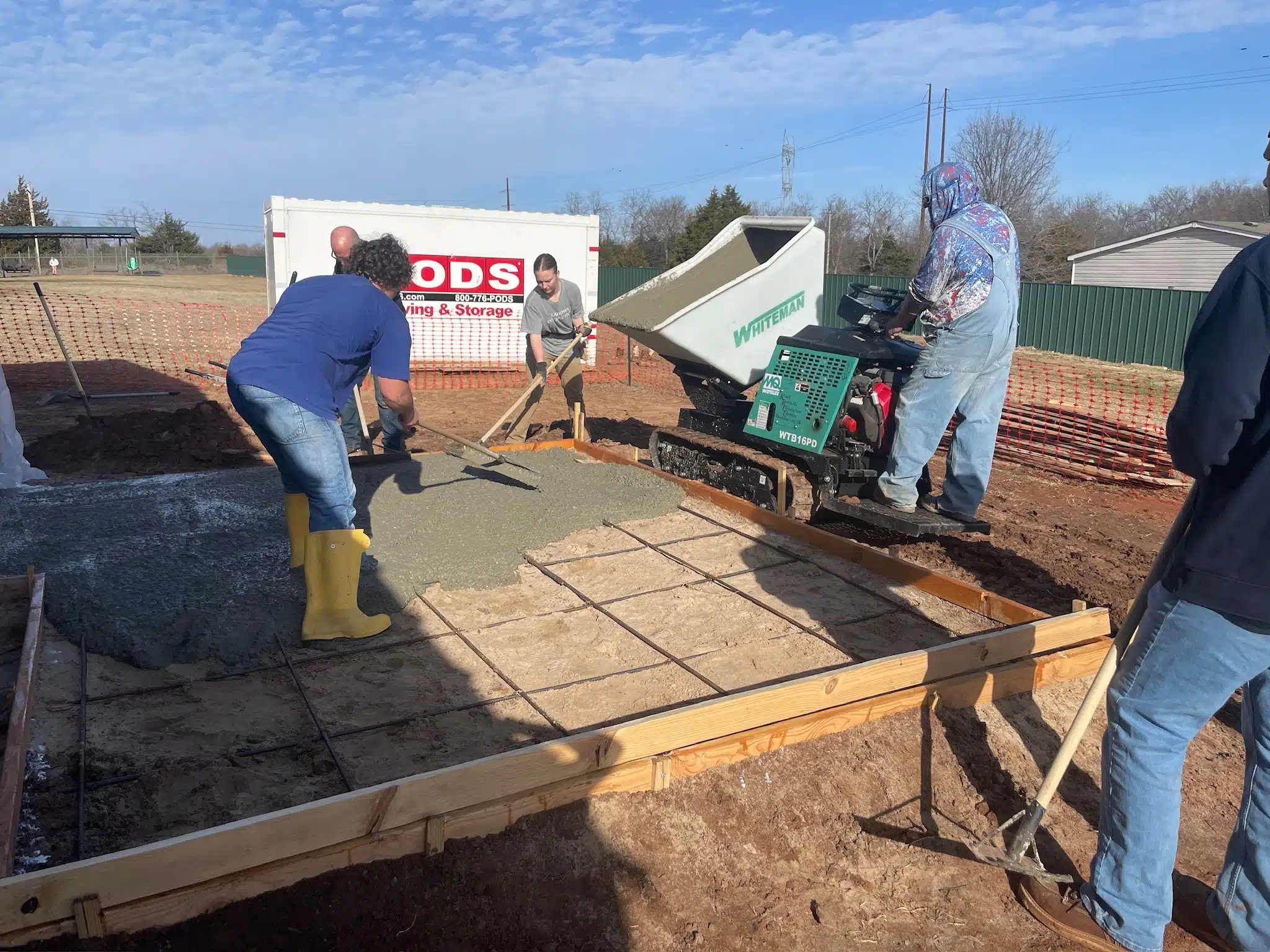
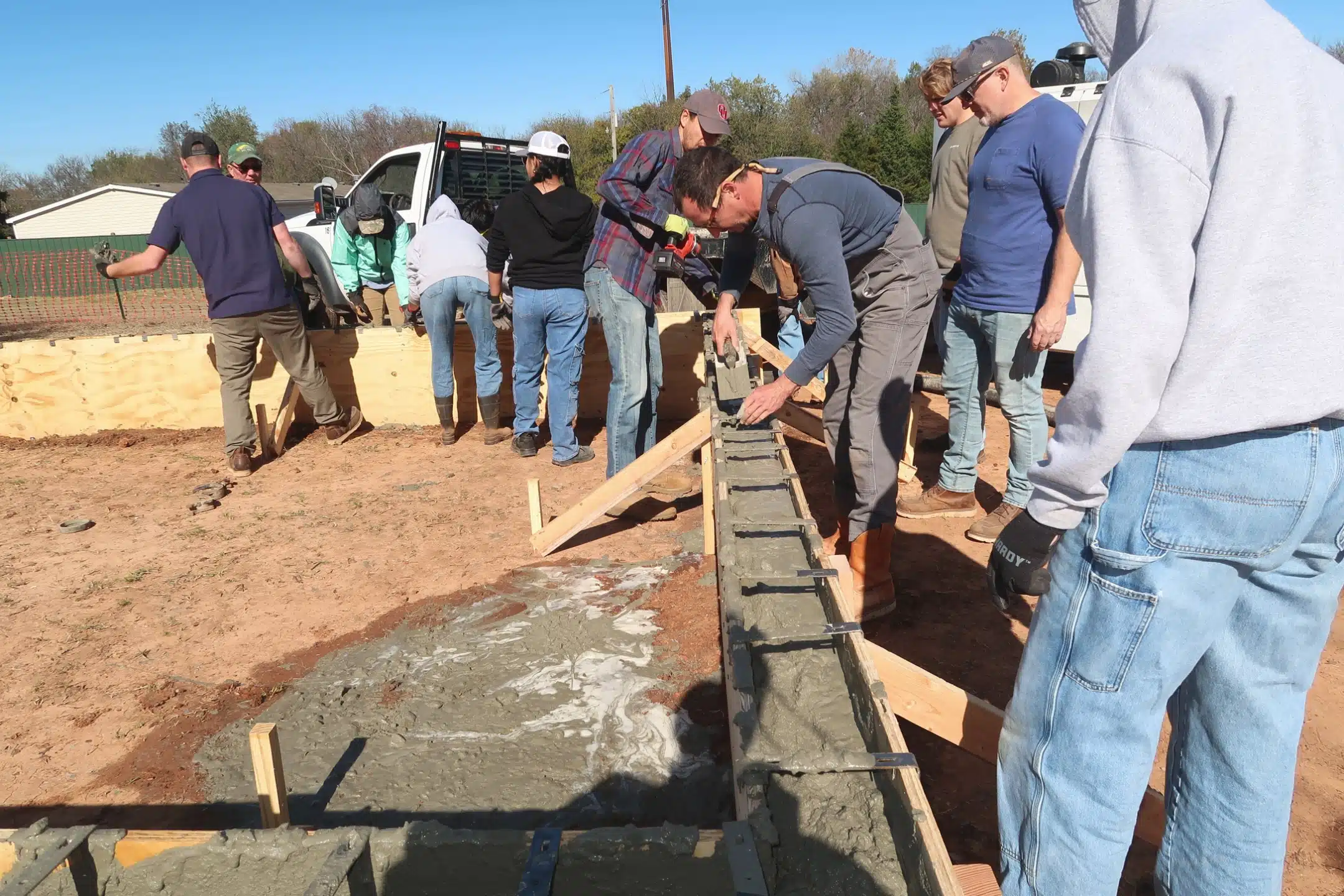
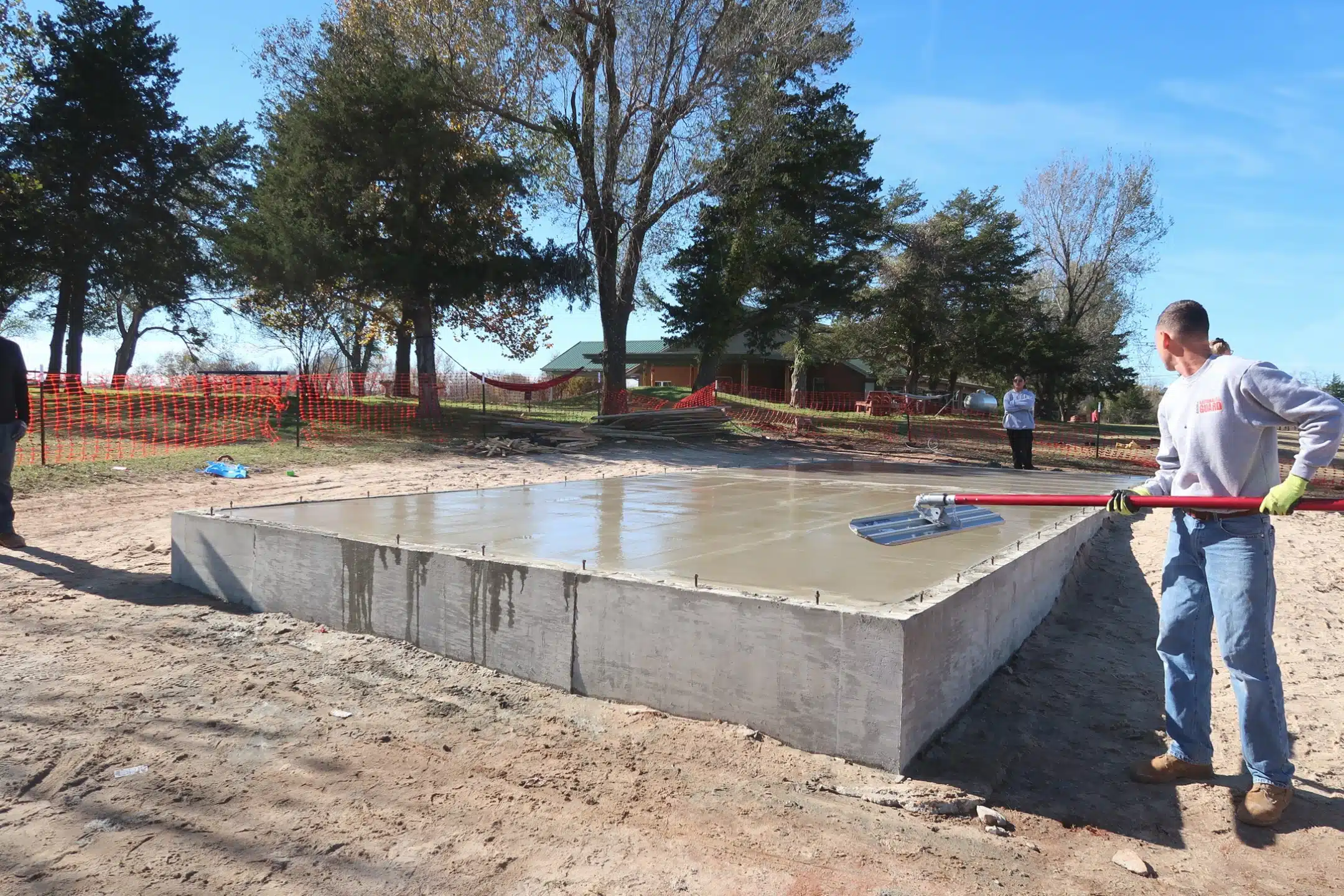
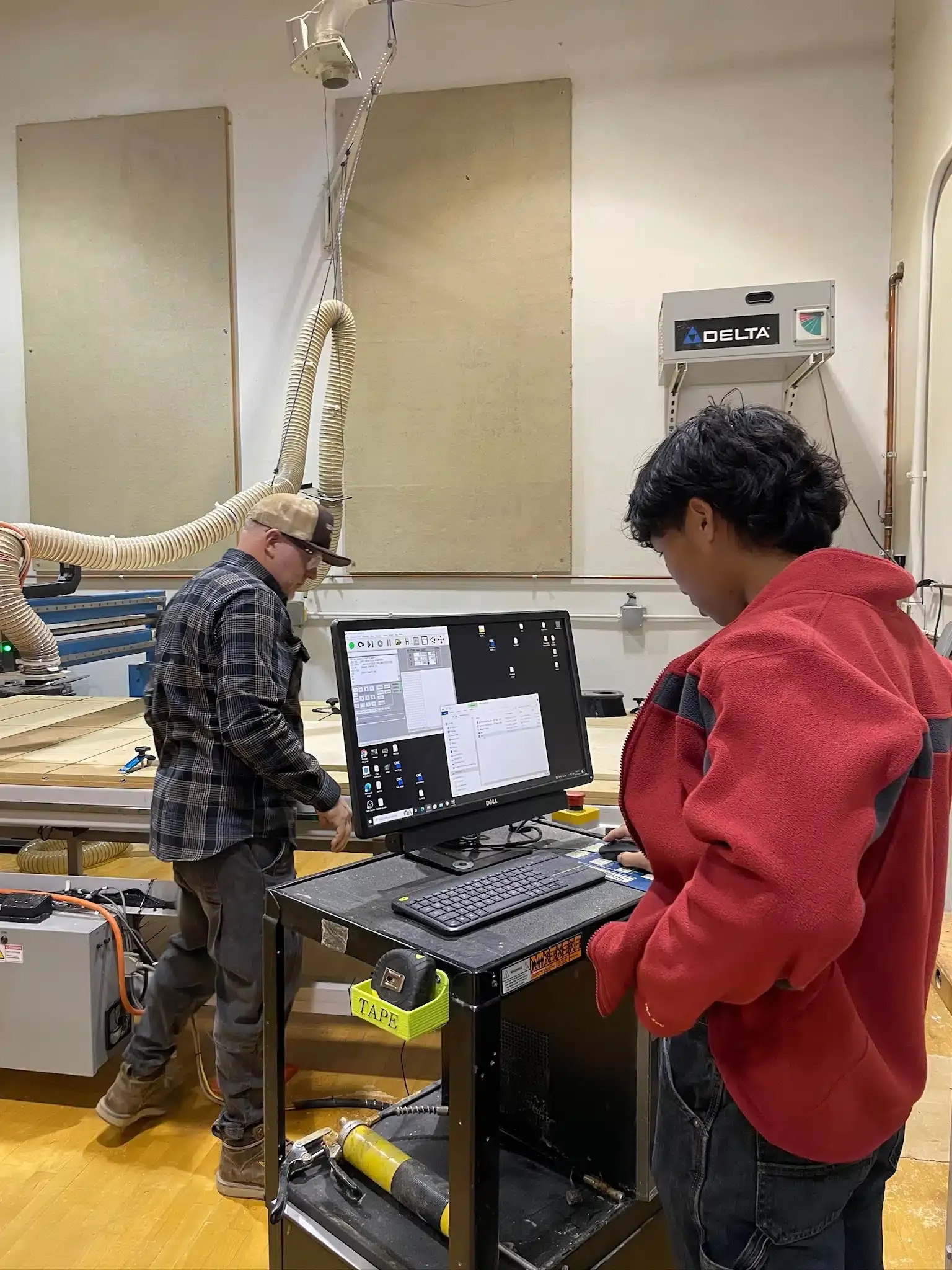
Crew: 10 architecture students through two 6-credit studio courses, and 6 construction science students through one 3-credit special topics course.

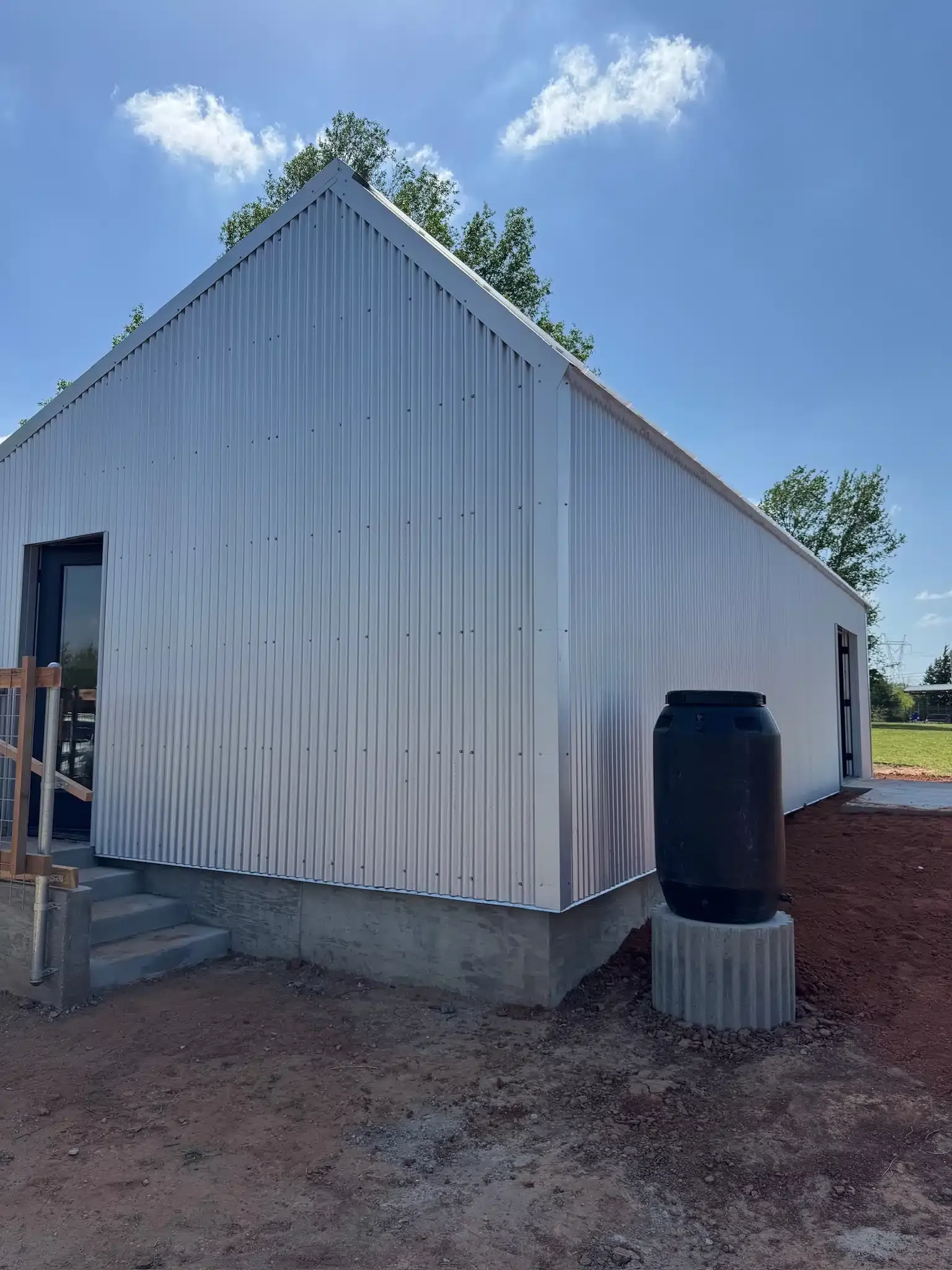
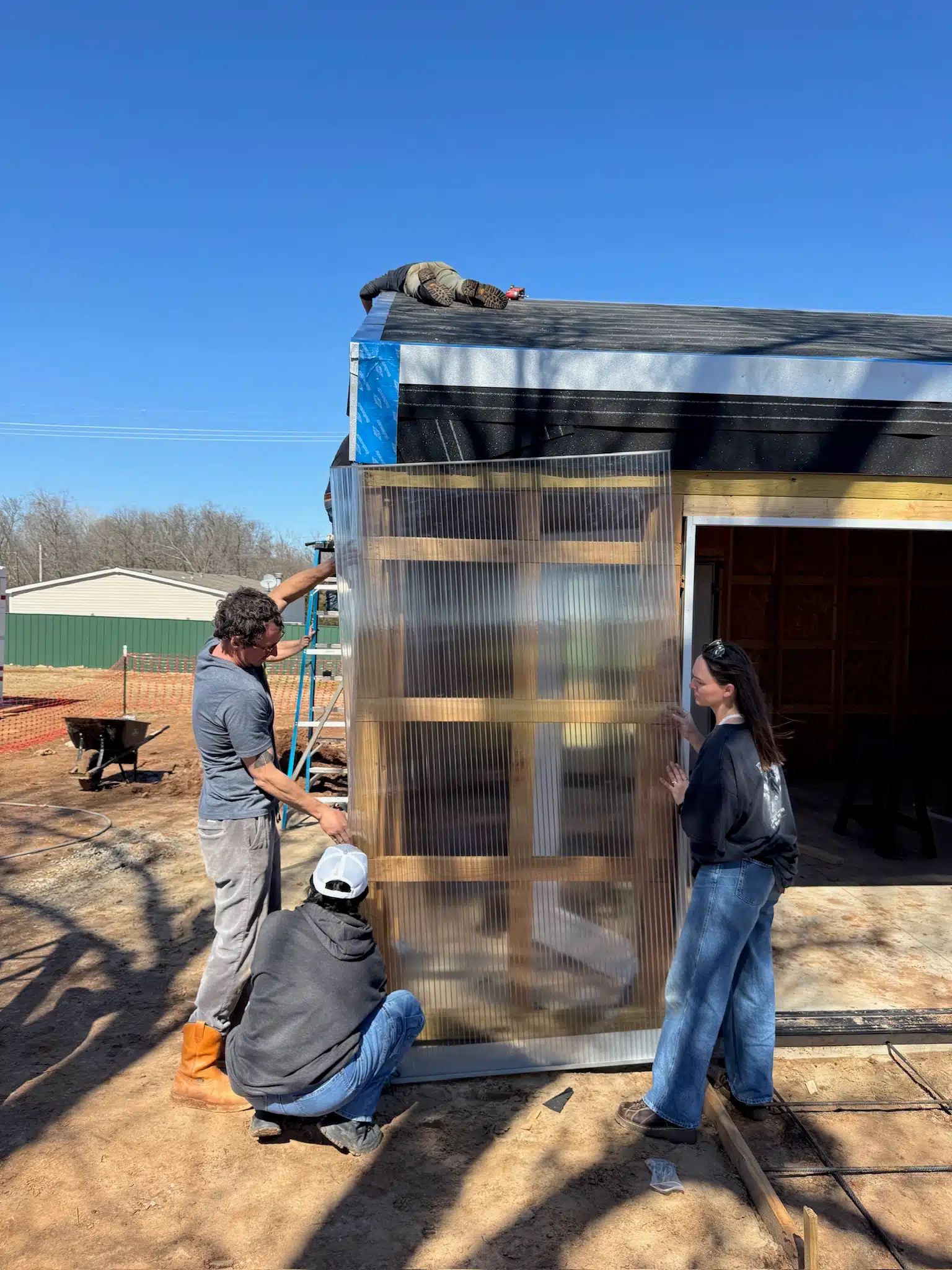
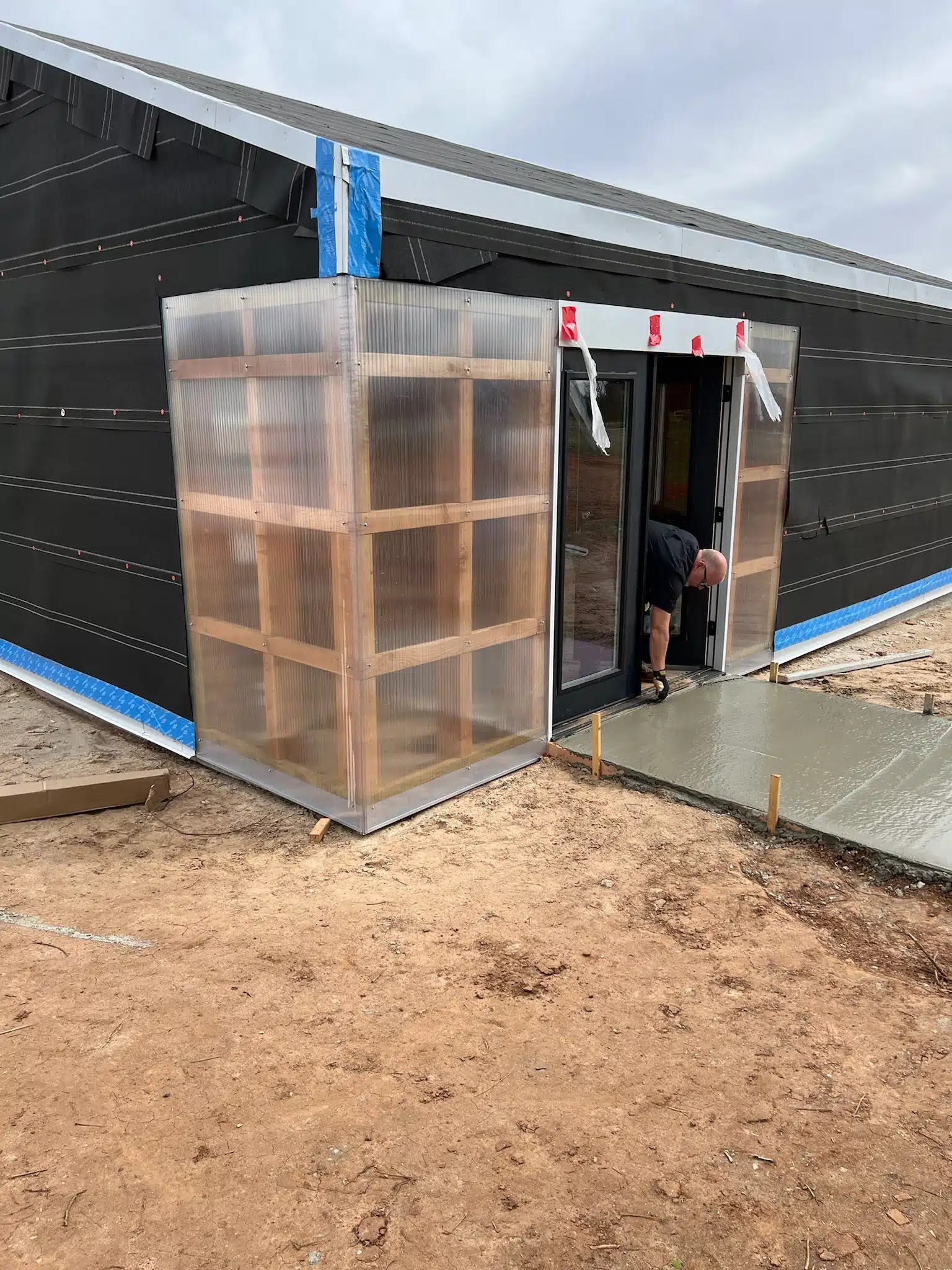
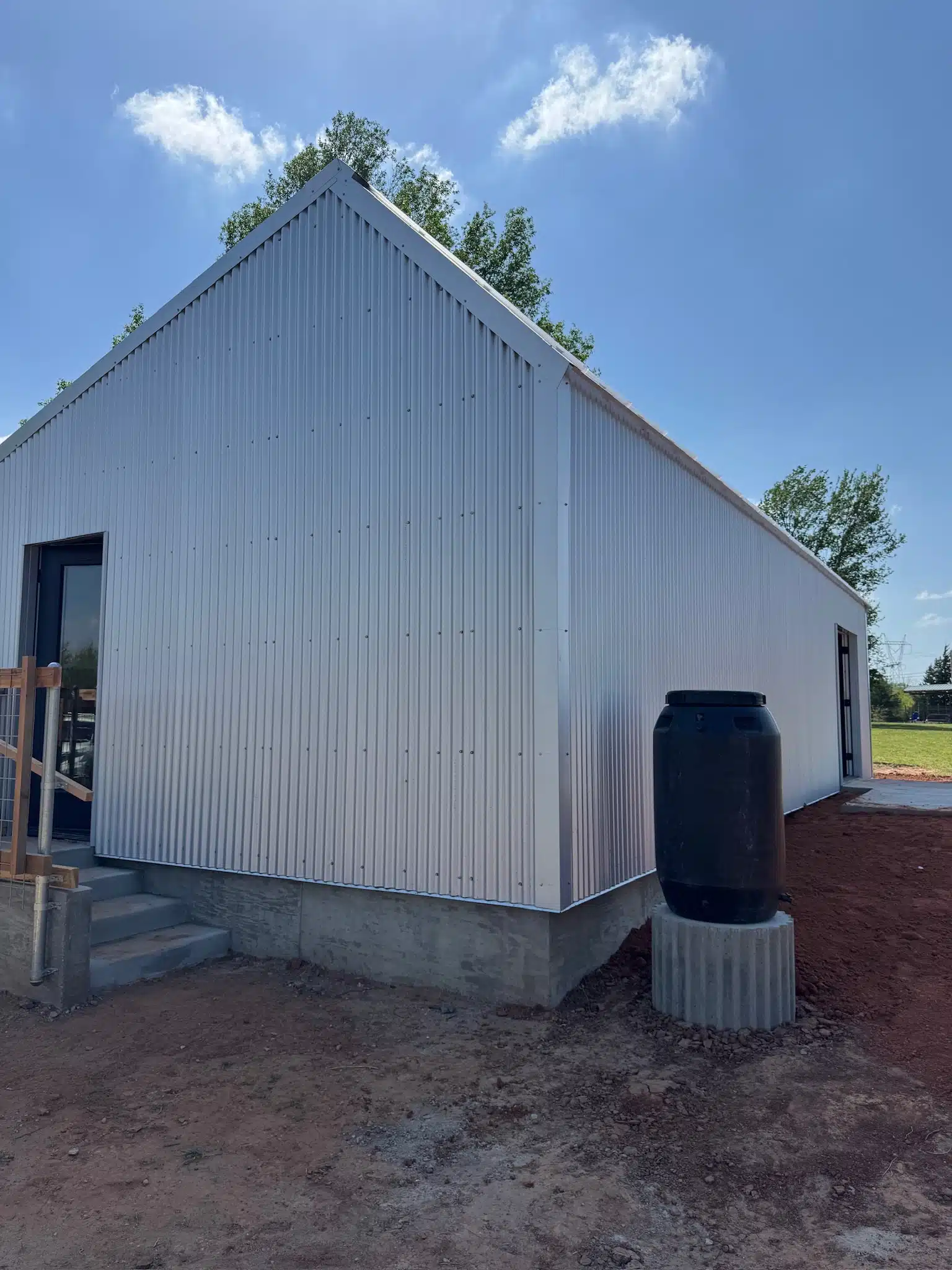
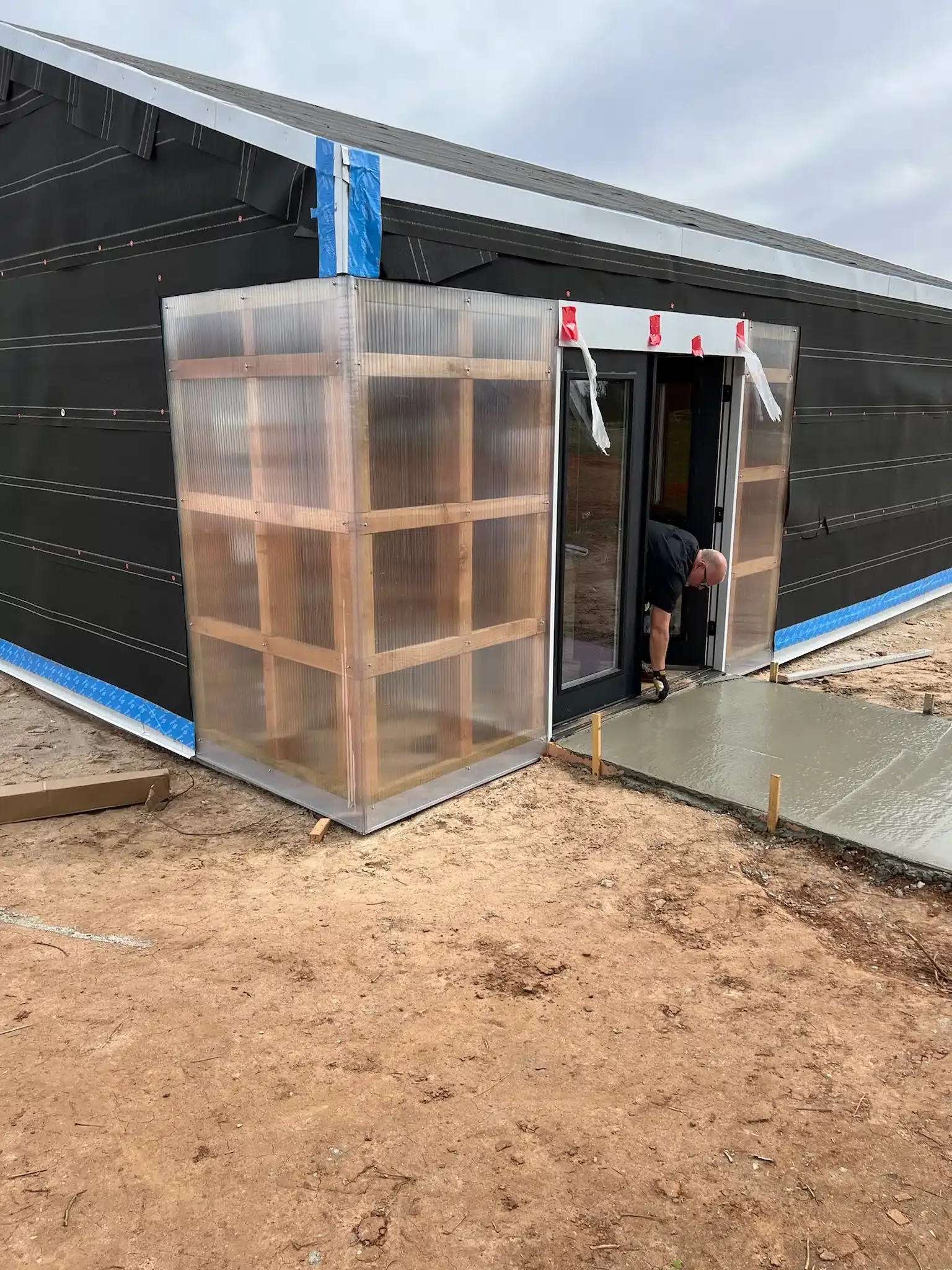
The SunHive Collective Community Space is a light-filled, flexible hub fostering connection, skill-building, and independence for young adults with disabilities. Its barn-inspired gable form, wrapped in corrugated metal, references Norman’s agricultural landscape while signaling strength, durability, and familiarity. A translucent polycarbonate vestibule brings a slice of regulated, paterned southern sun at entry, while a continuous north facing skylight washes the interior with indirect light, casting a soft glow that subtlely shifts through the day conveying openness, transparency, and welcome.

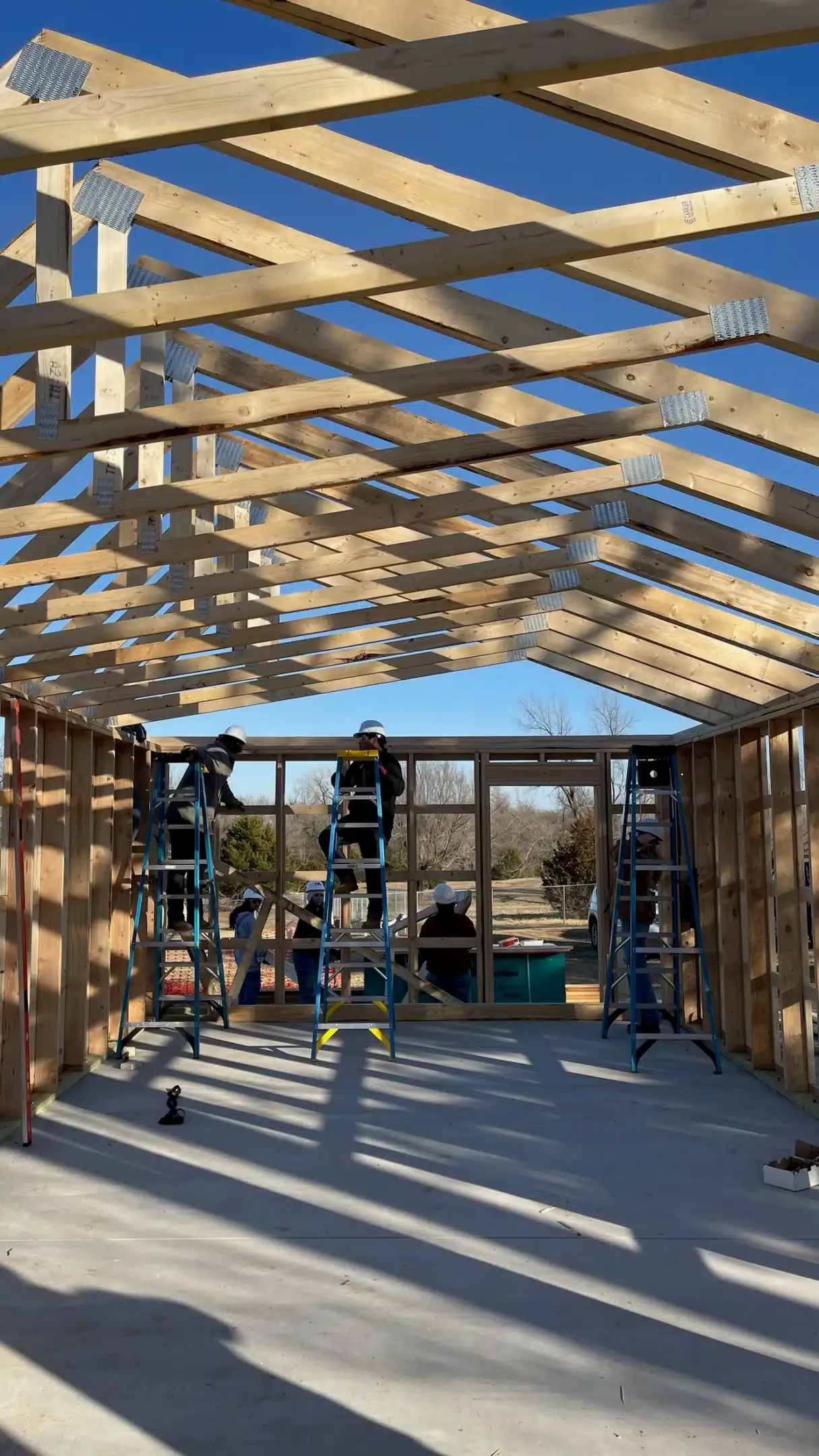
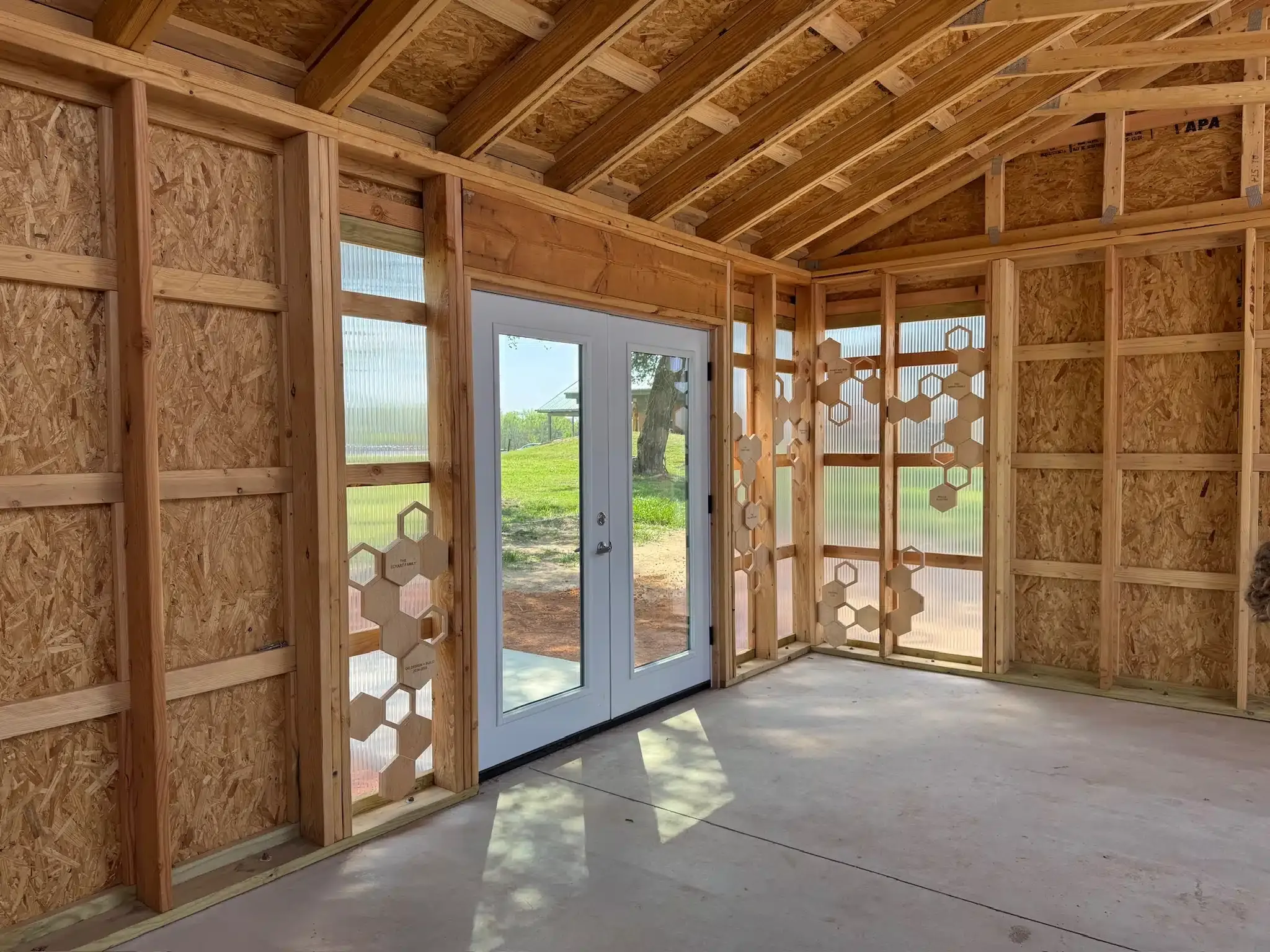
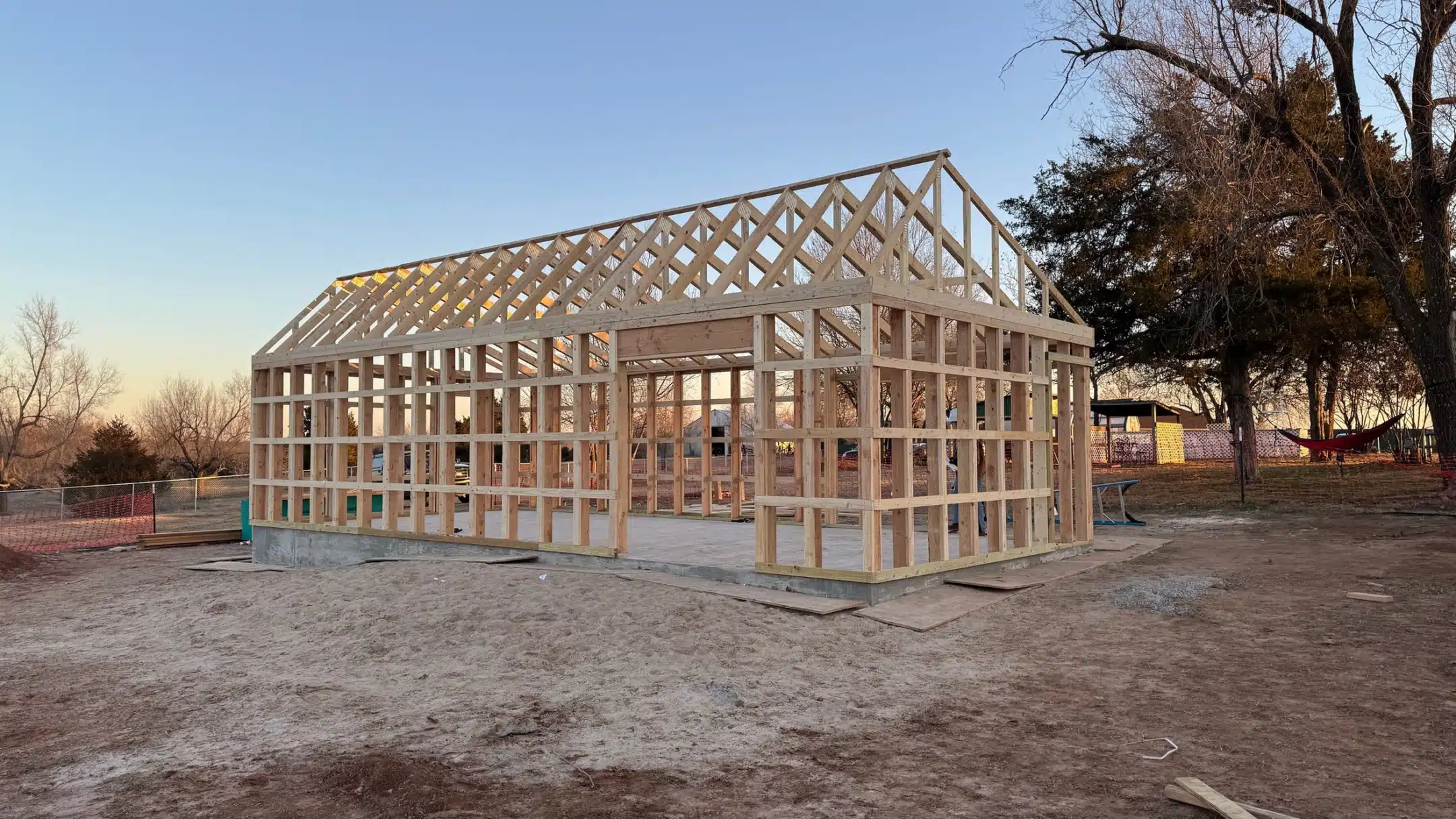
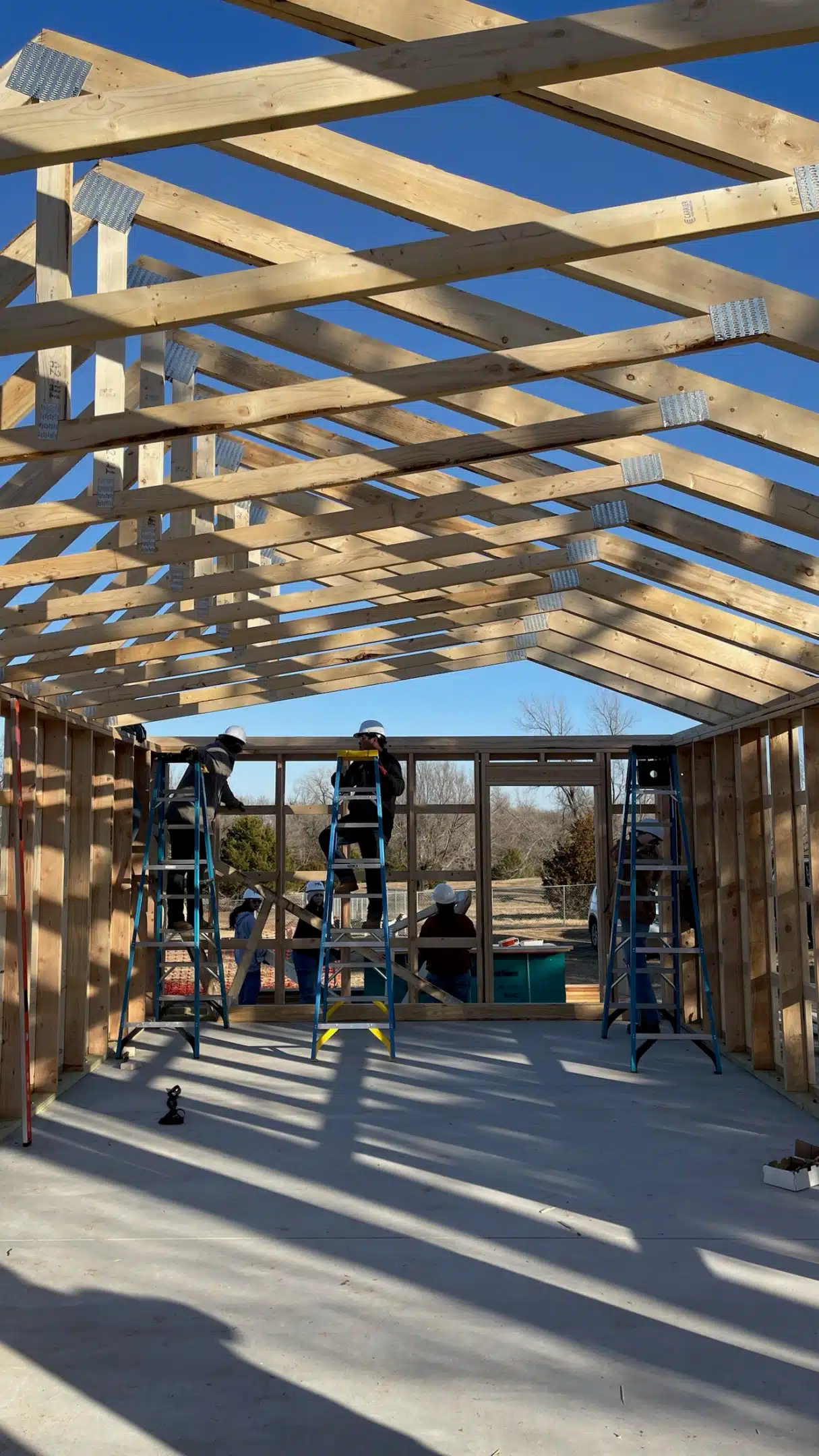
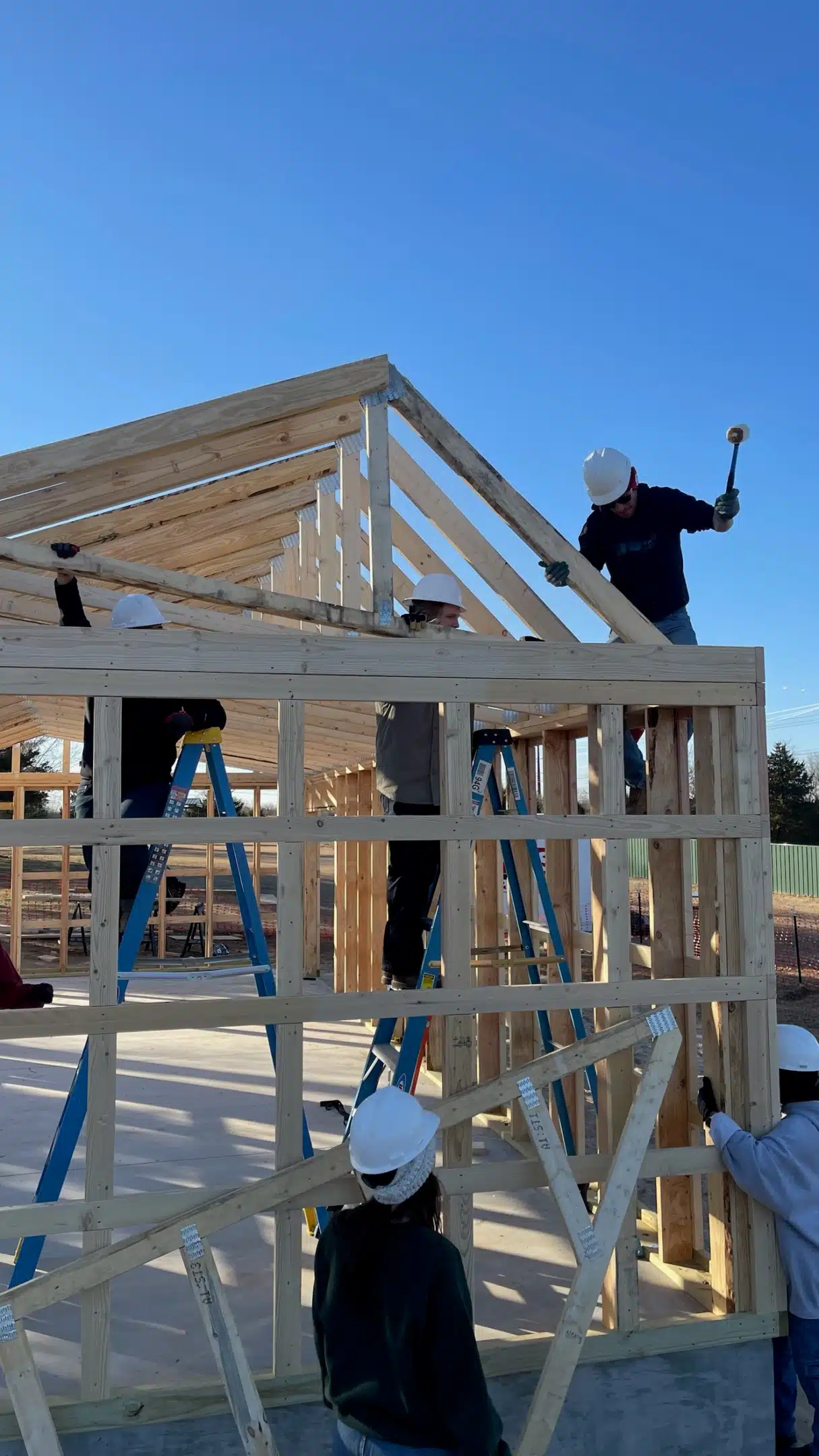
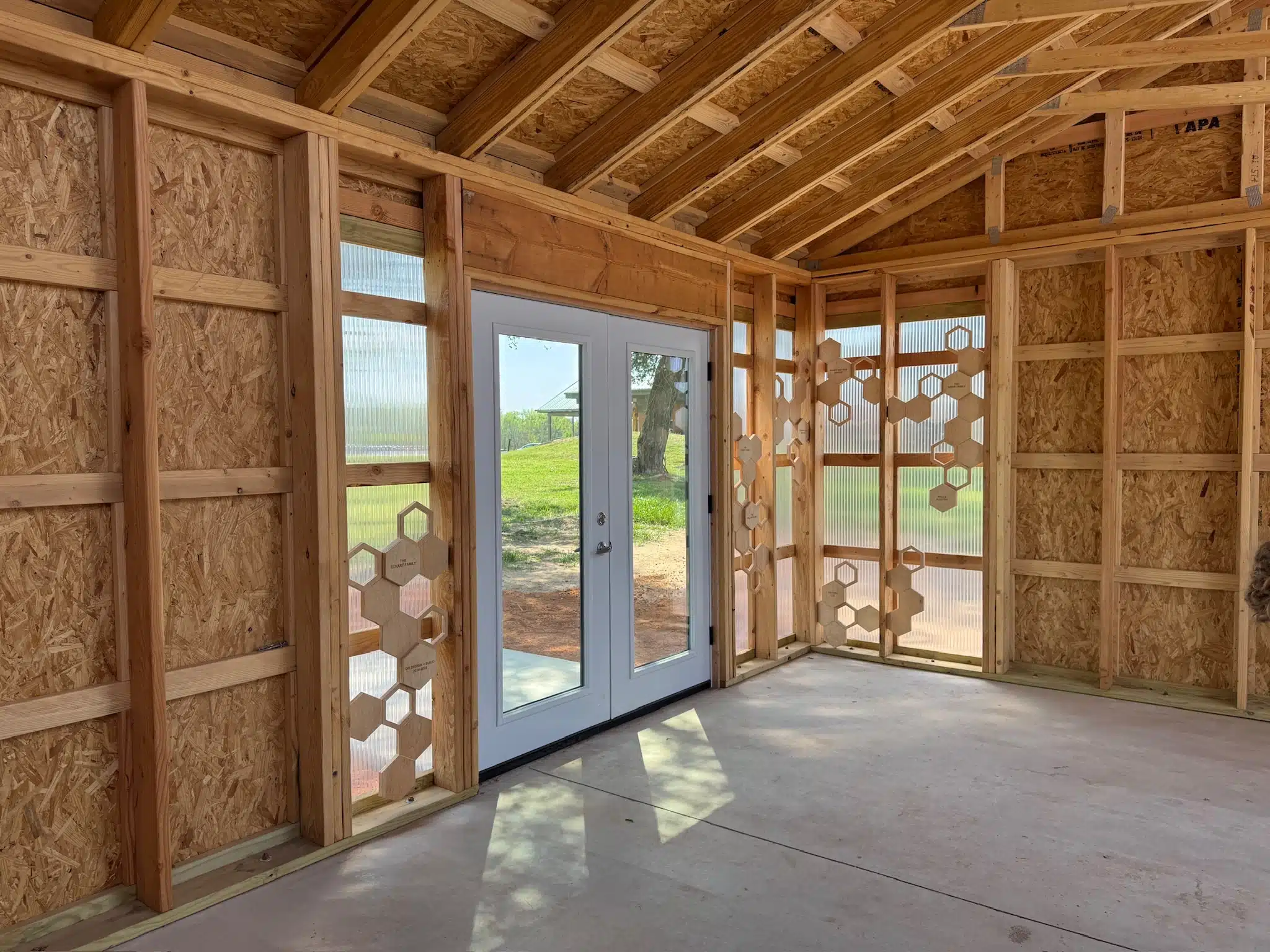
Inside, the space is defined by its open-span truss roof, exposed wood framing, and concrete floor, creating a warm, adaptable environment that can transition effortlessly between activities, group gatherings, art projects, workshops, or quiet reflection. The natural richness of woods grains are set against a grid of regulating lines, enhancing the rhythm of the structure. Together, the build-up of structural systems and skin creates a dimensional, layered spatial experience. Every element is intentionally straightforward, ensuring the building is easy to maintain and allowing the community’s activities, voices, and creativity to become the true focal point.

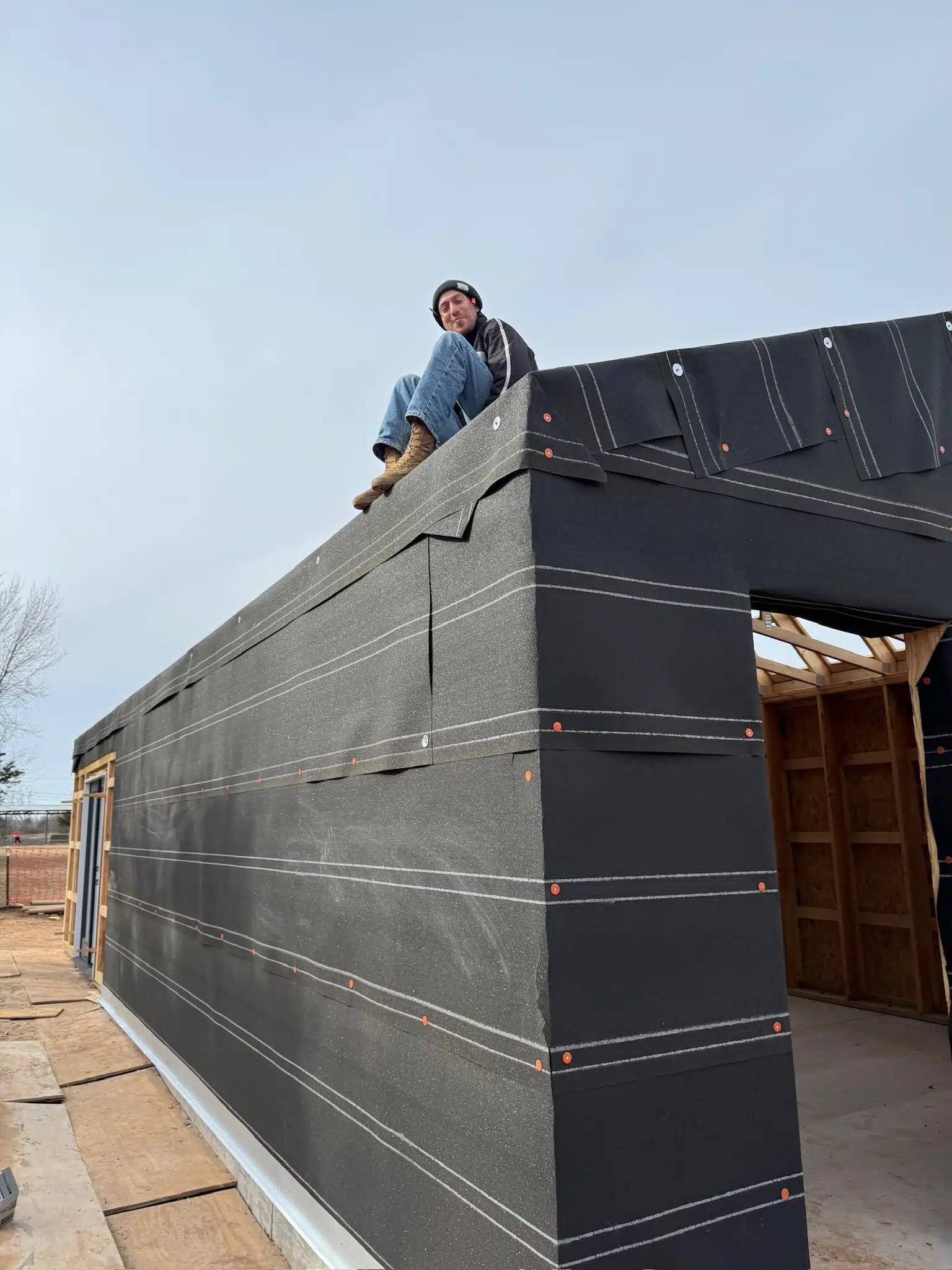
Construction Process

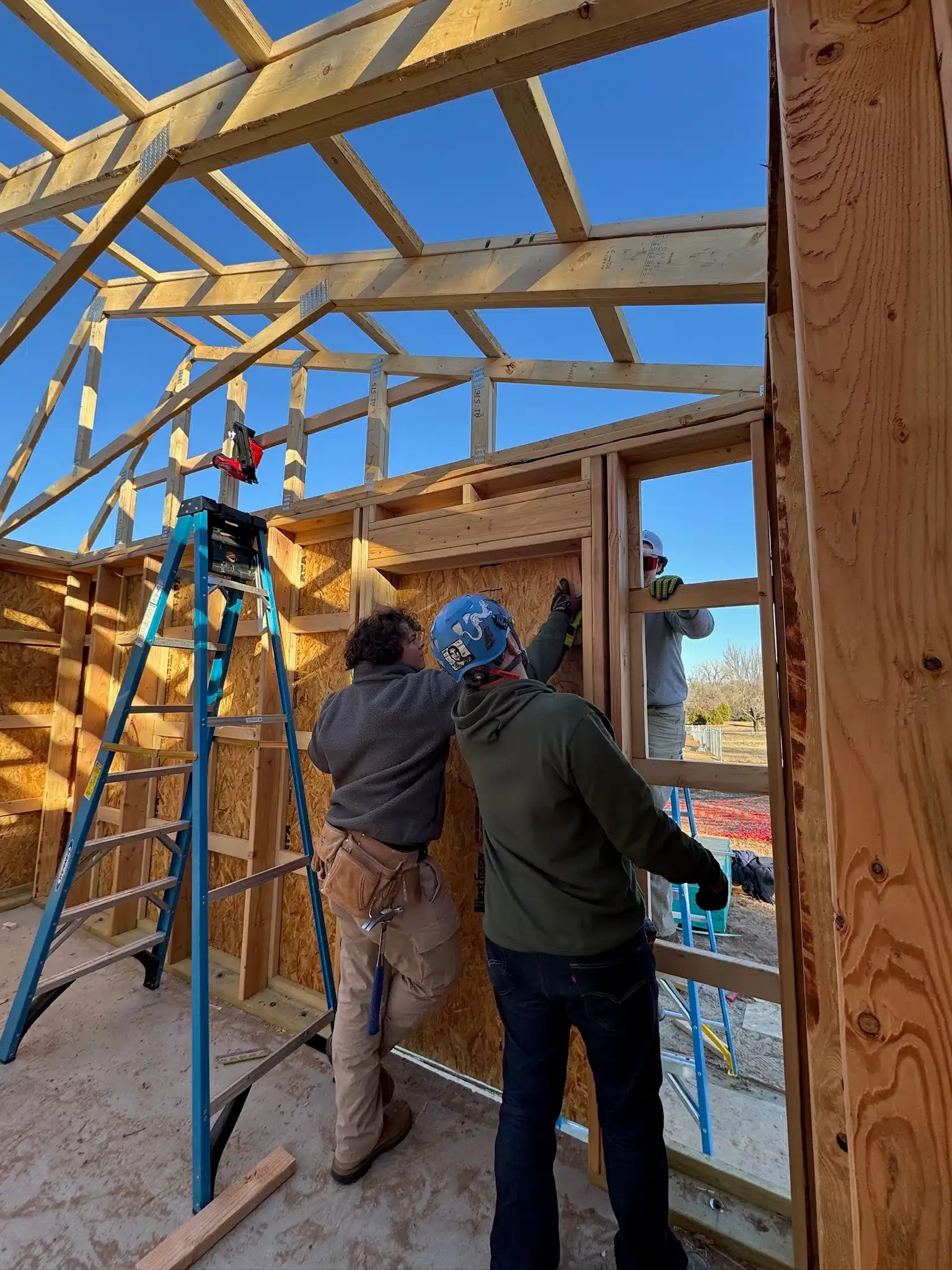
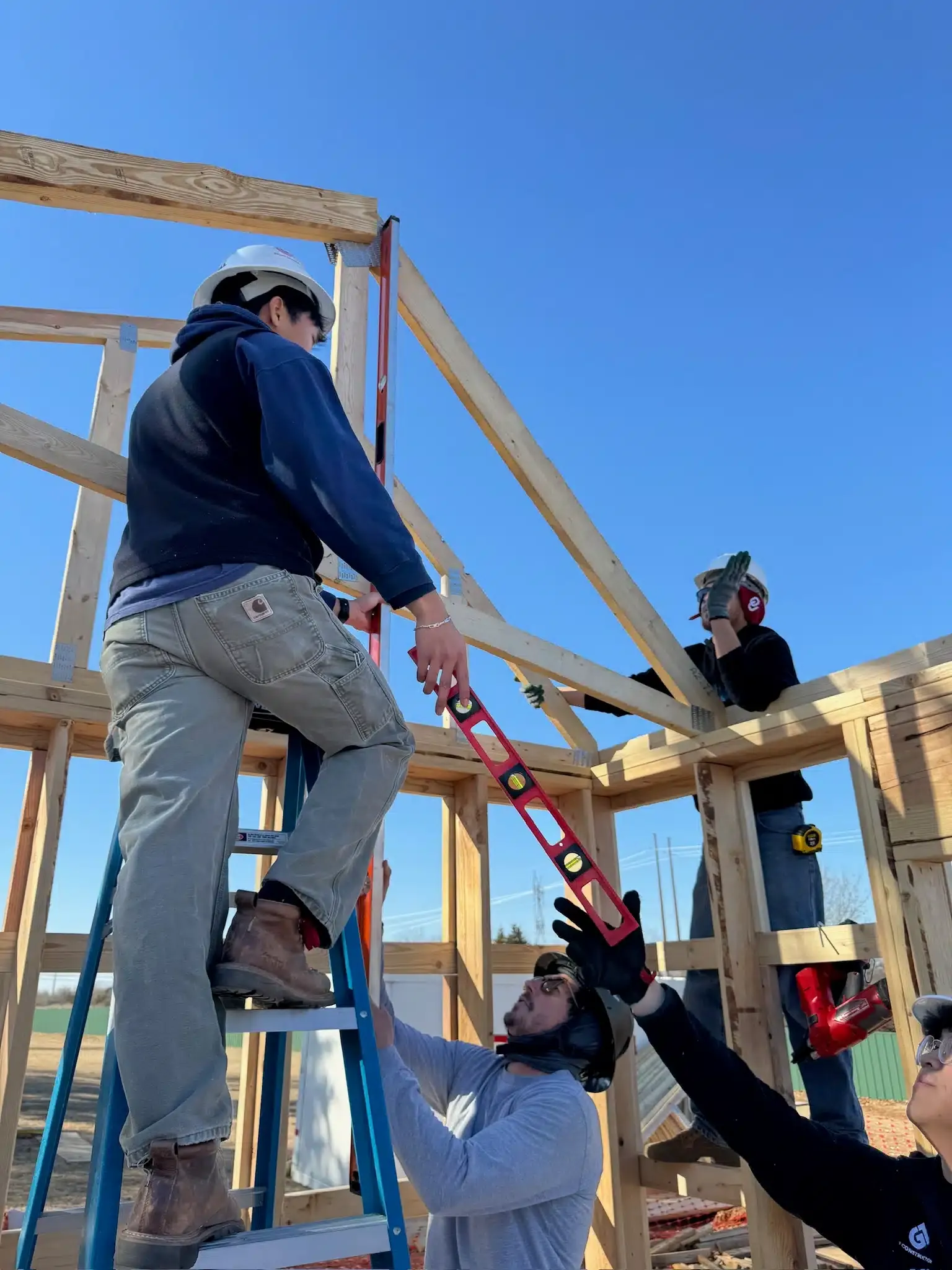
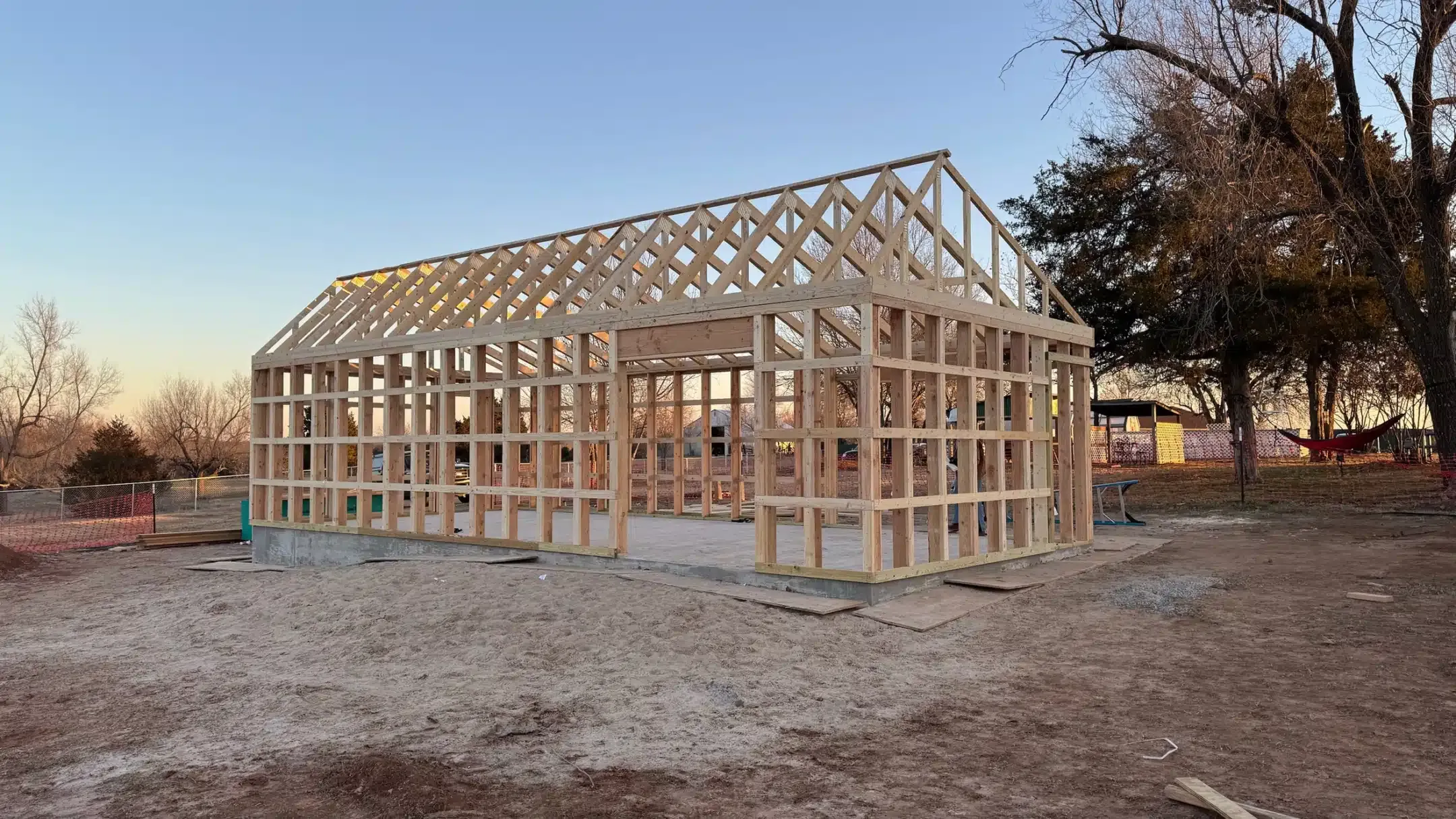
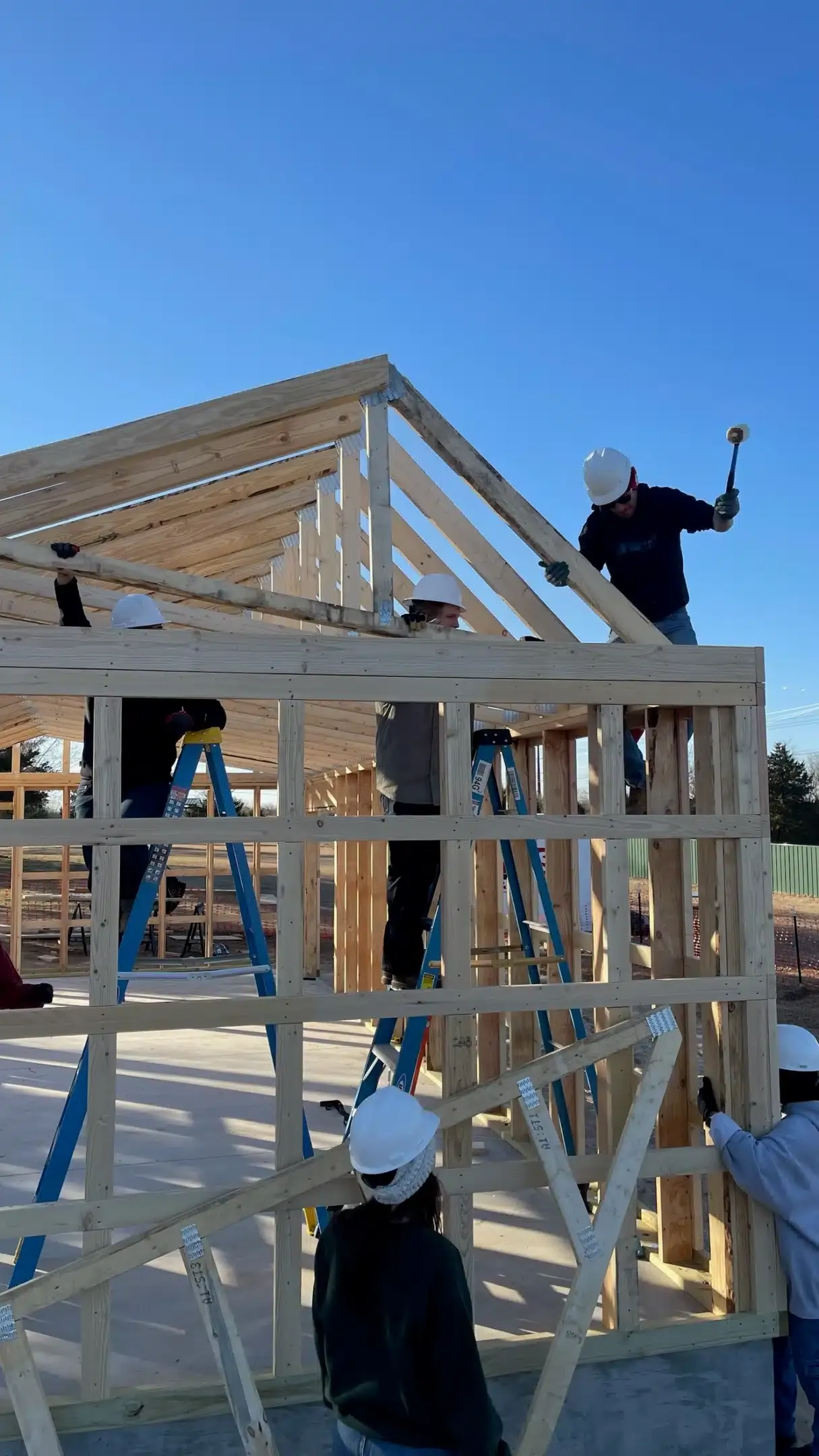
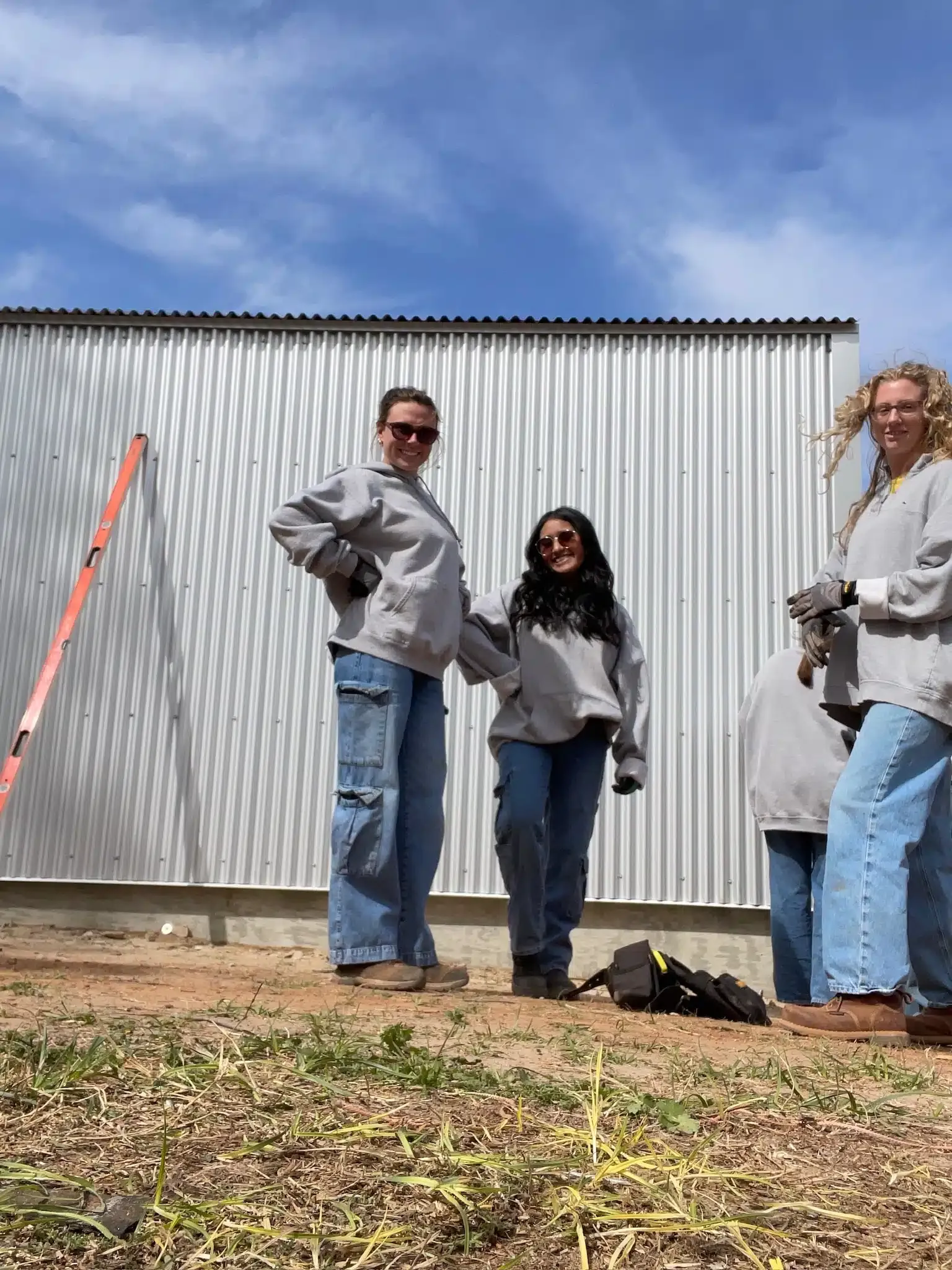
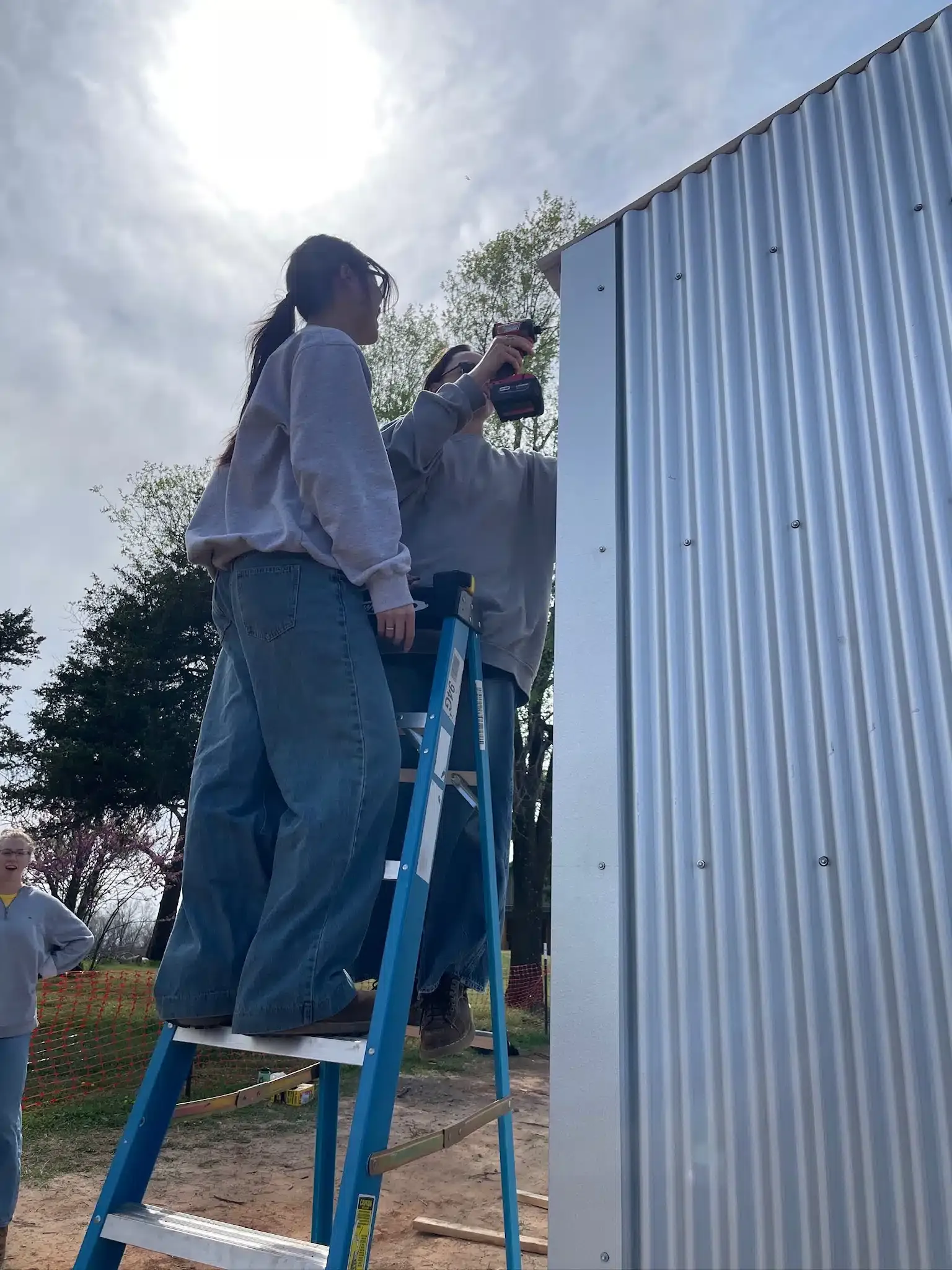
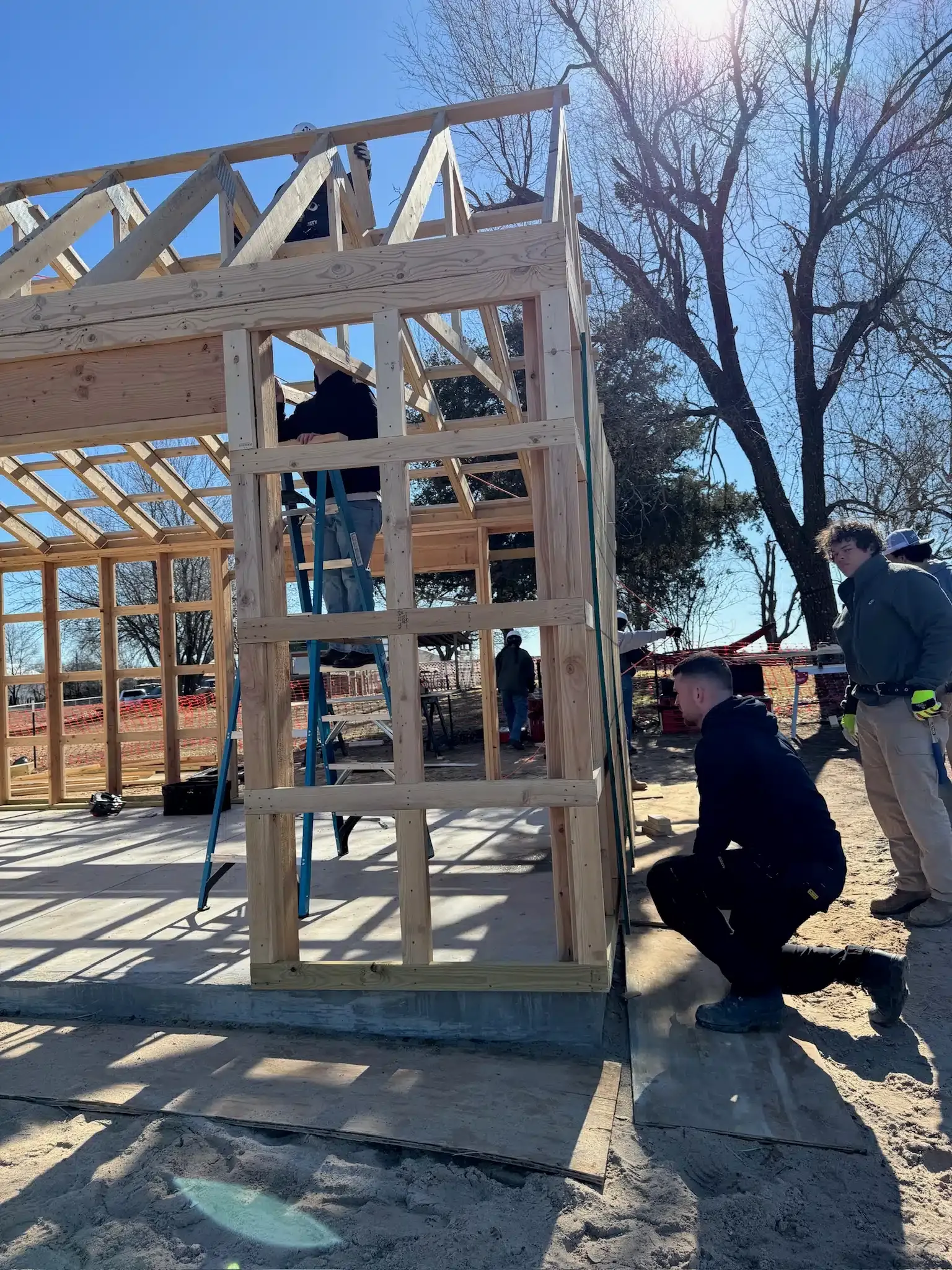
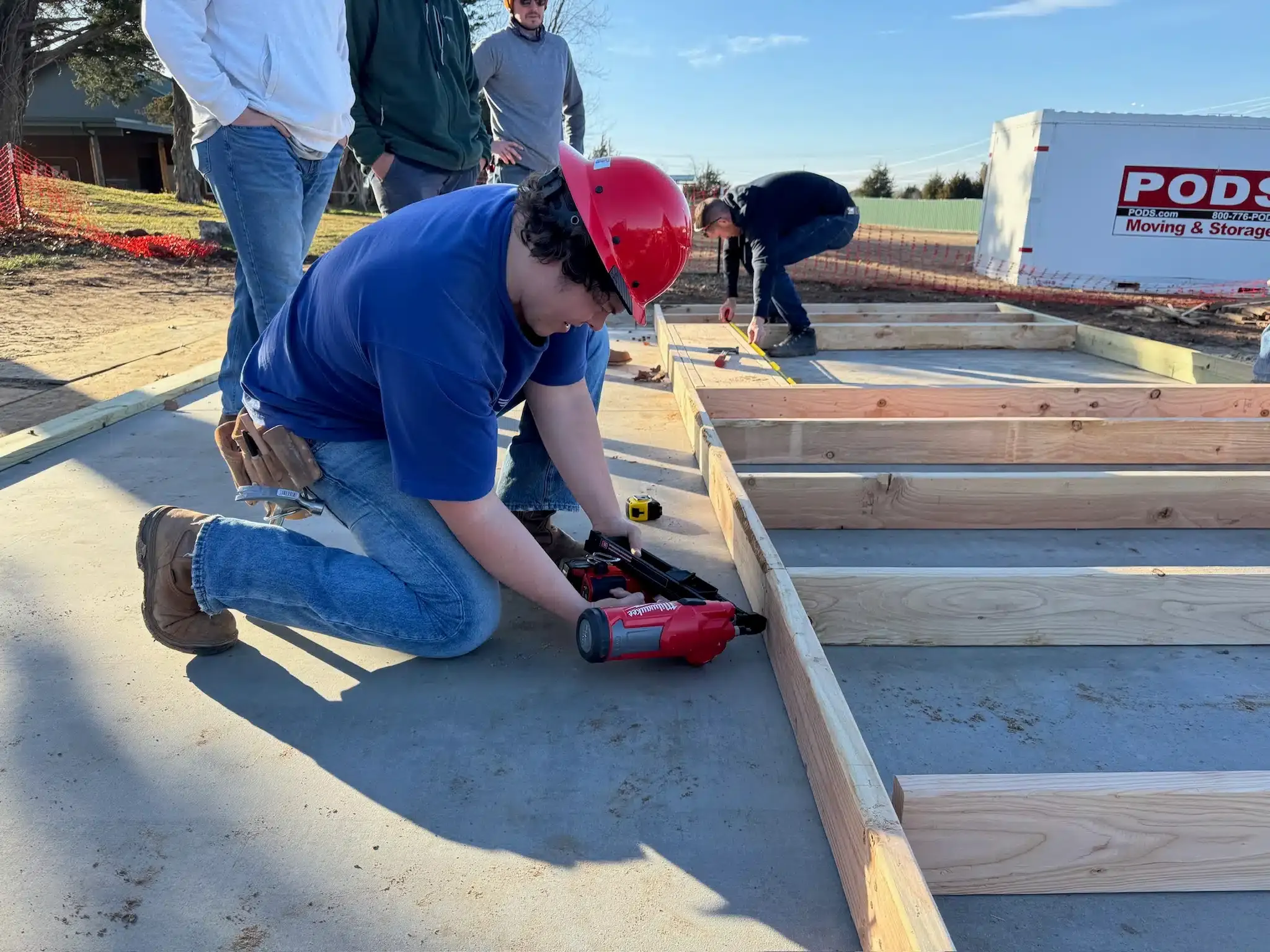
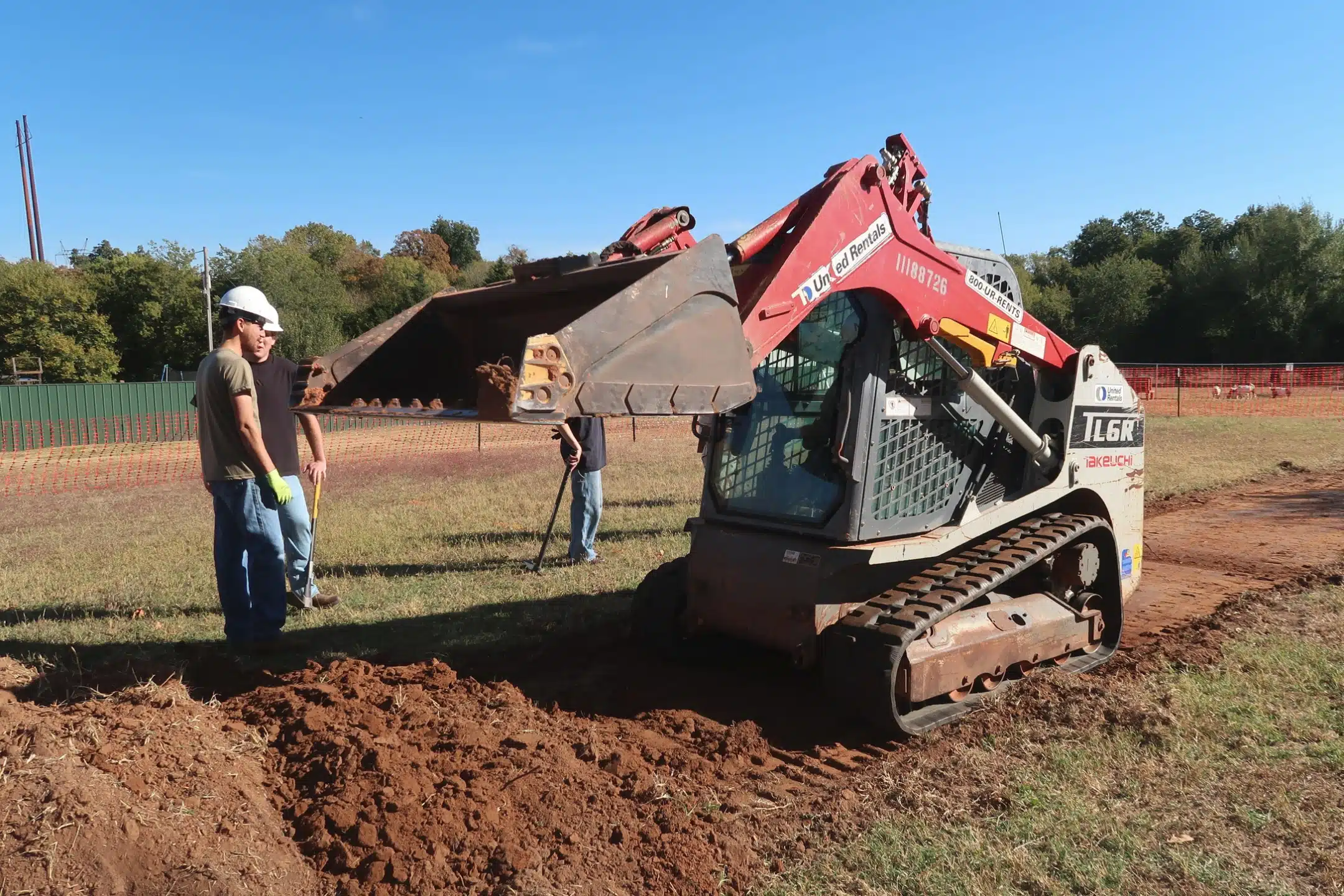
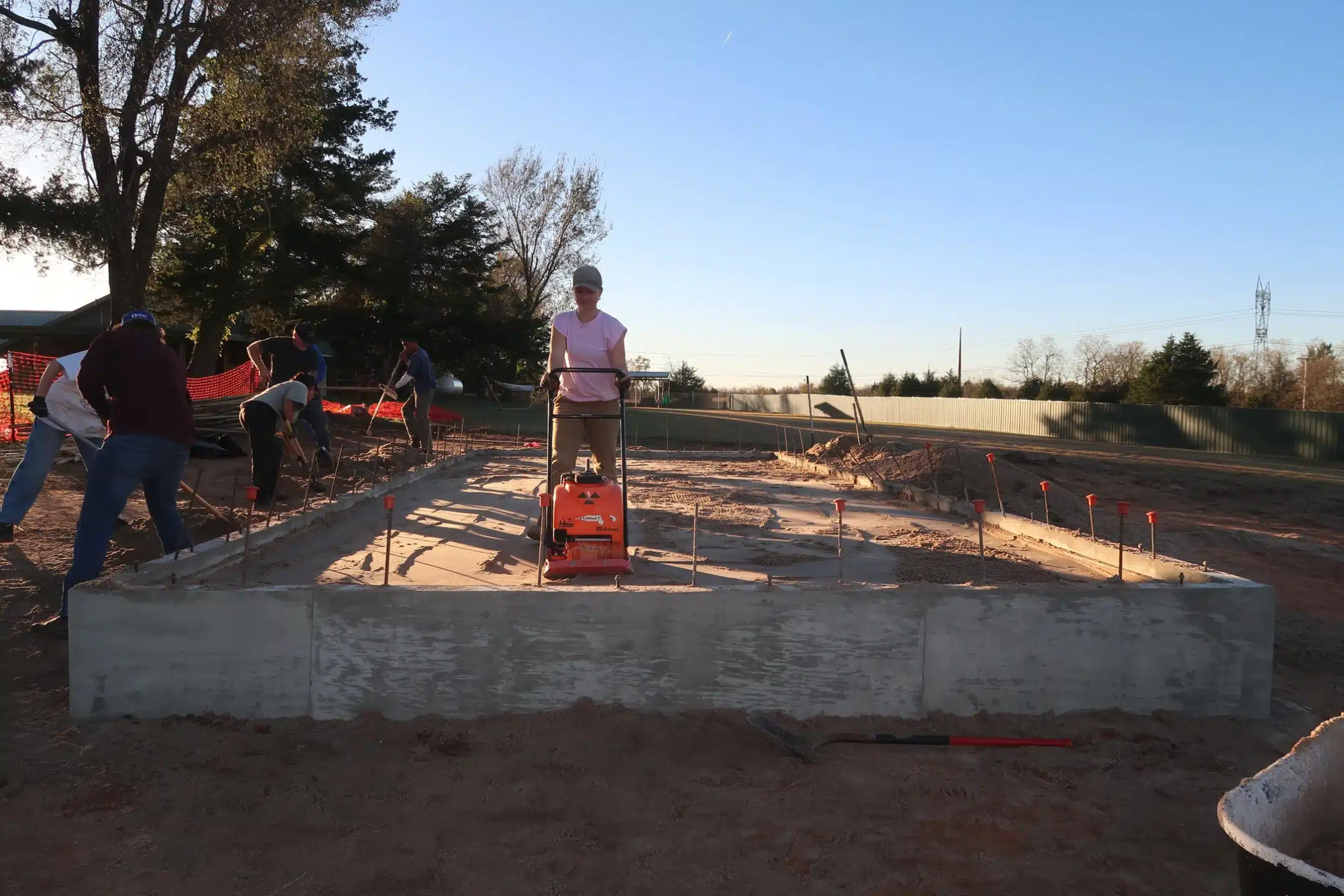
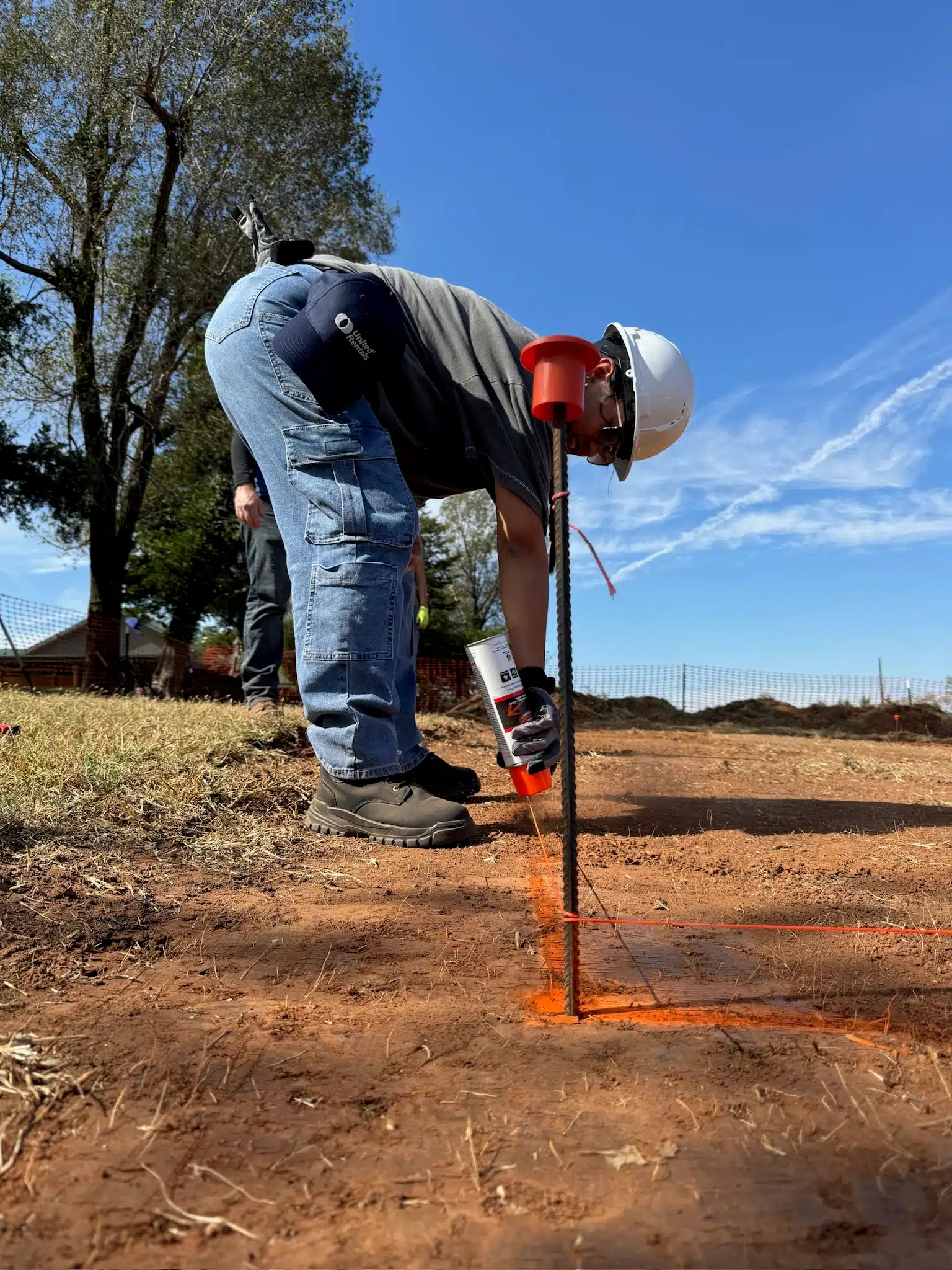
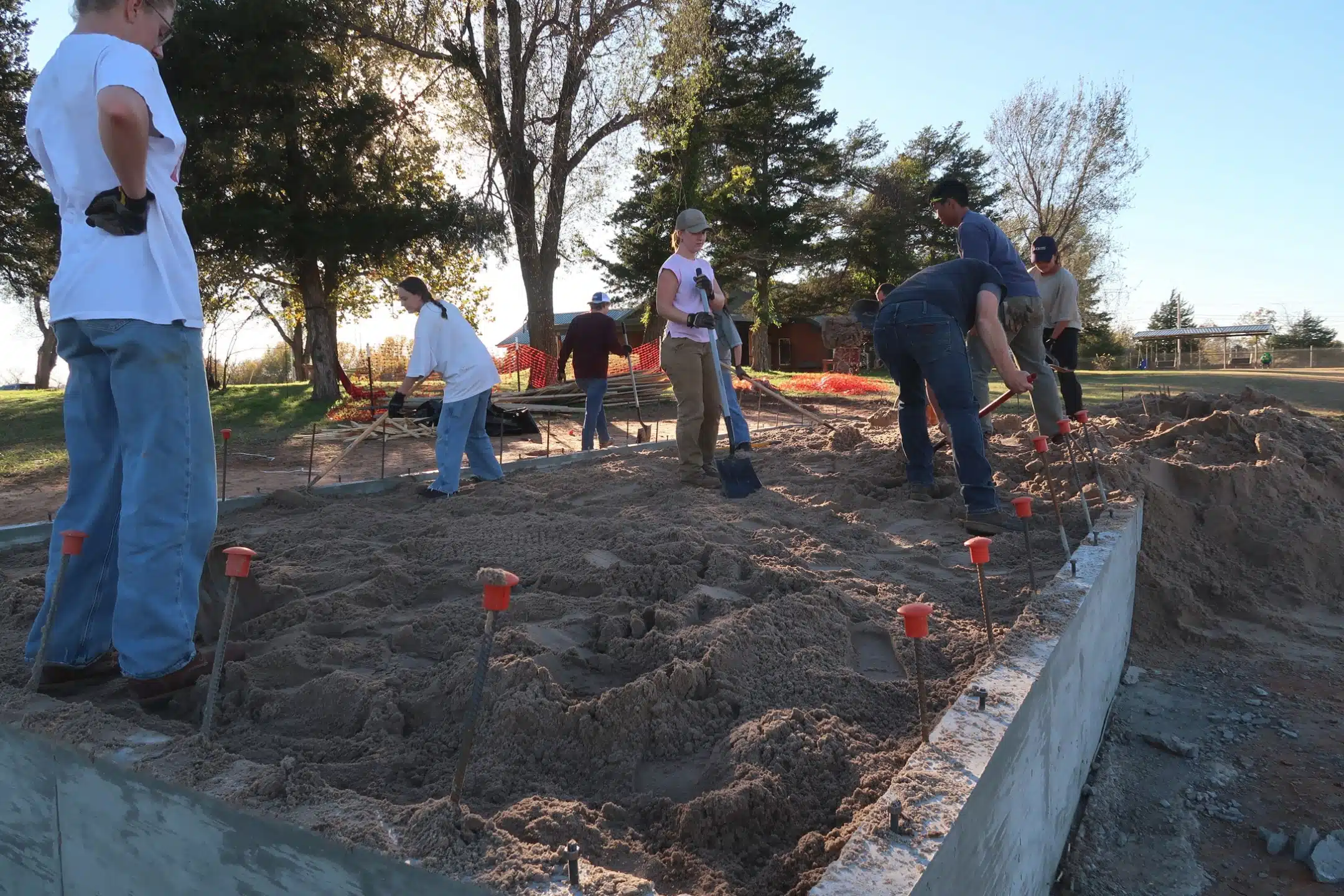
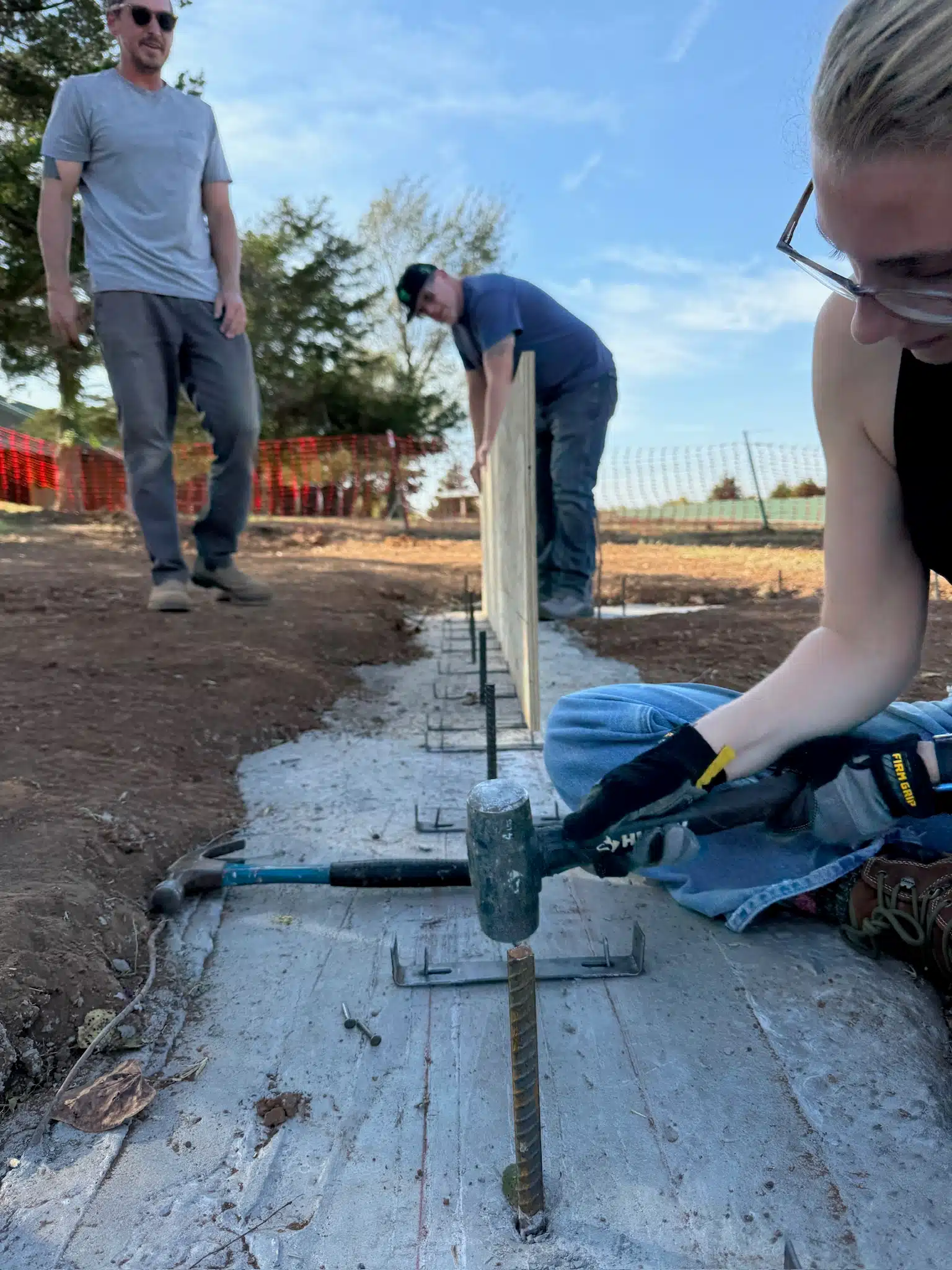
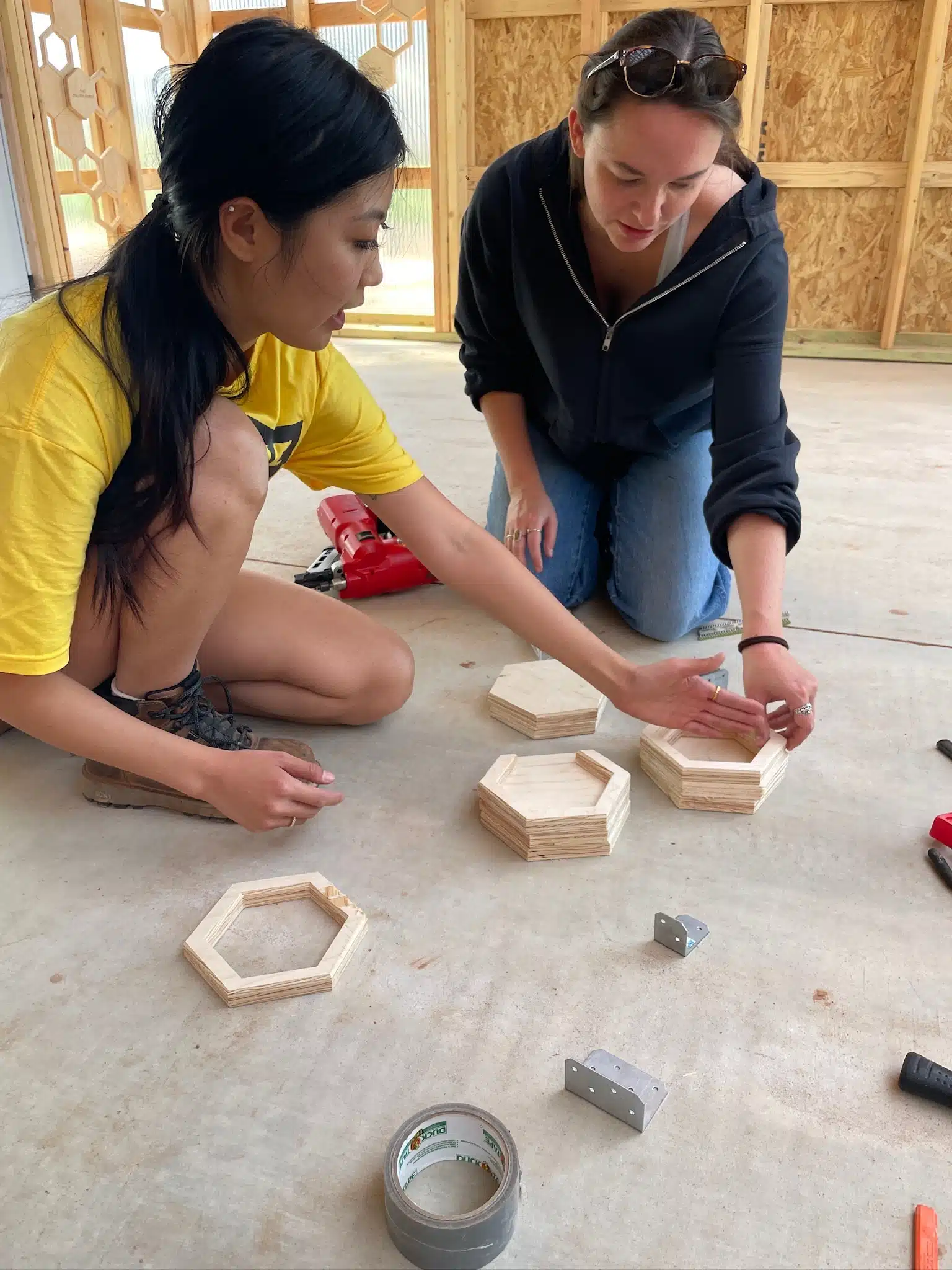
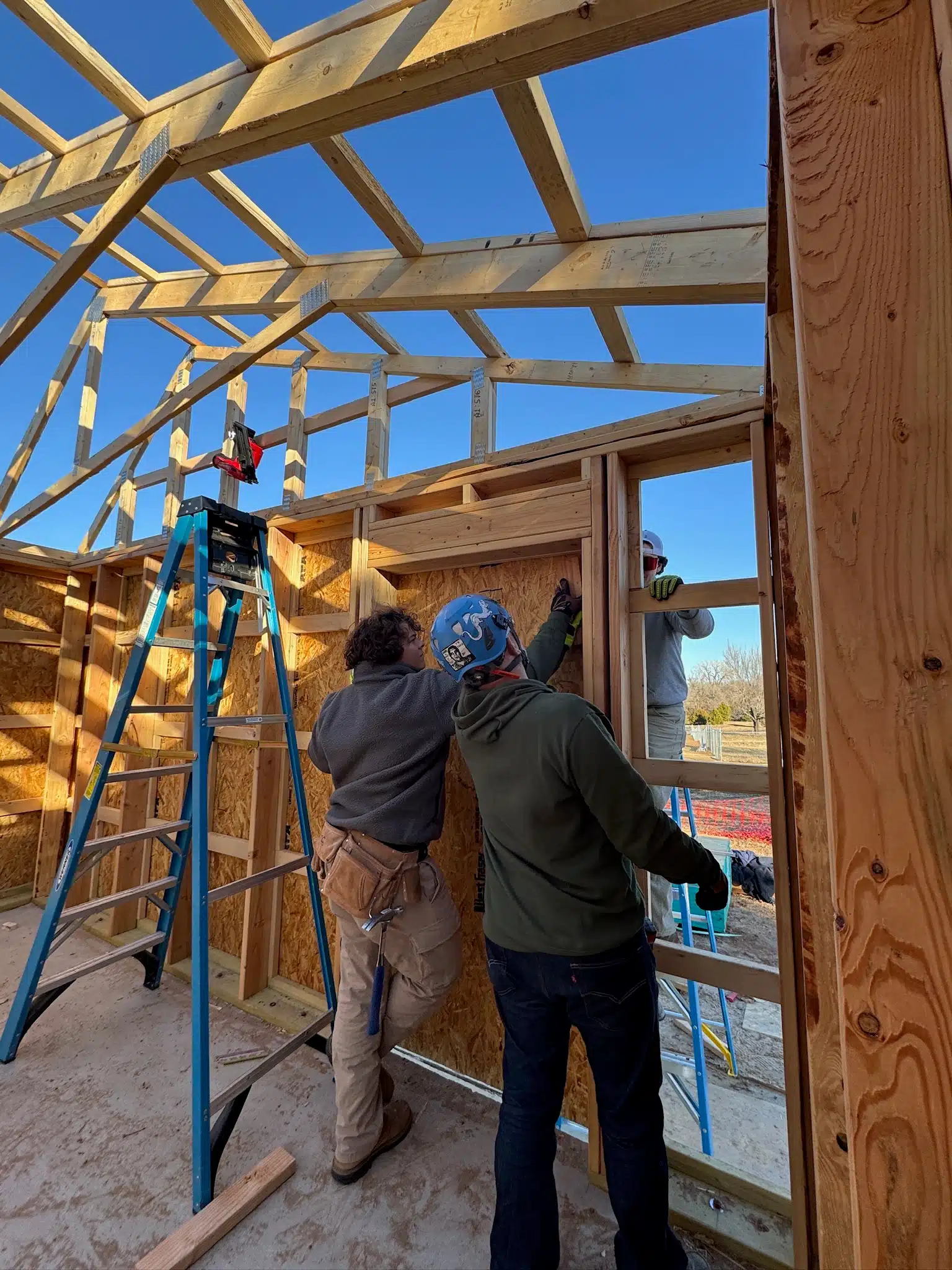
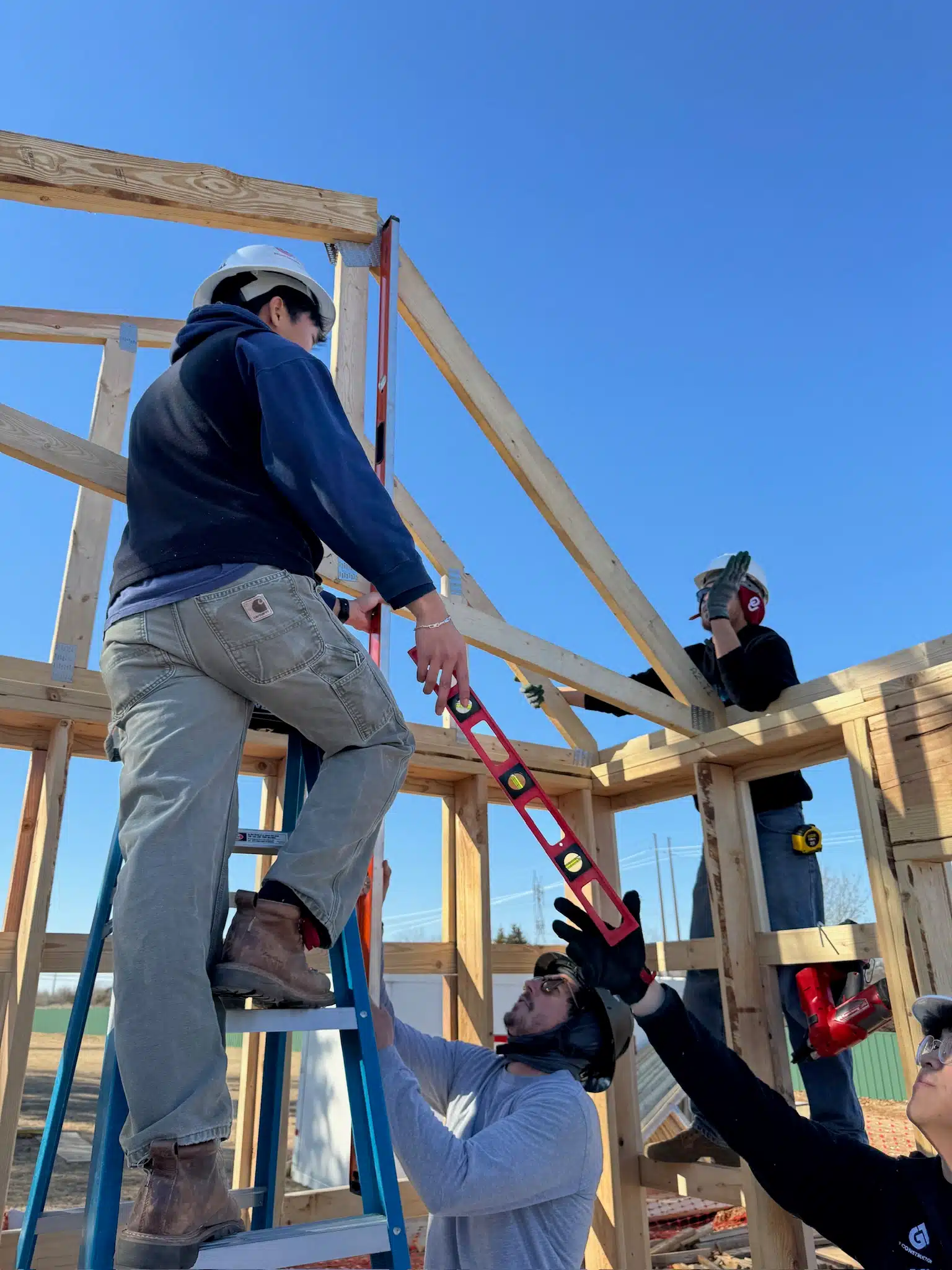
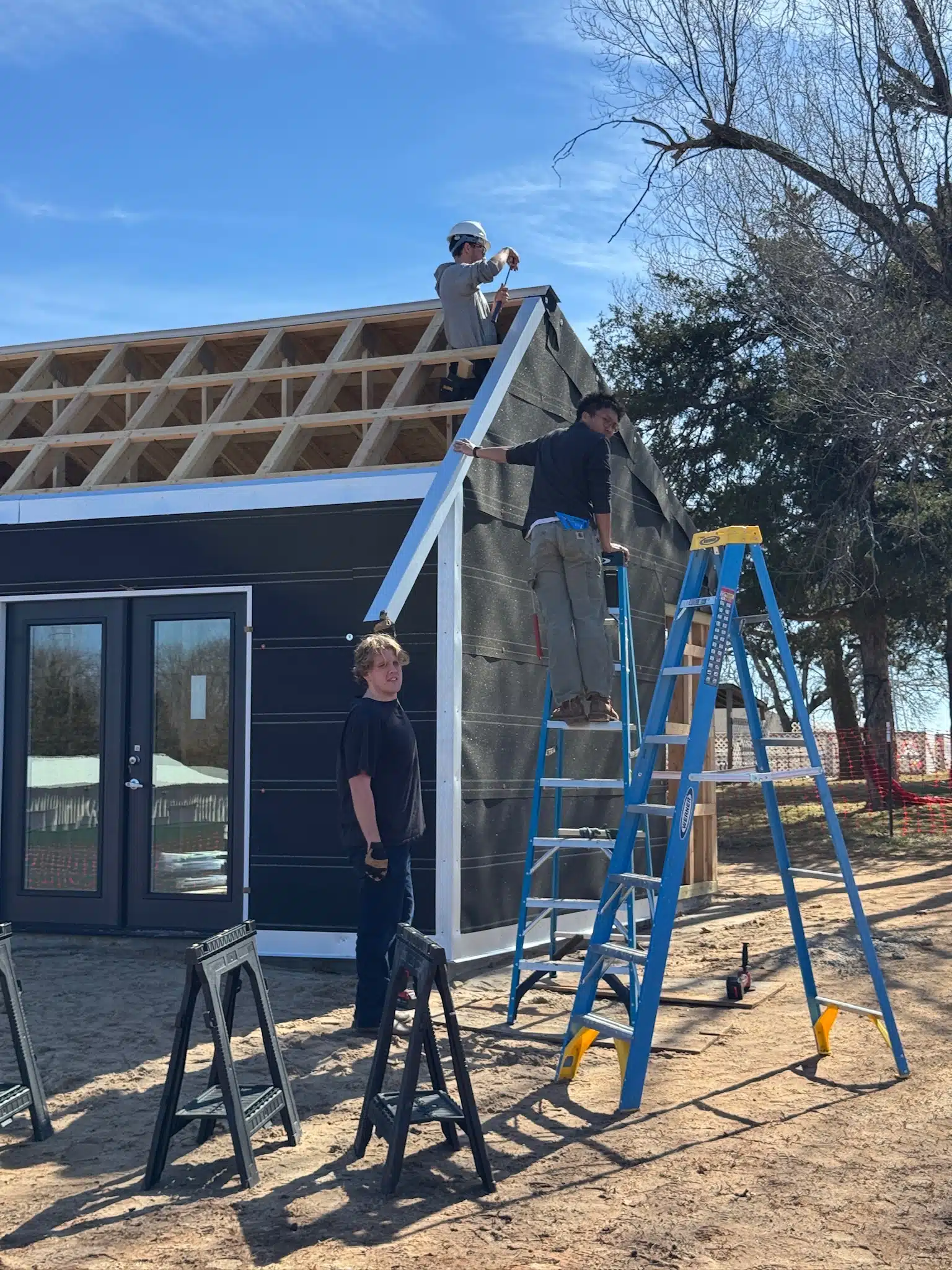
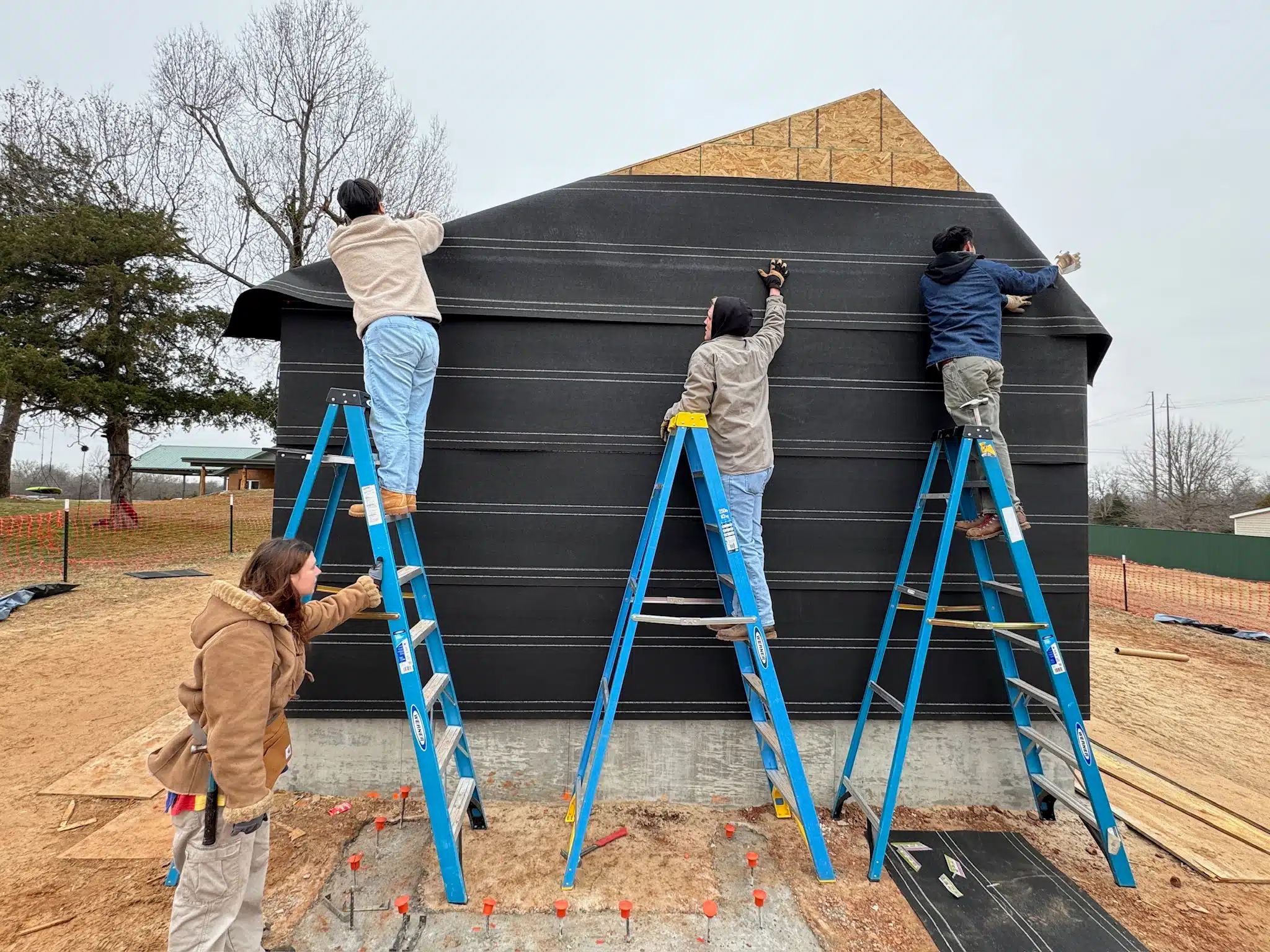
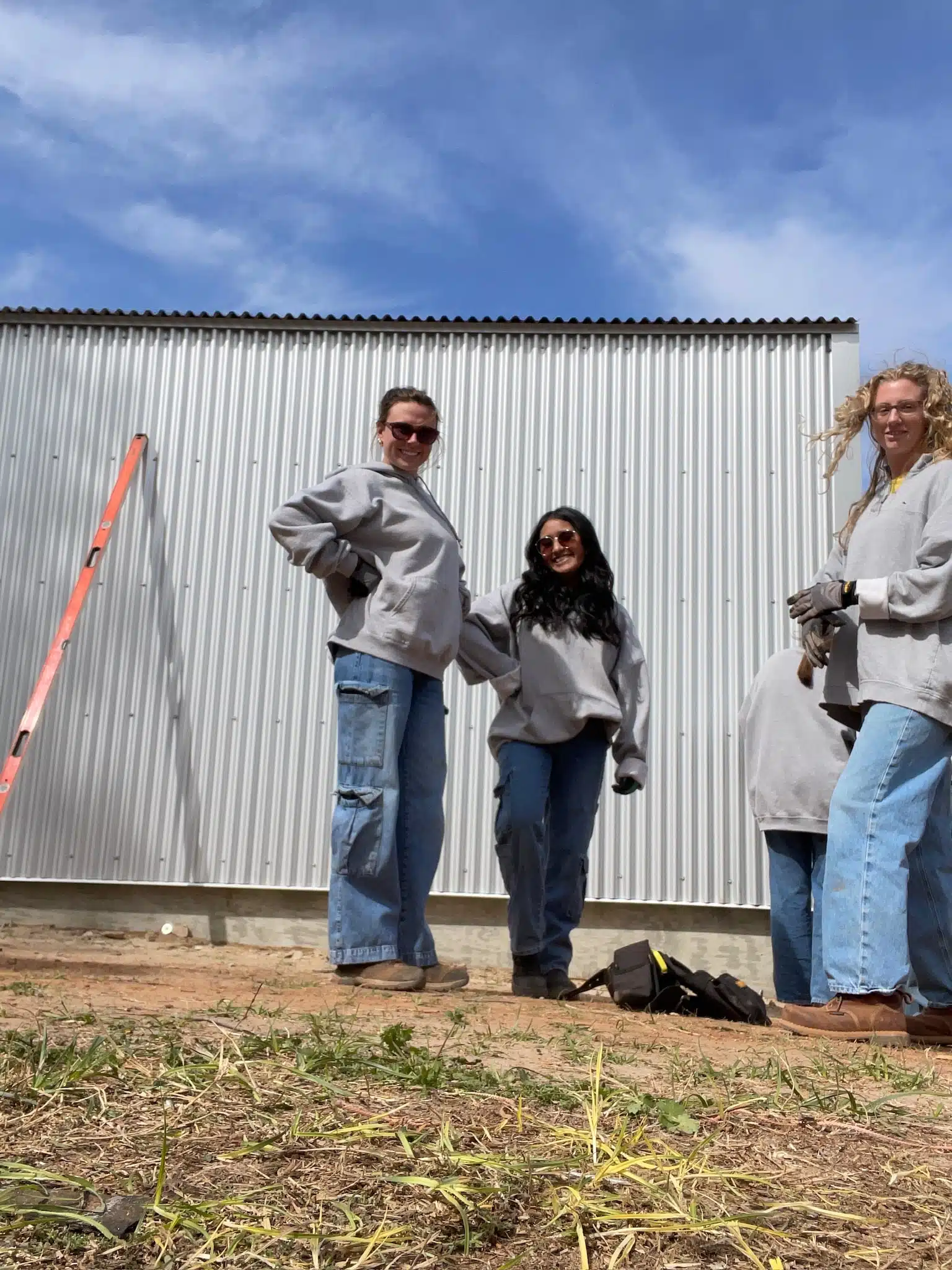
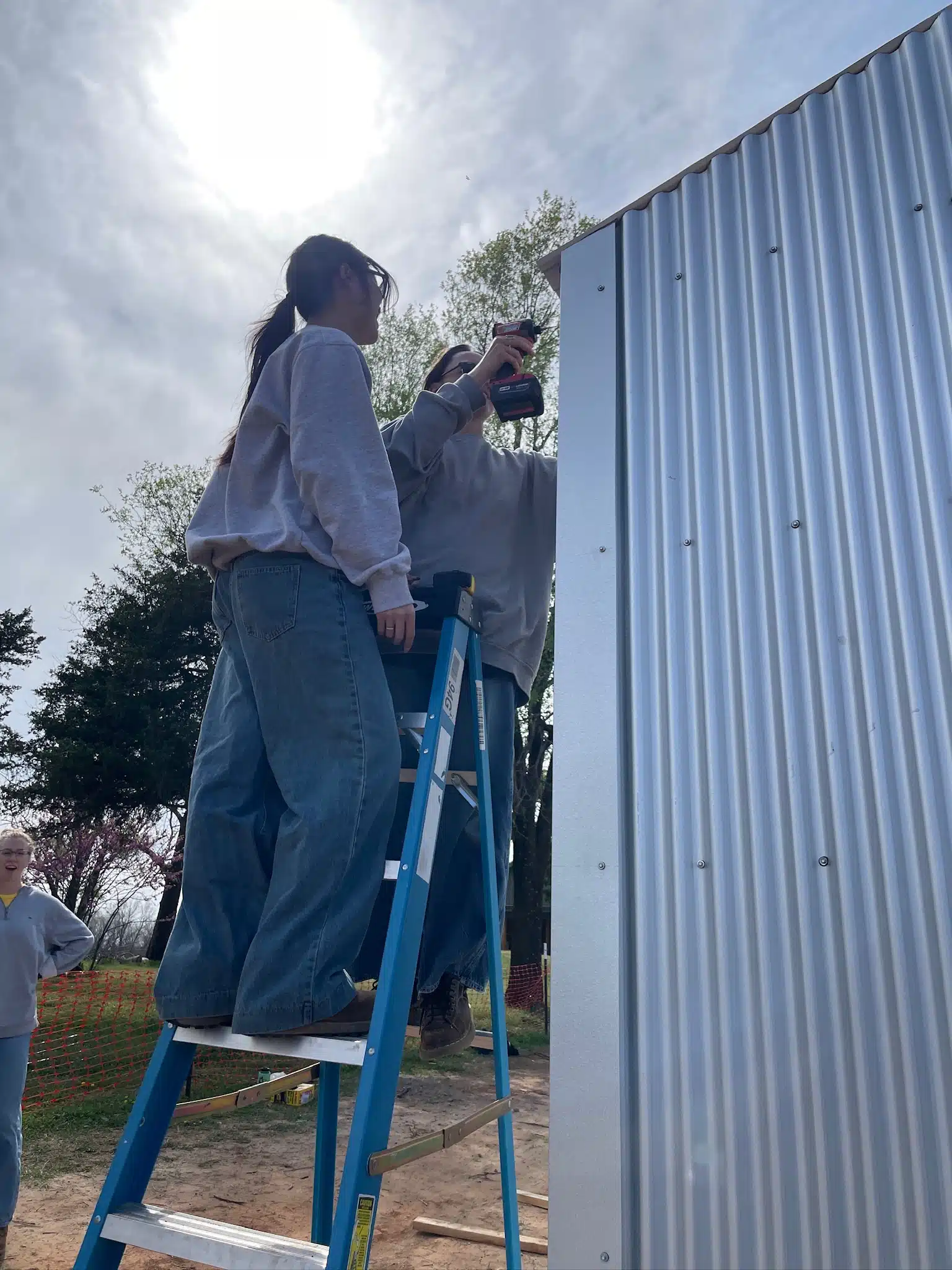
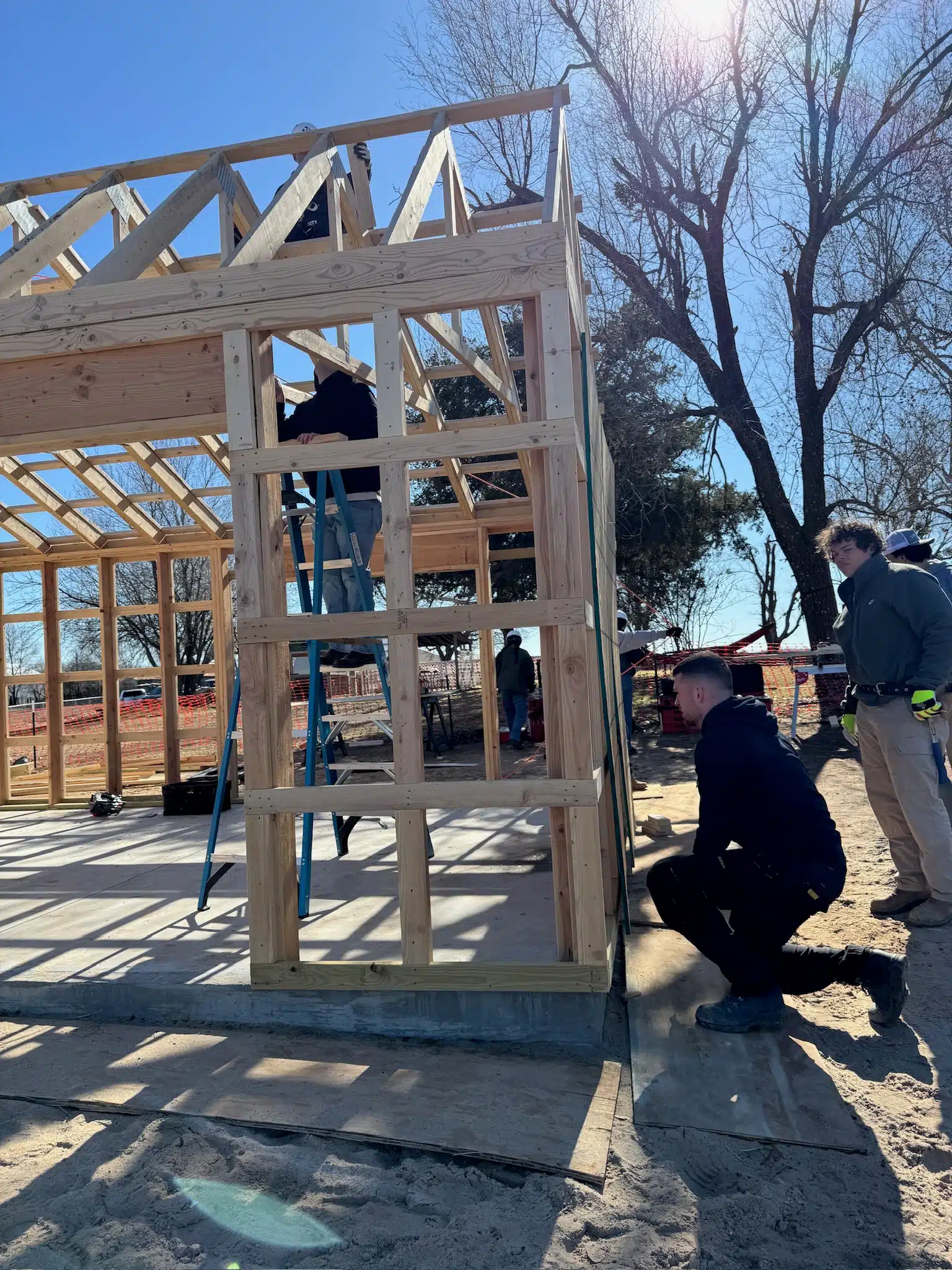
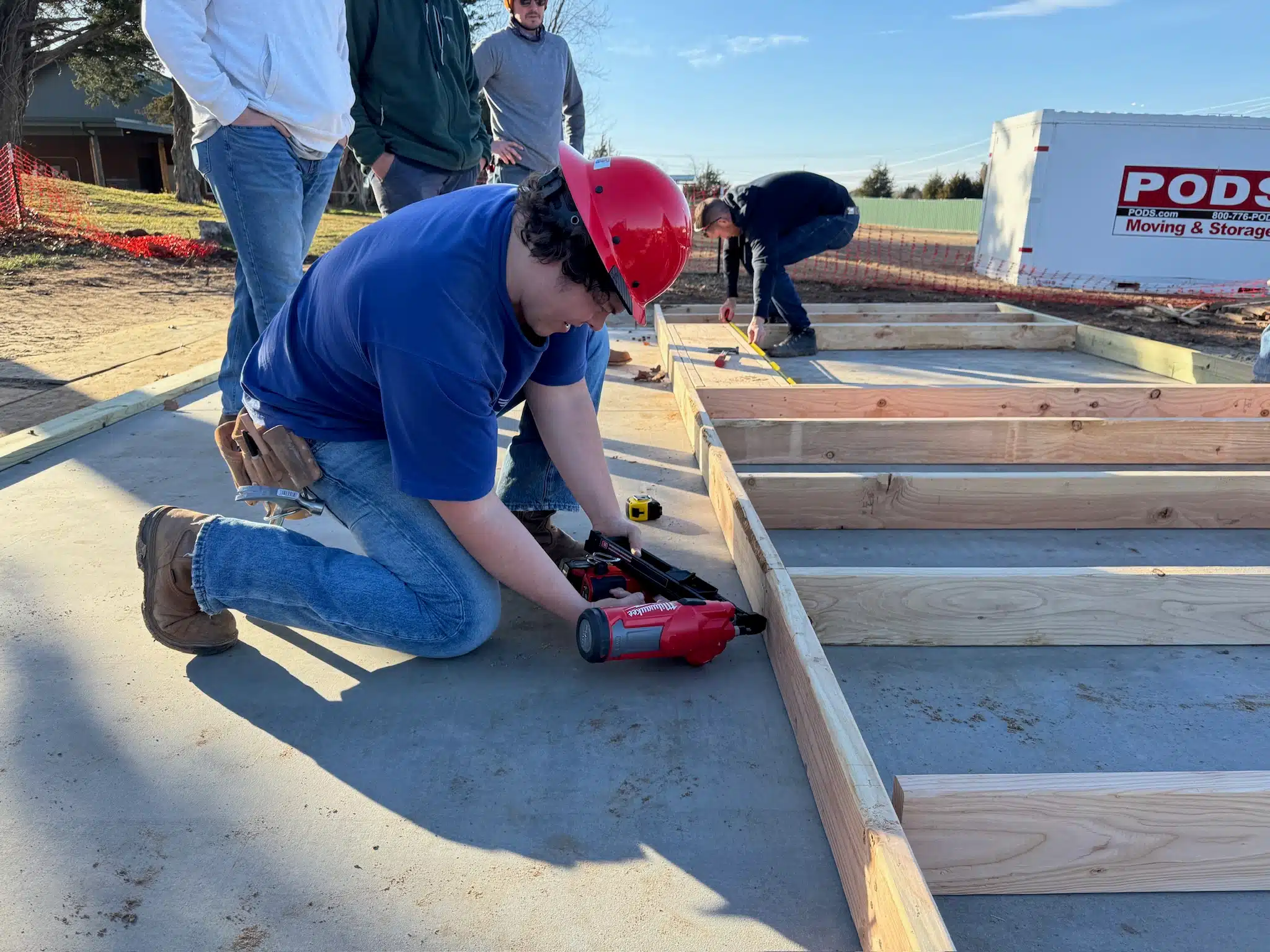
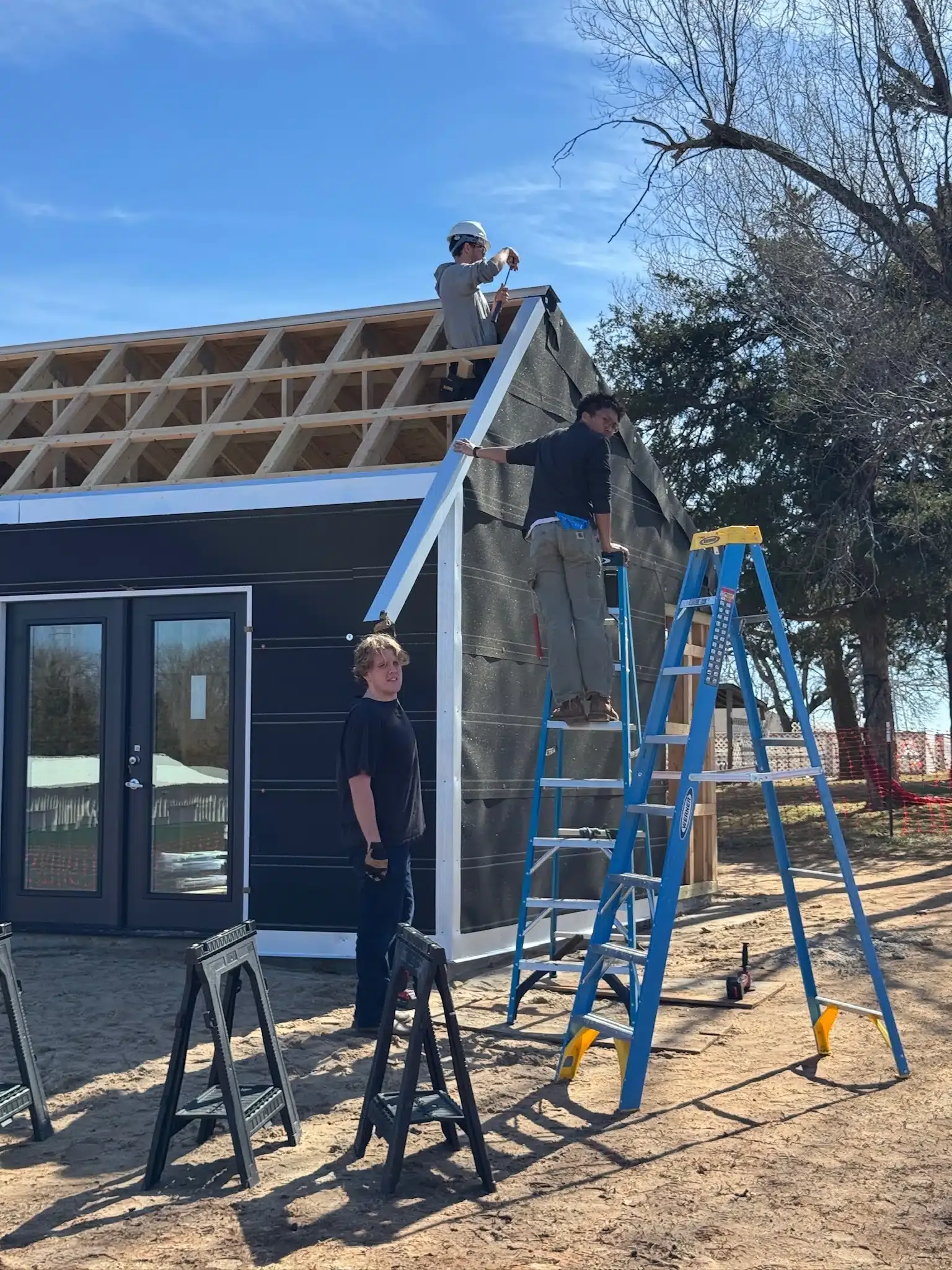
The SunHive Community Space represents the fusion of design vision and hands-on craftsmanship. The structure’s framing system, was engineered for both cost-efficiency and rapid assembly, while also creating a dynamic, shifting, interior overhead condition. Exterior cladding in corrugated galvanized steel delivers weather resistance while harmonizing with rural architectural vernacular, ensuring the building feels at home in its setting.

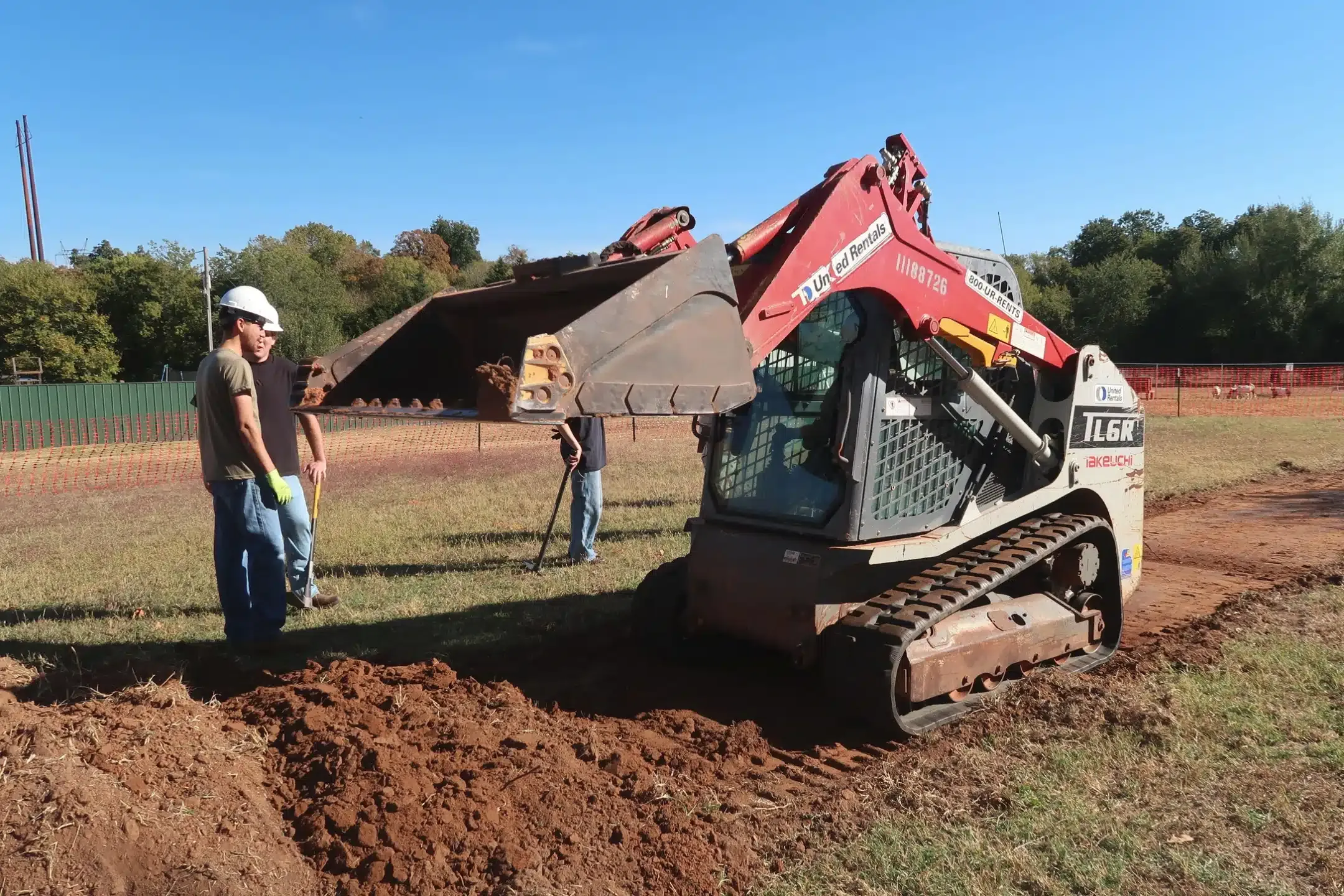
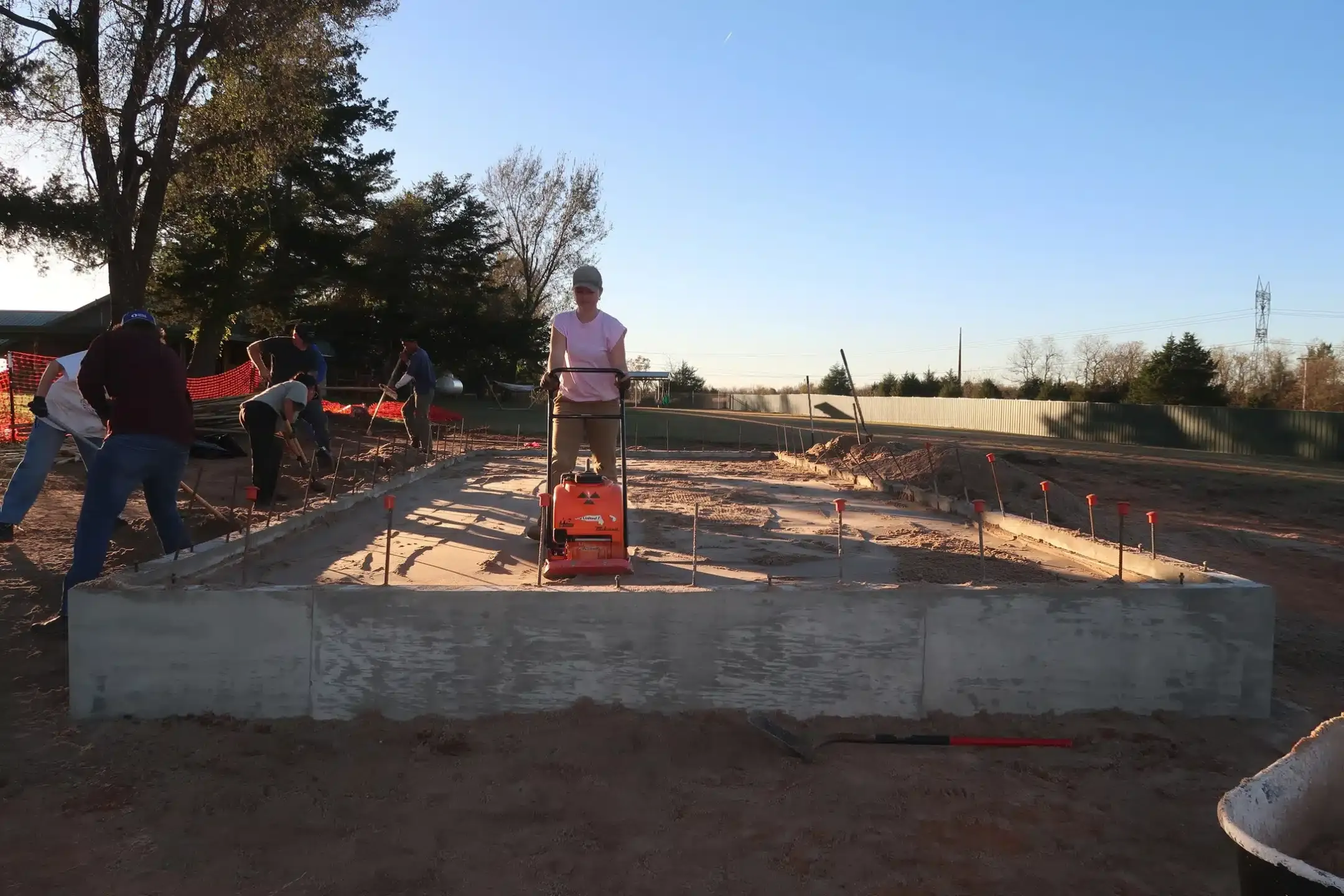
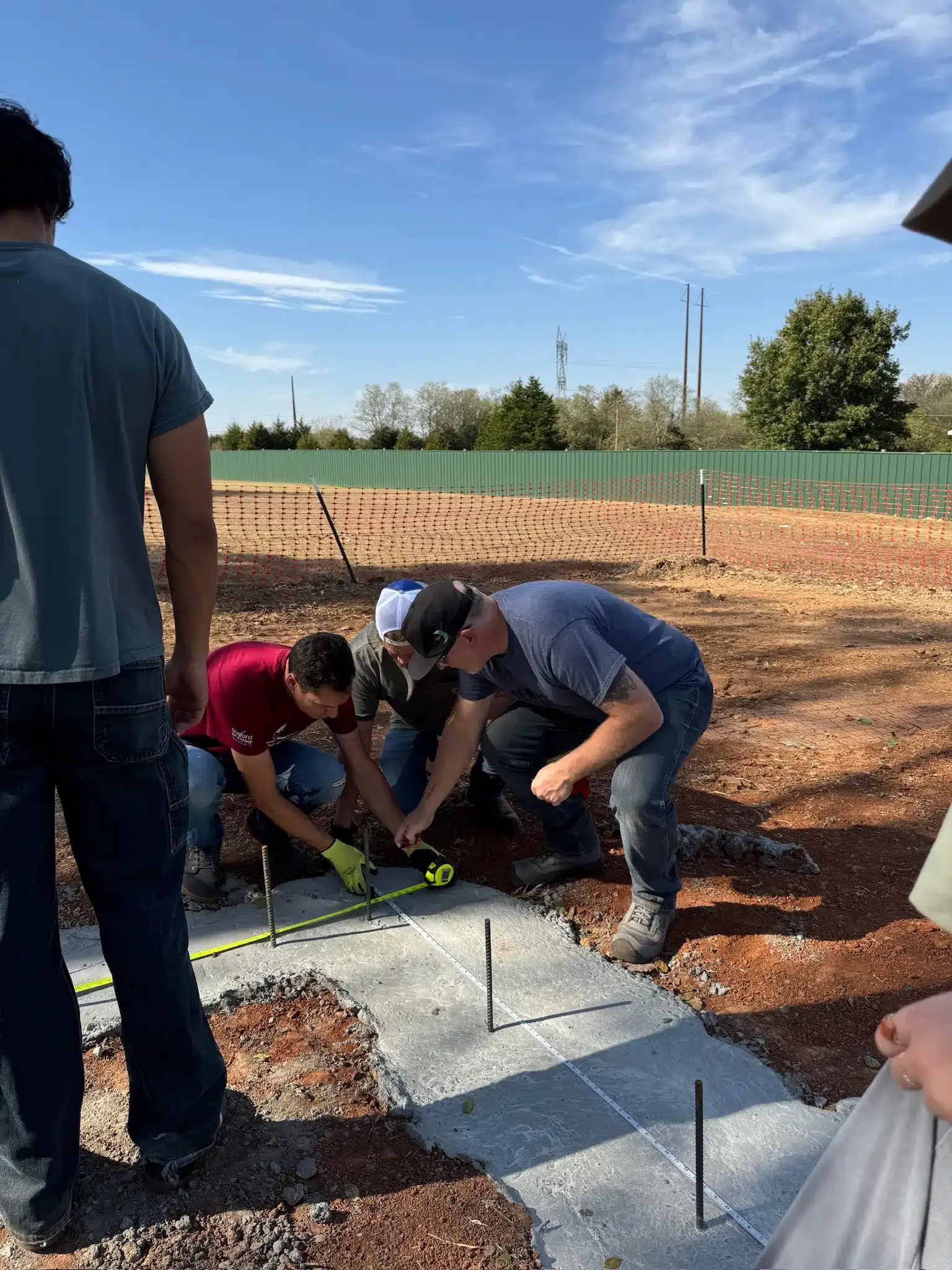
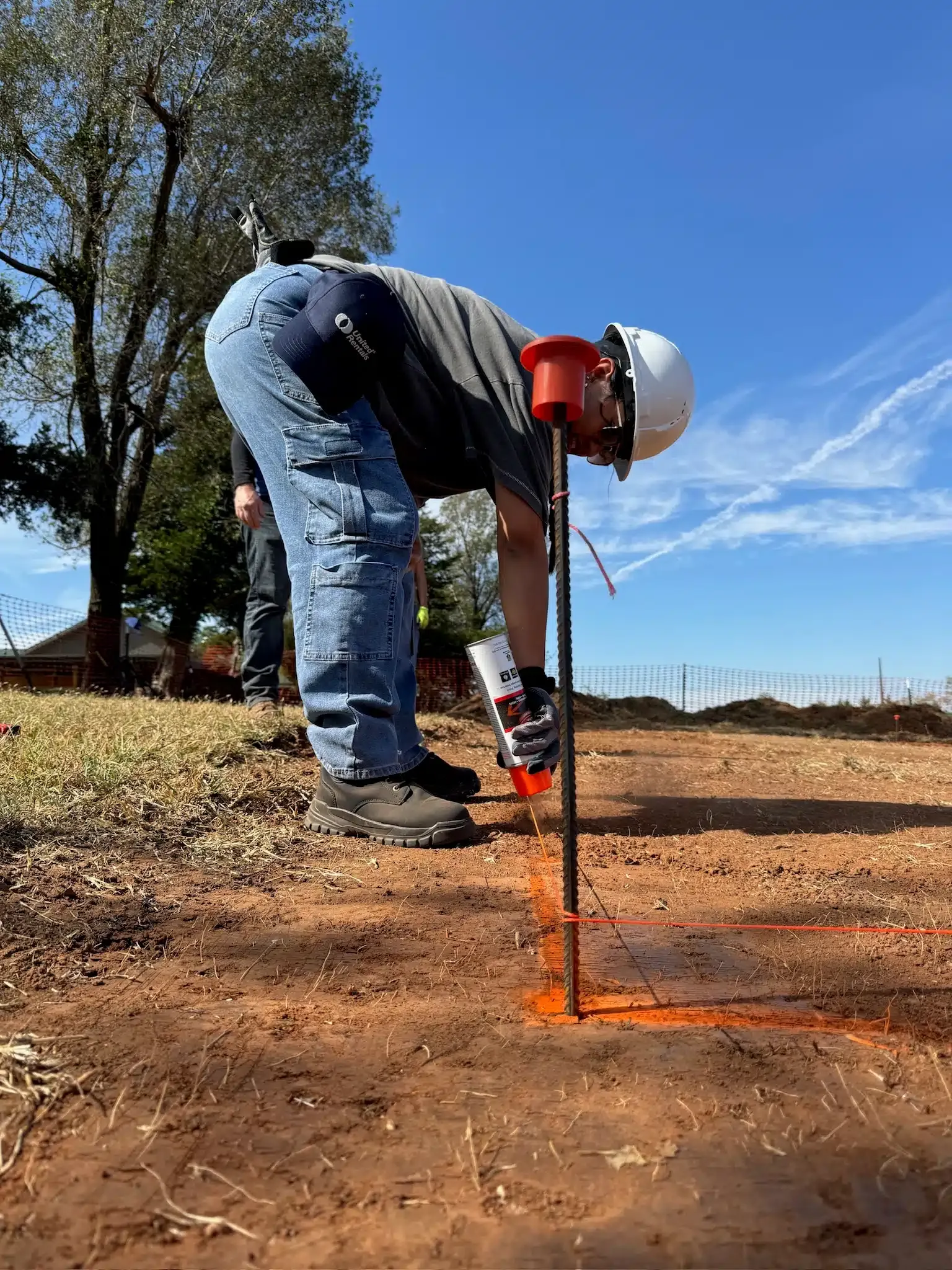
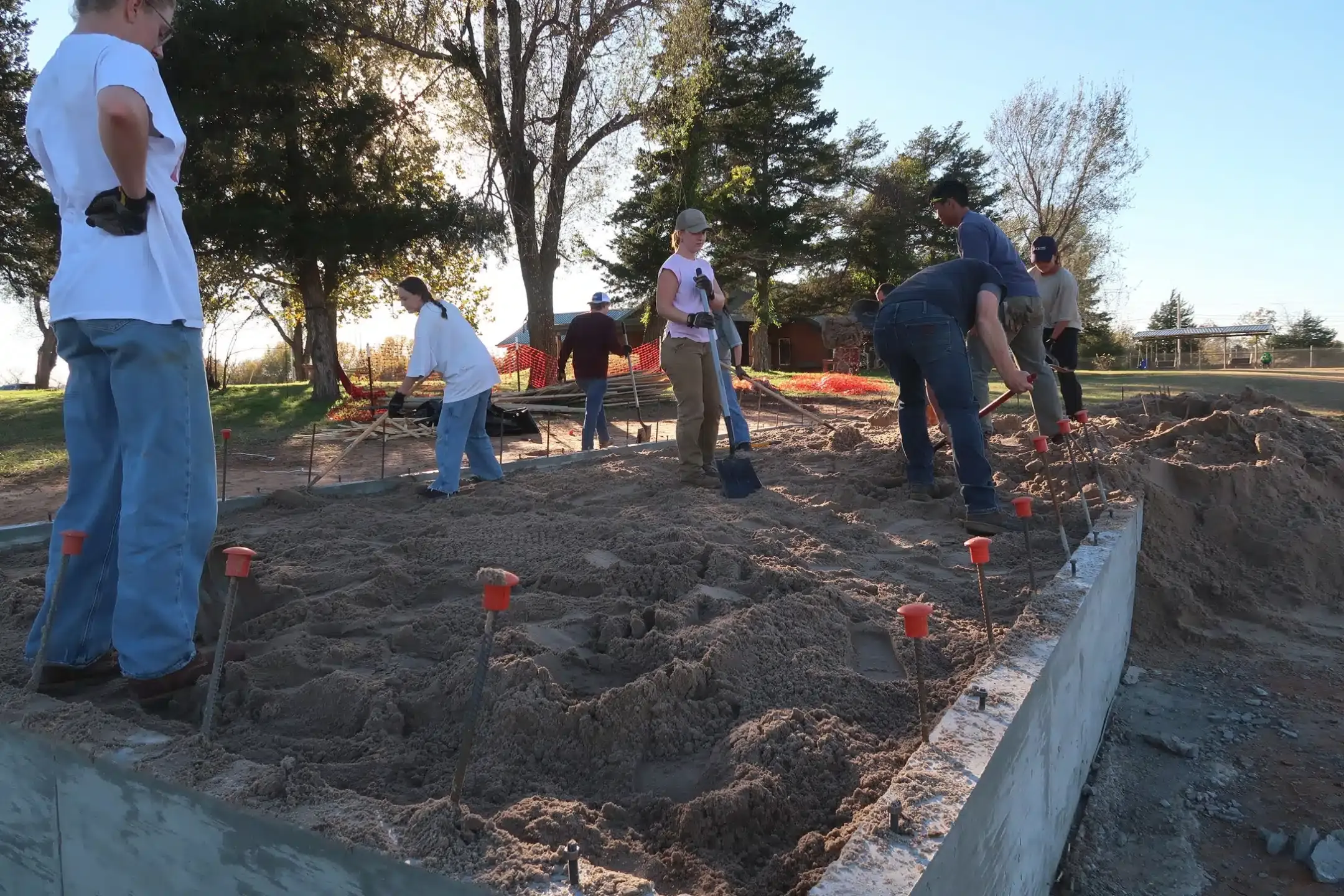
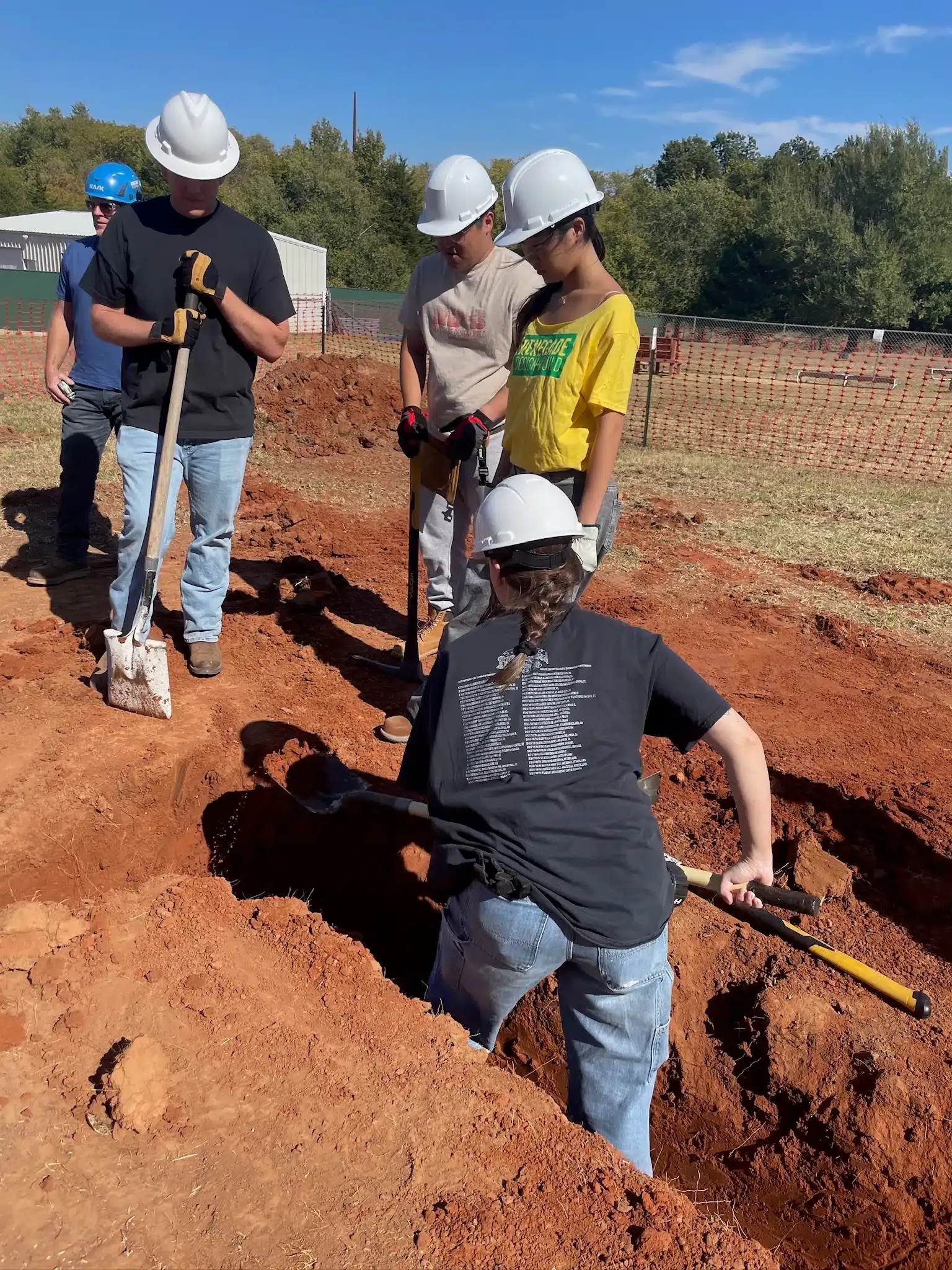
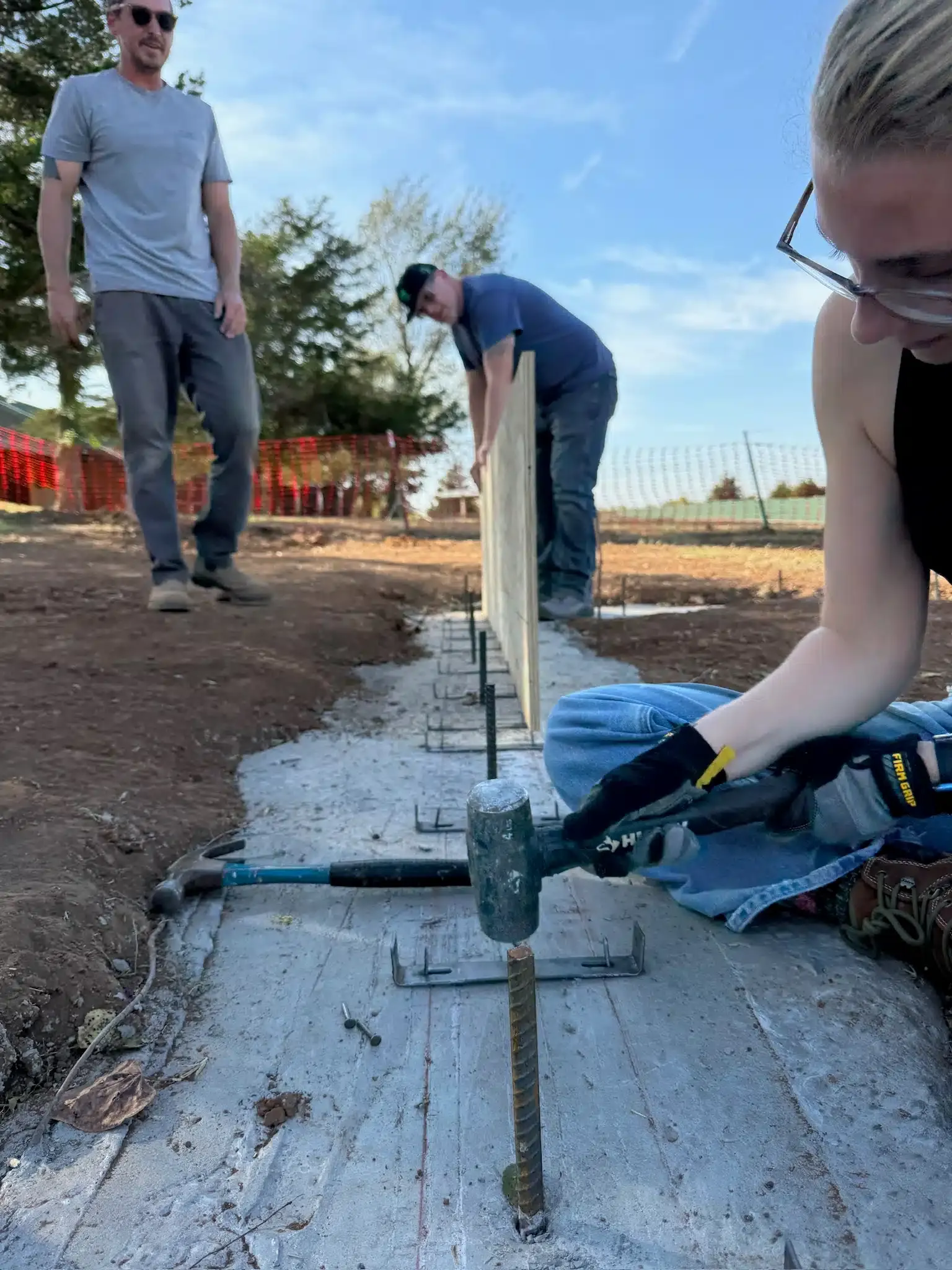
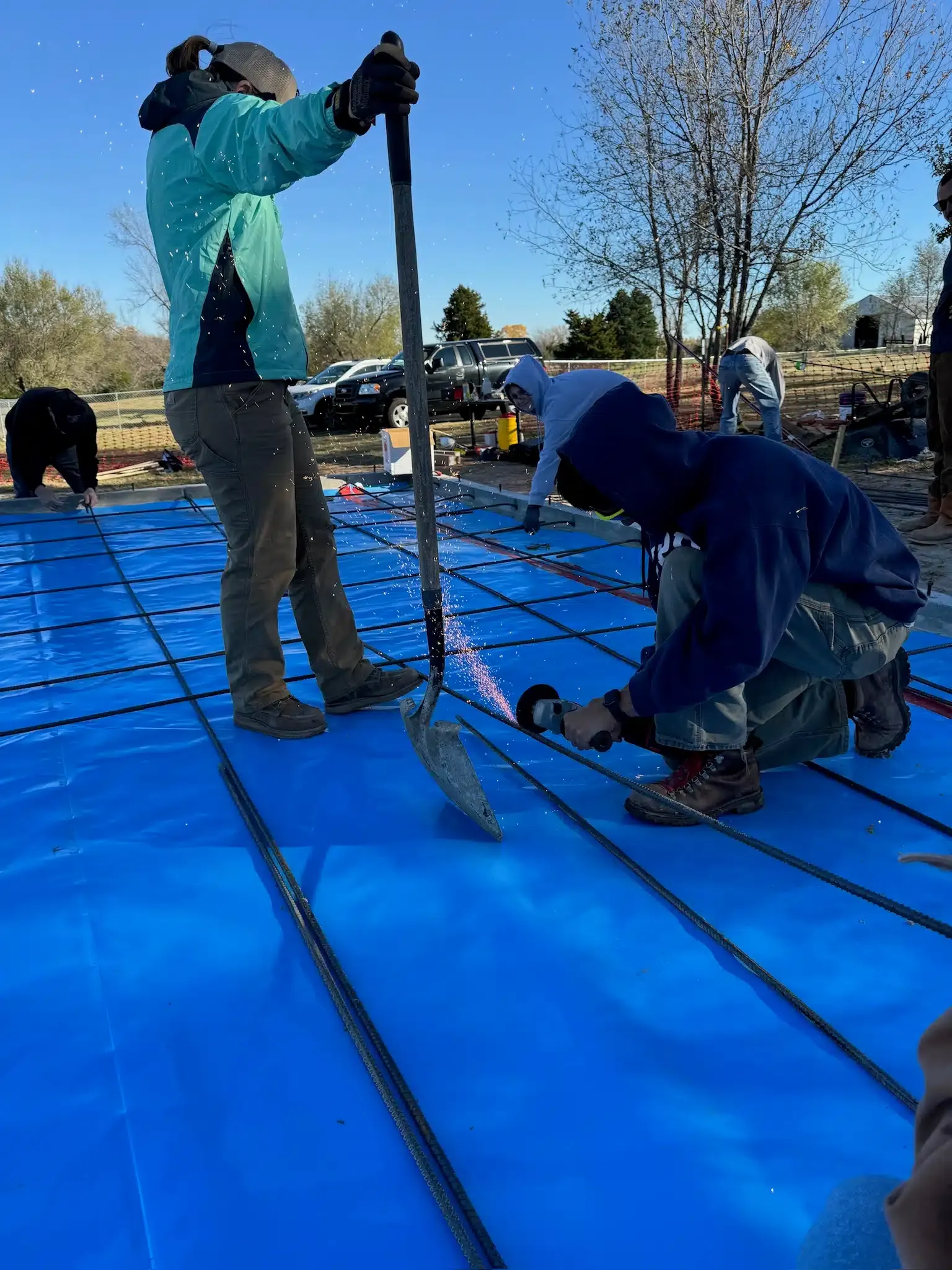
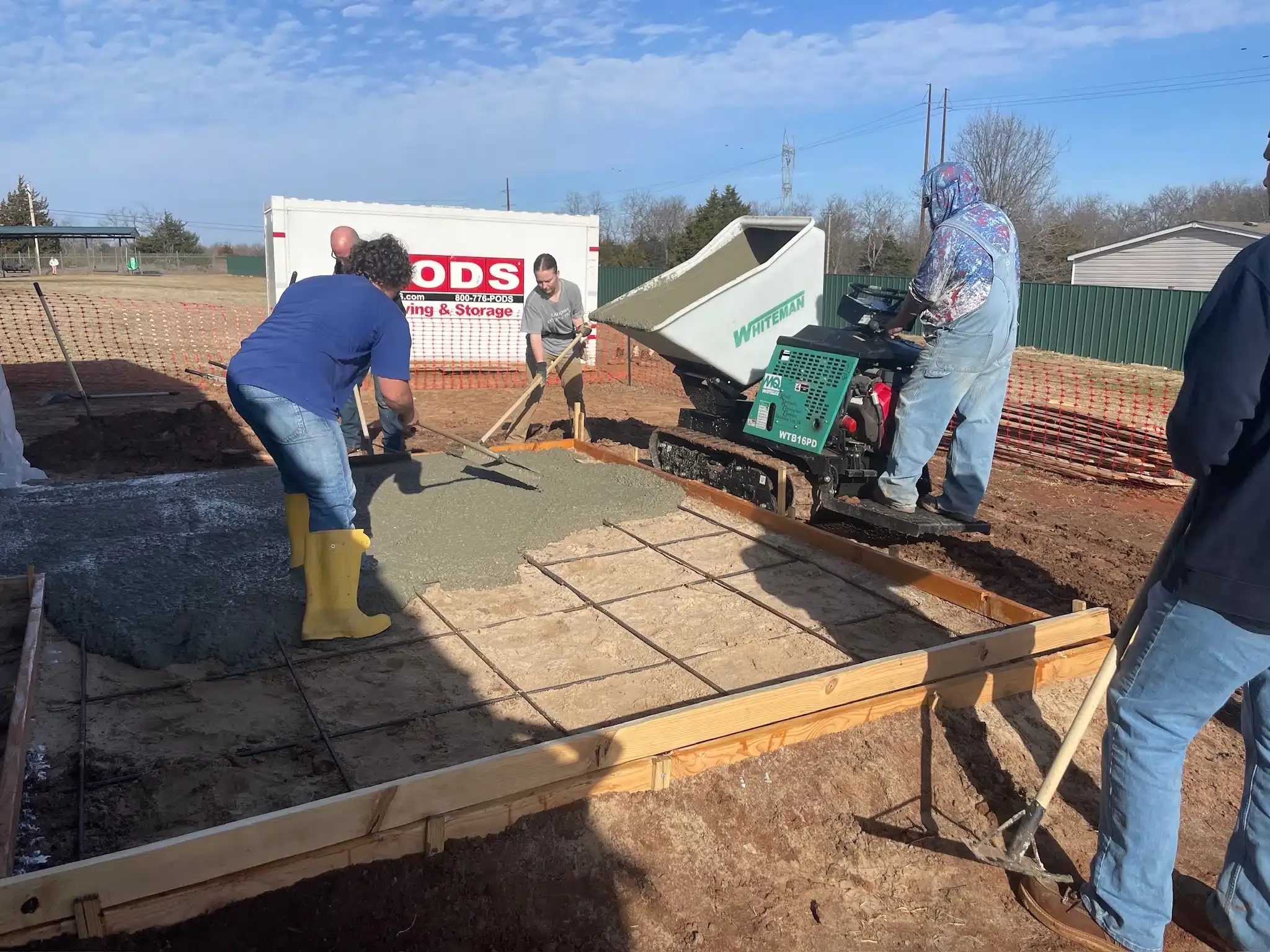
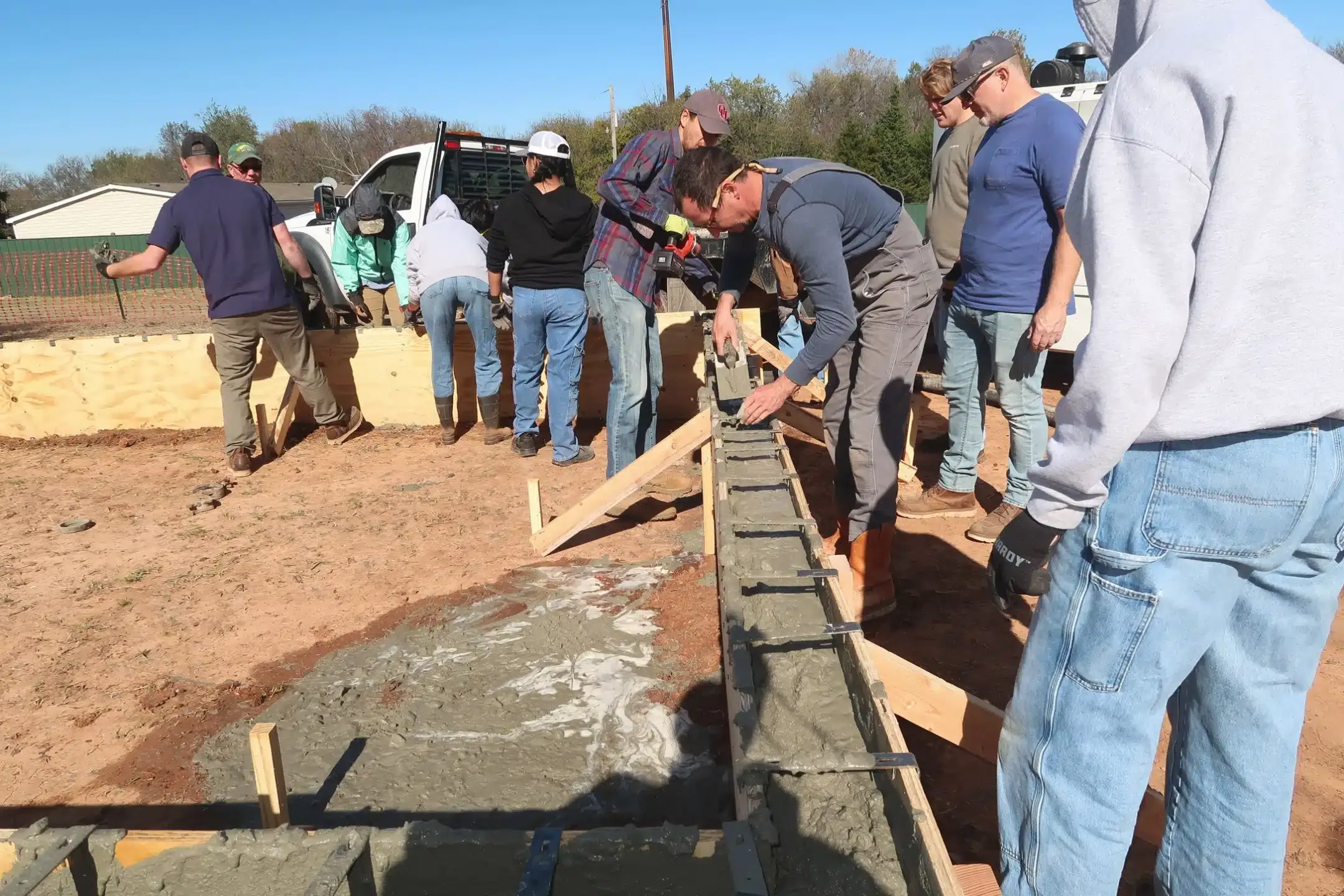
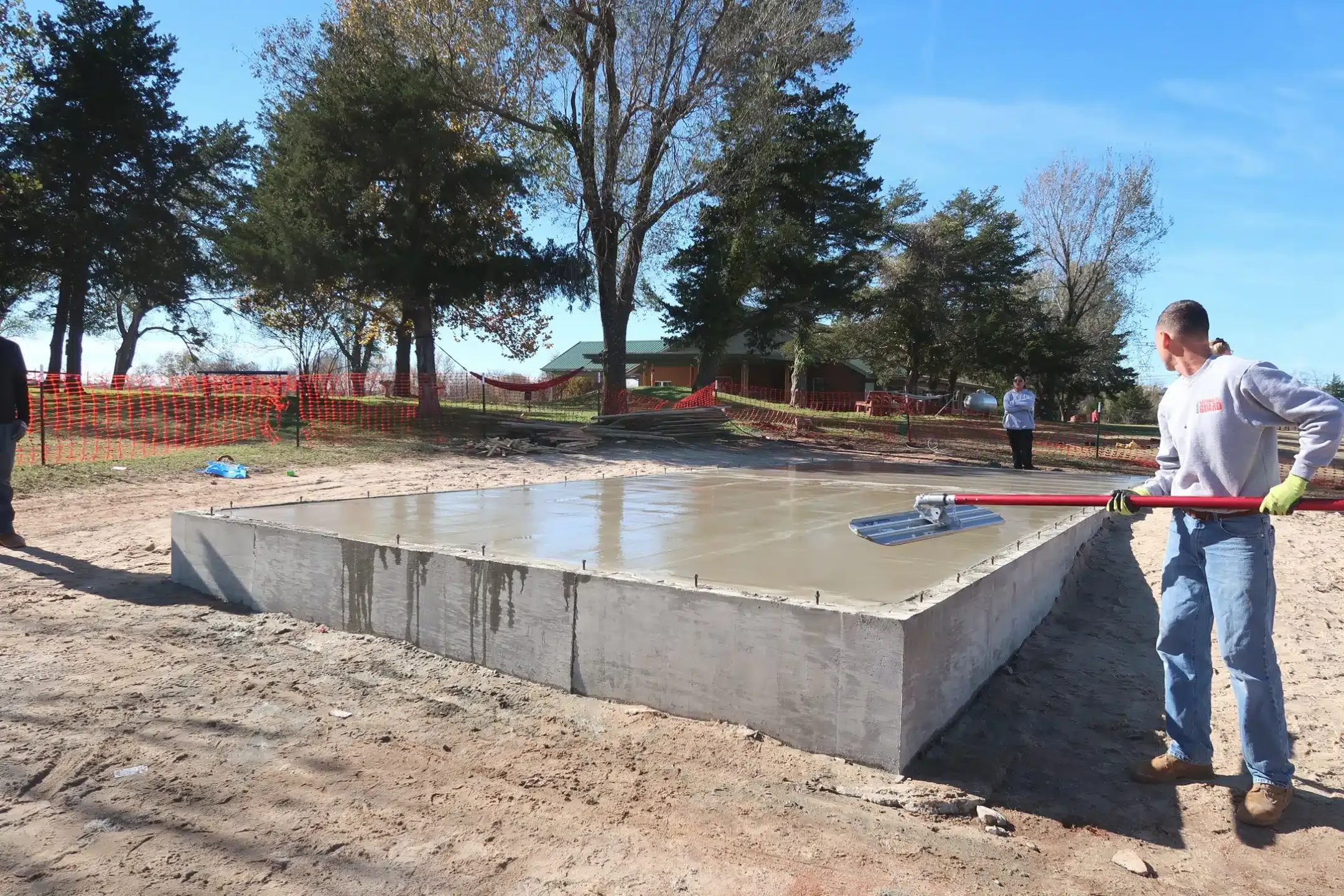
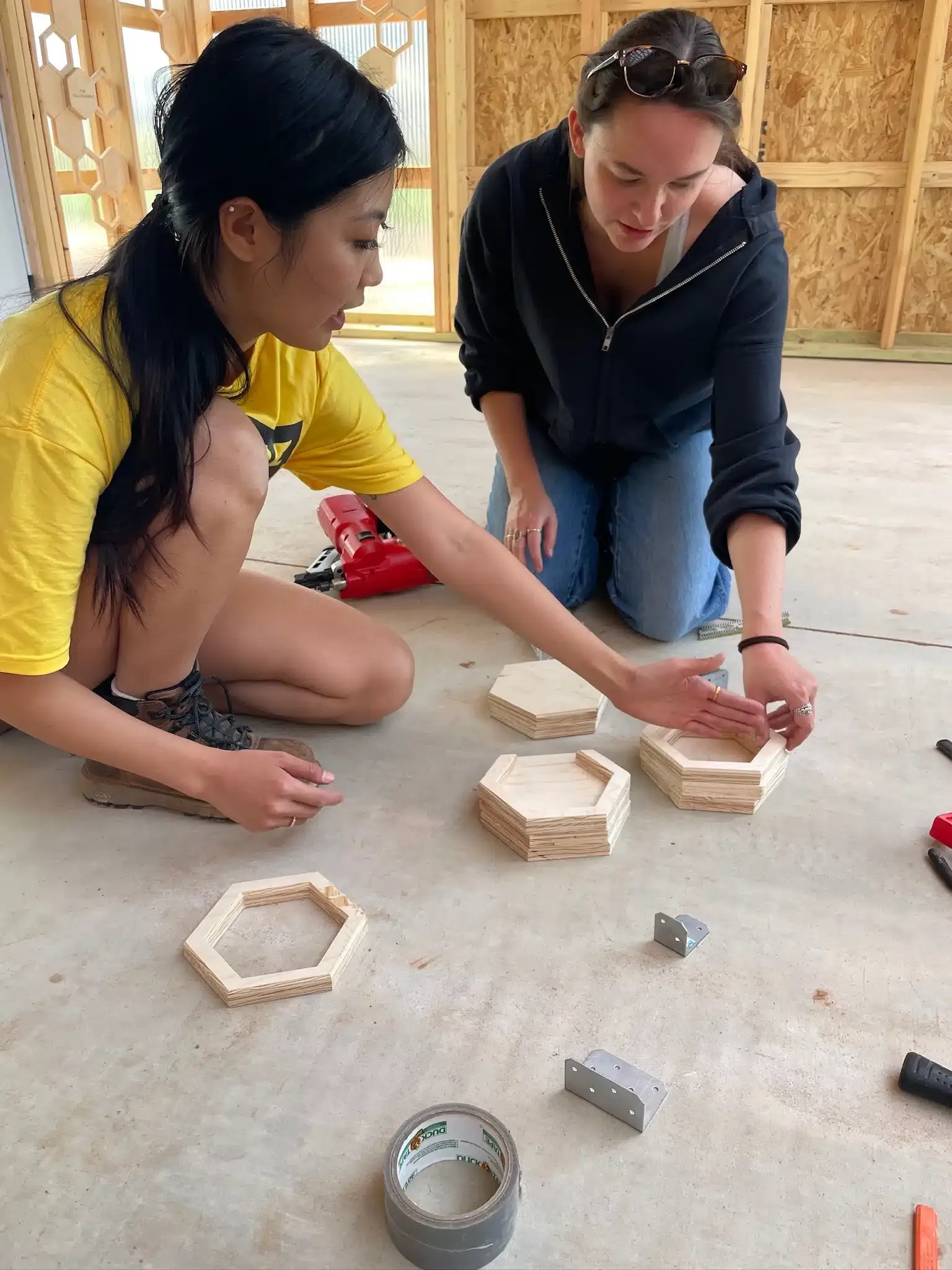
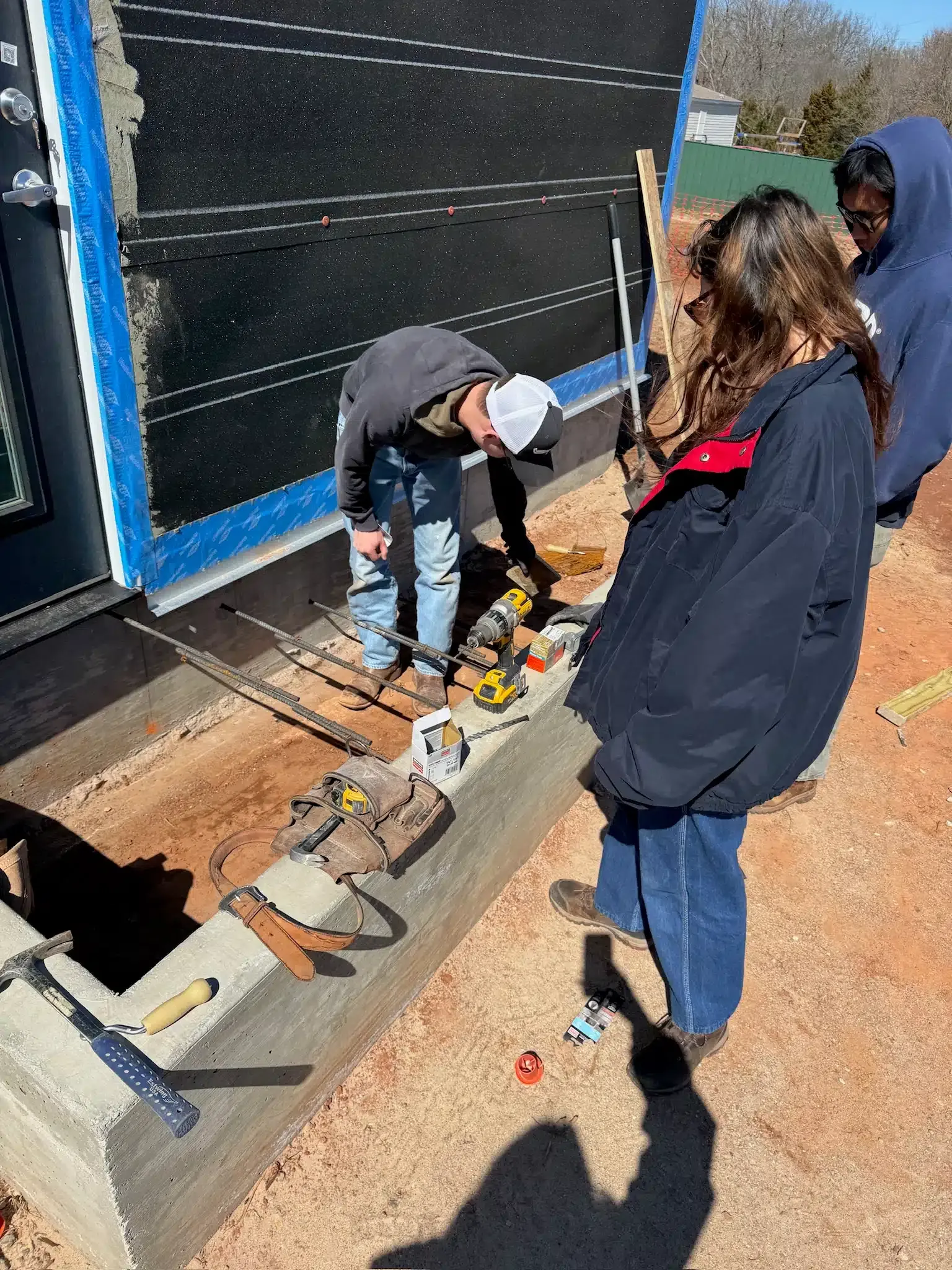
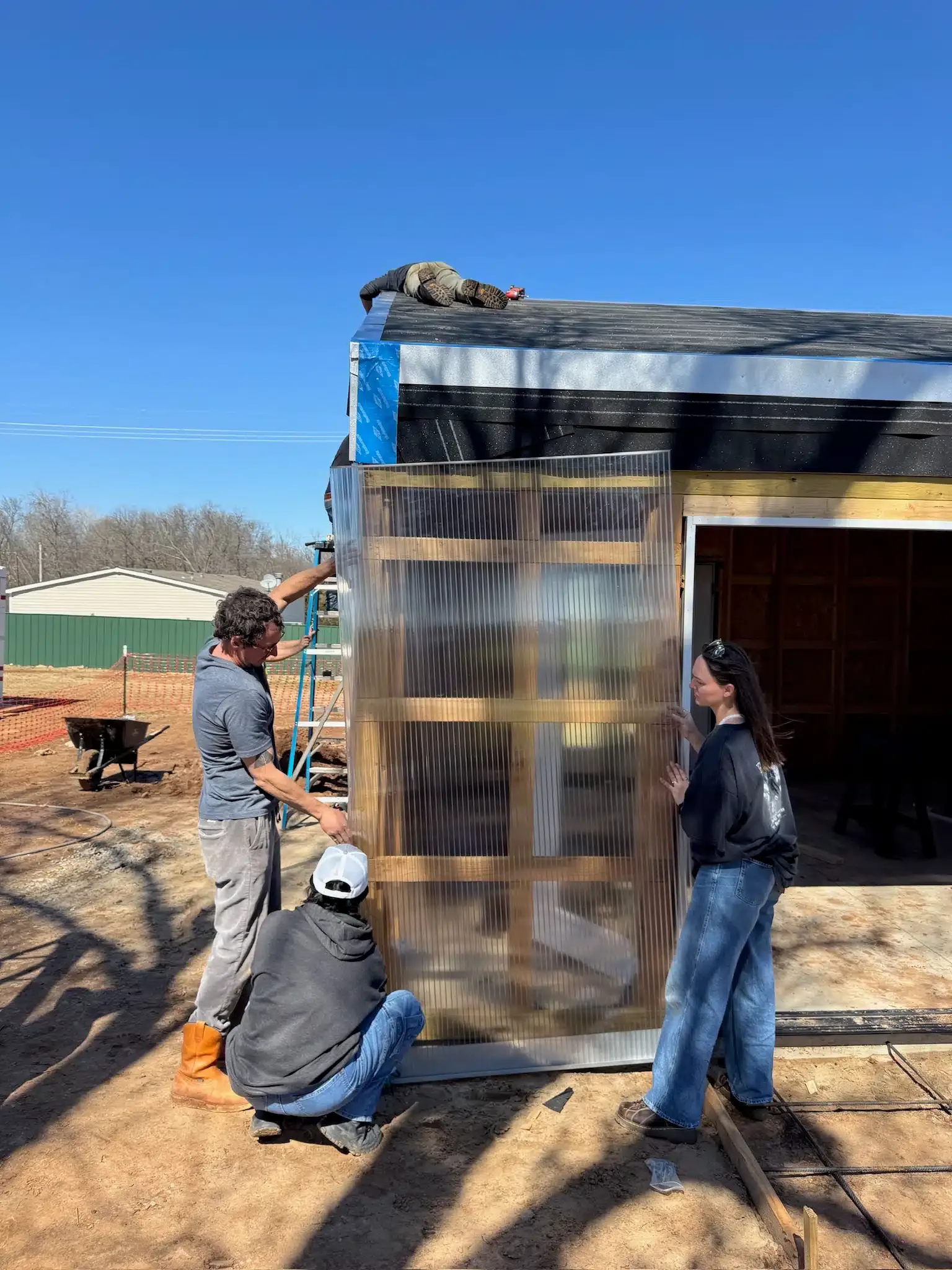
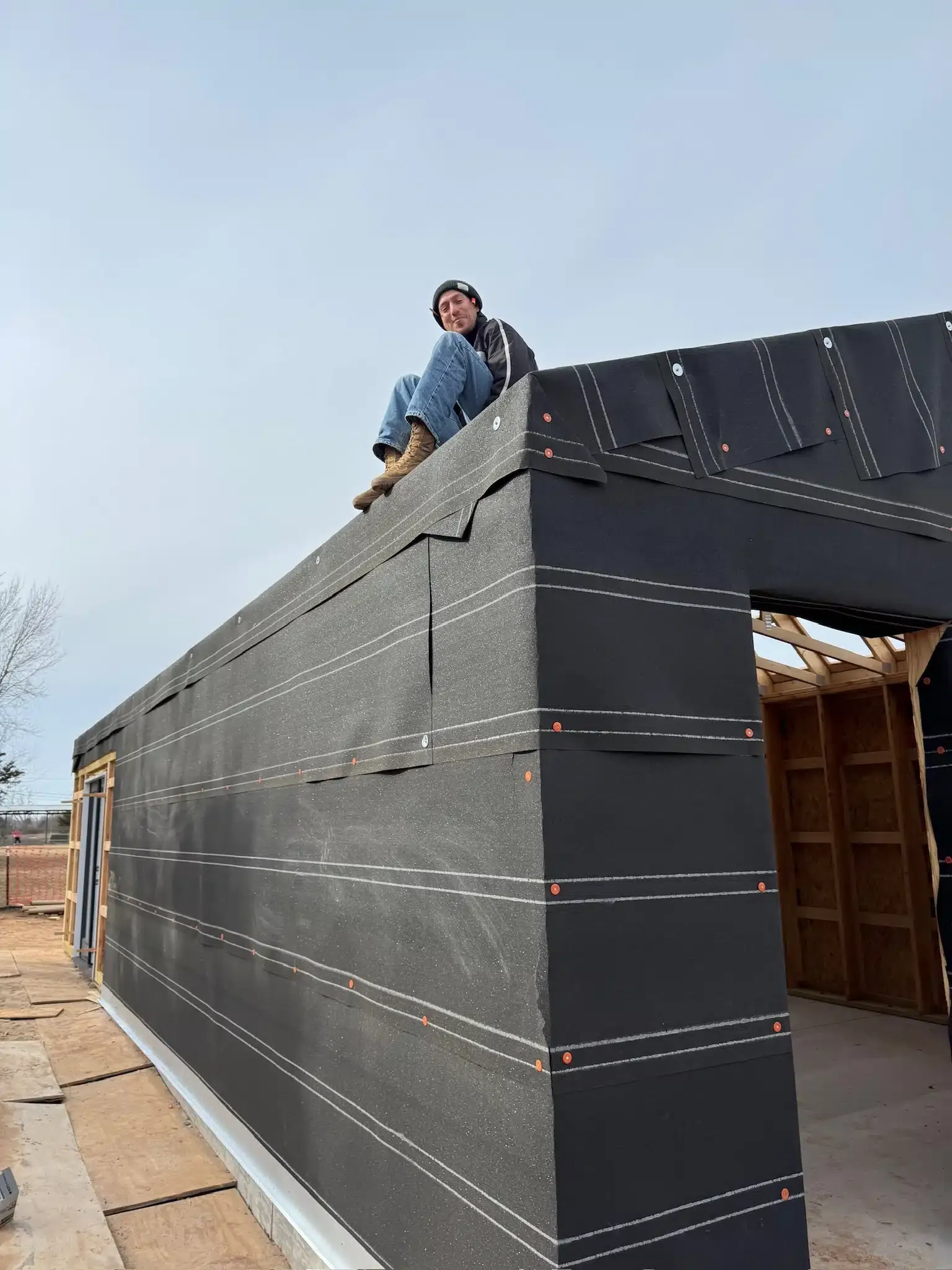
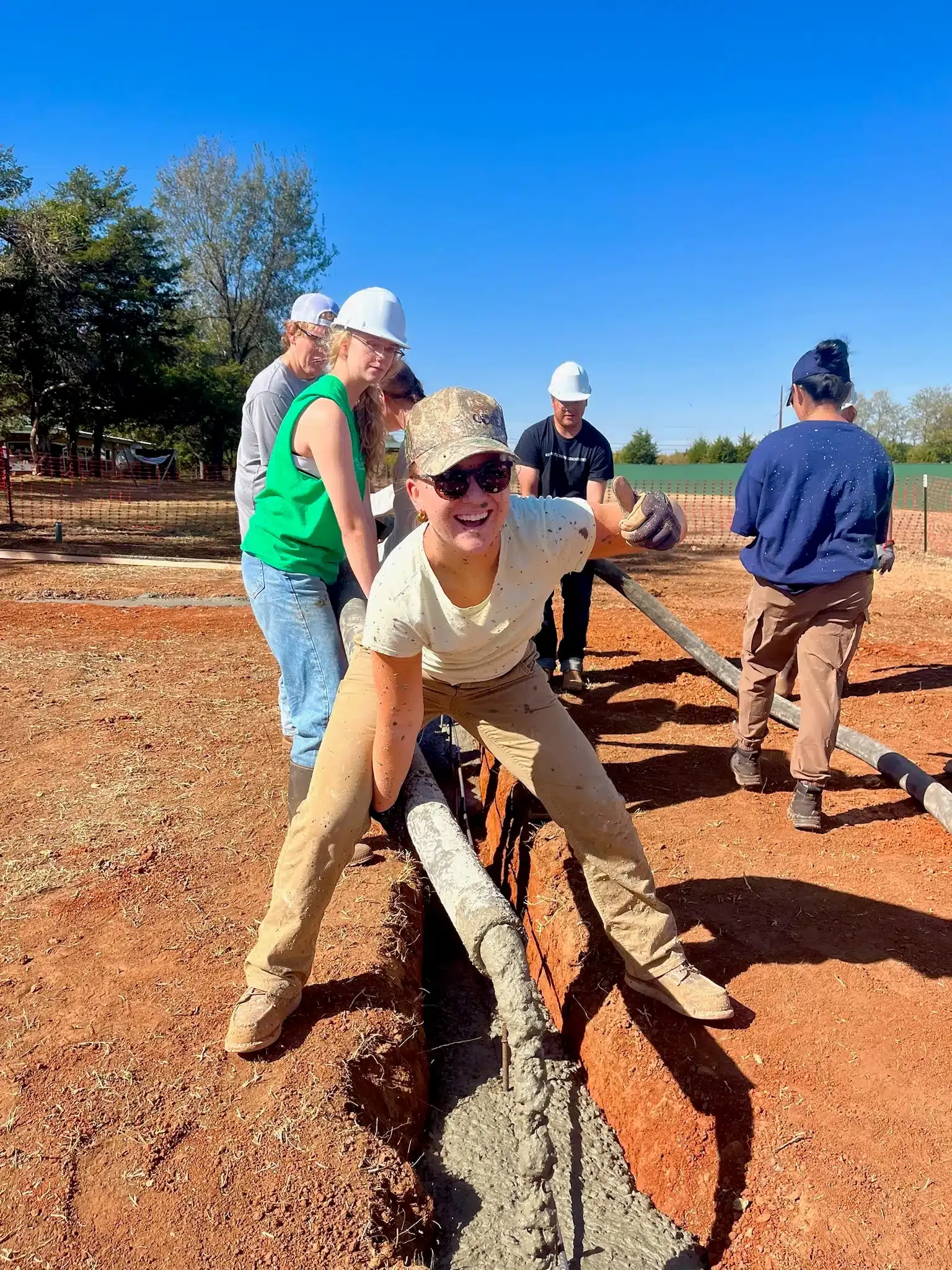
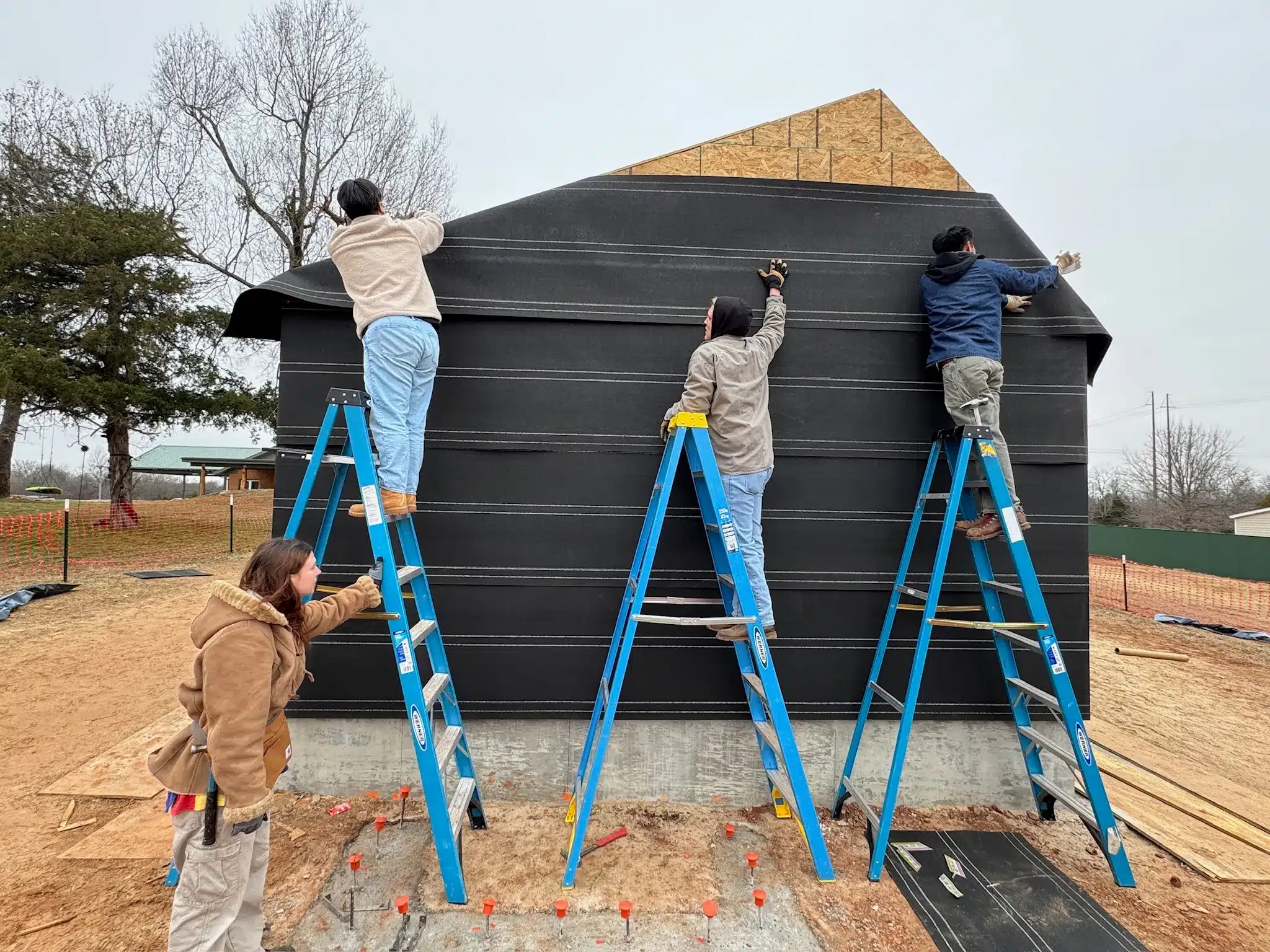
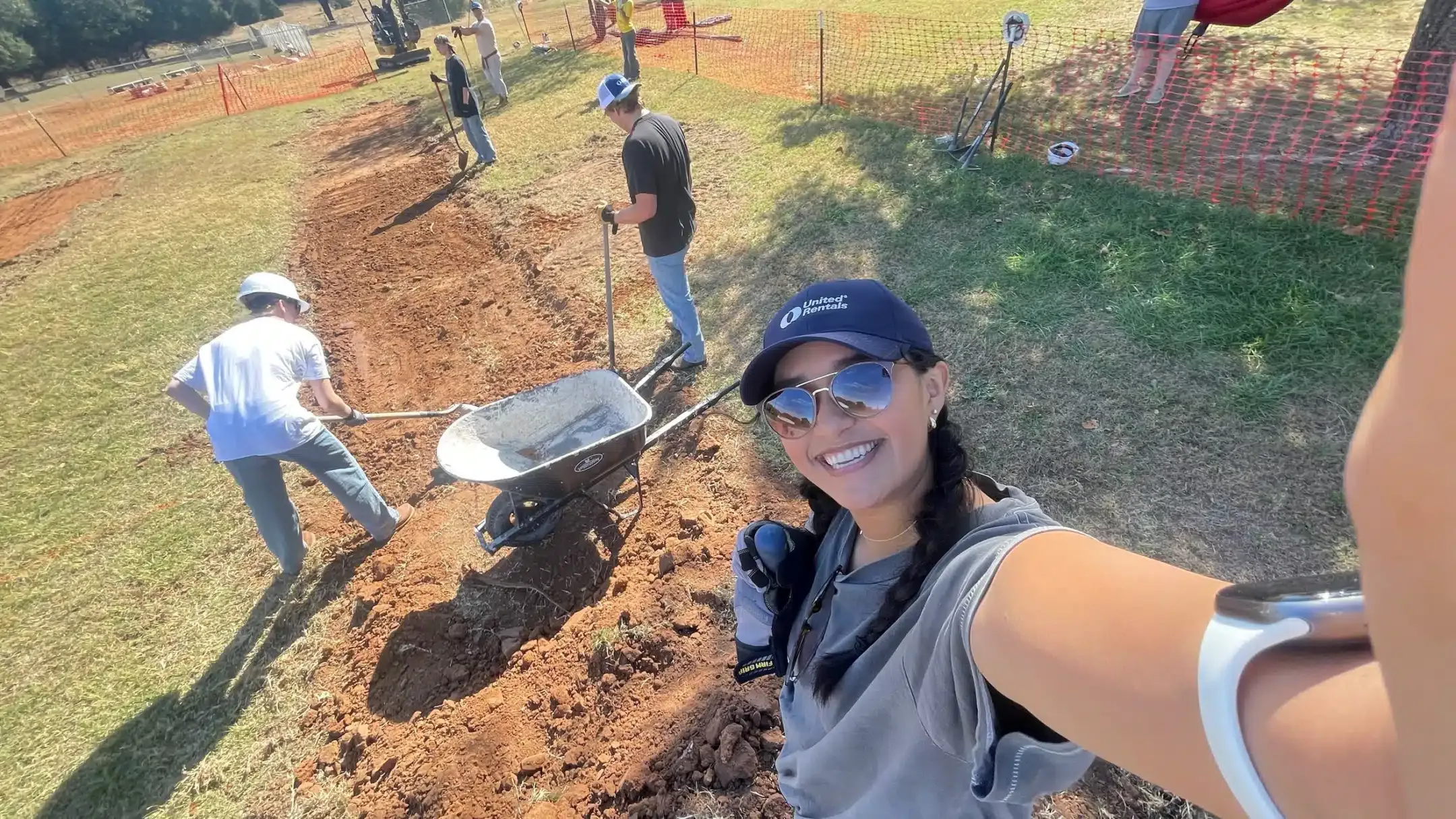
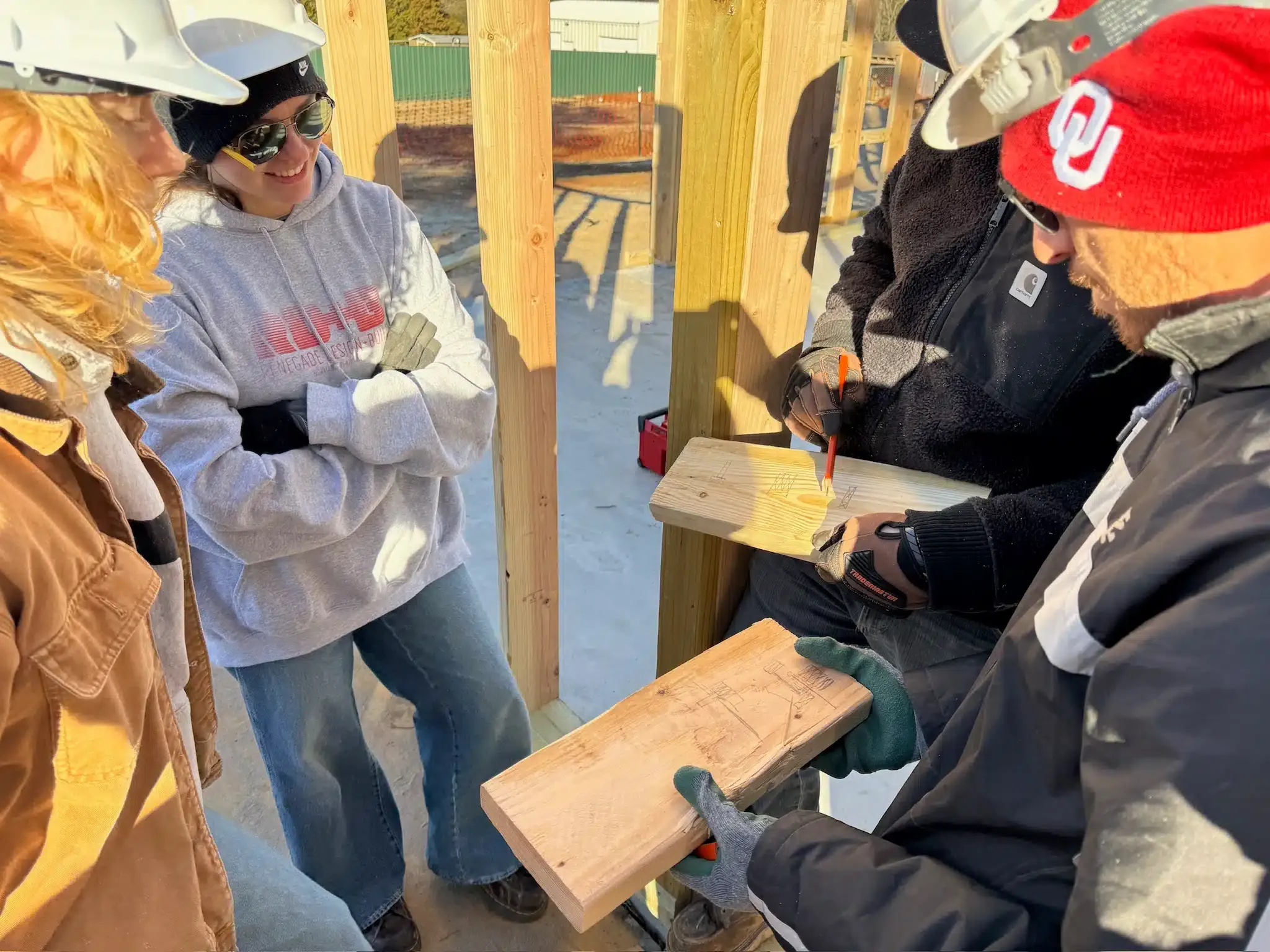
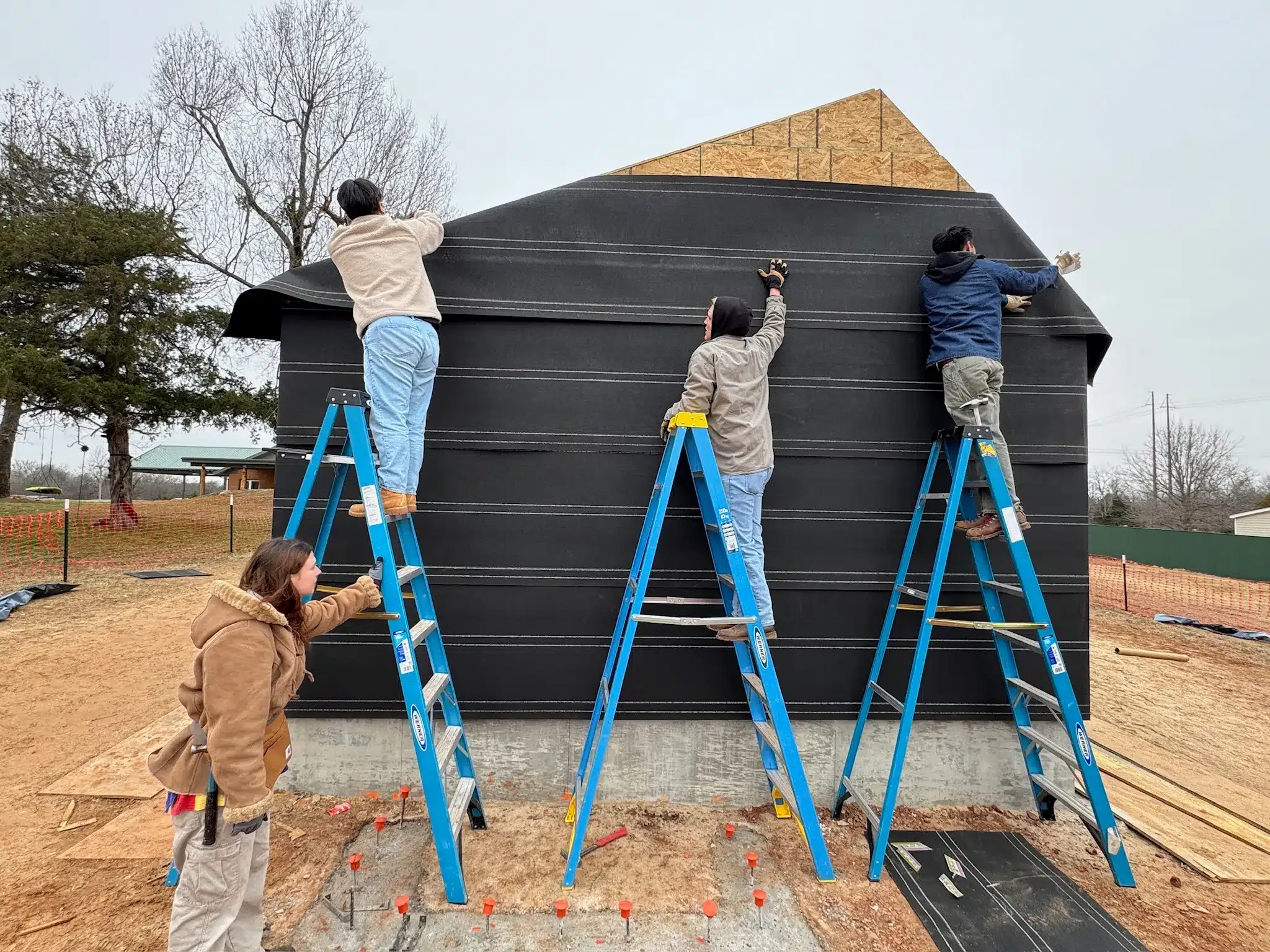
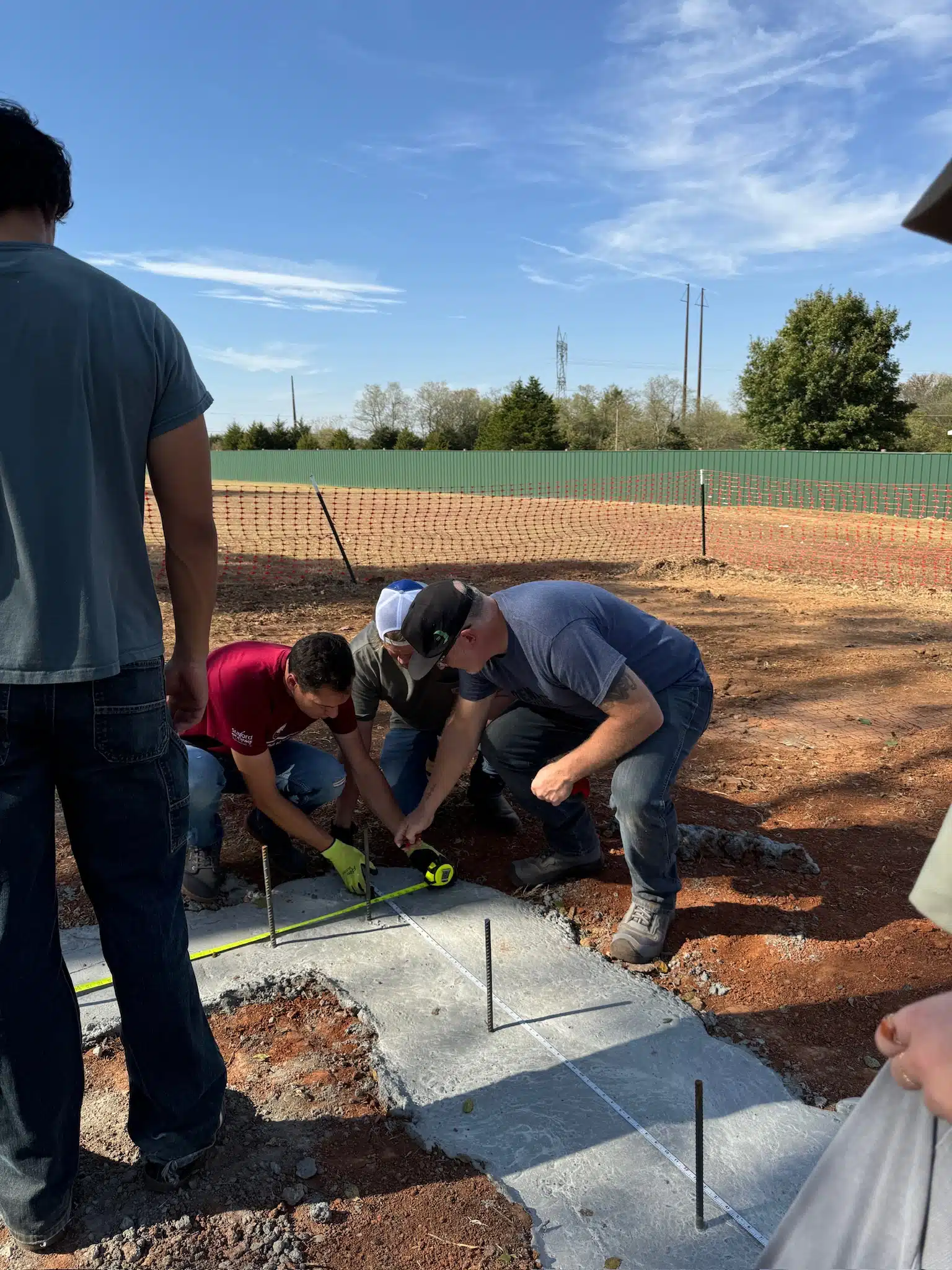
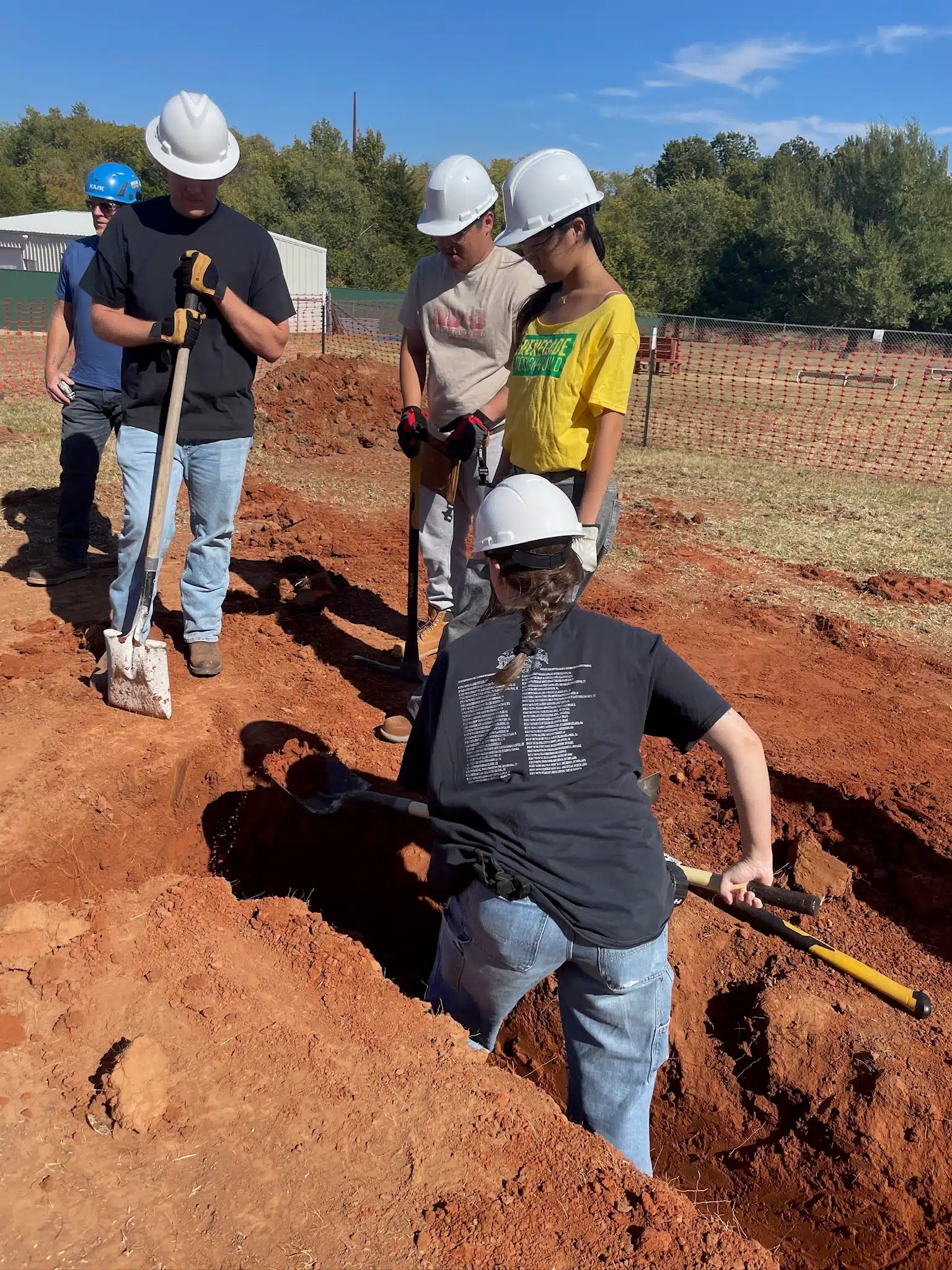
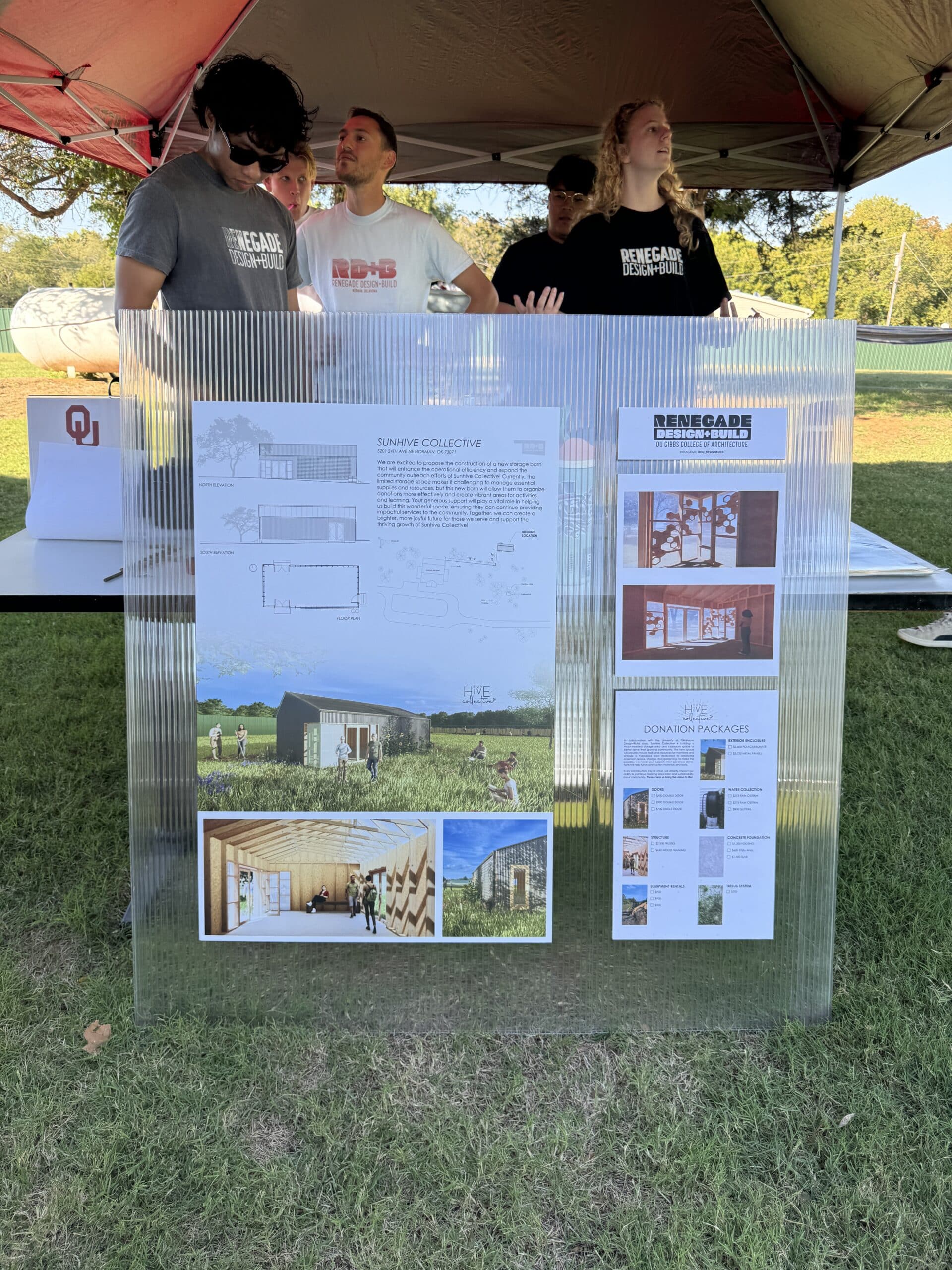
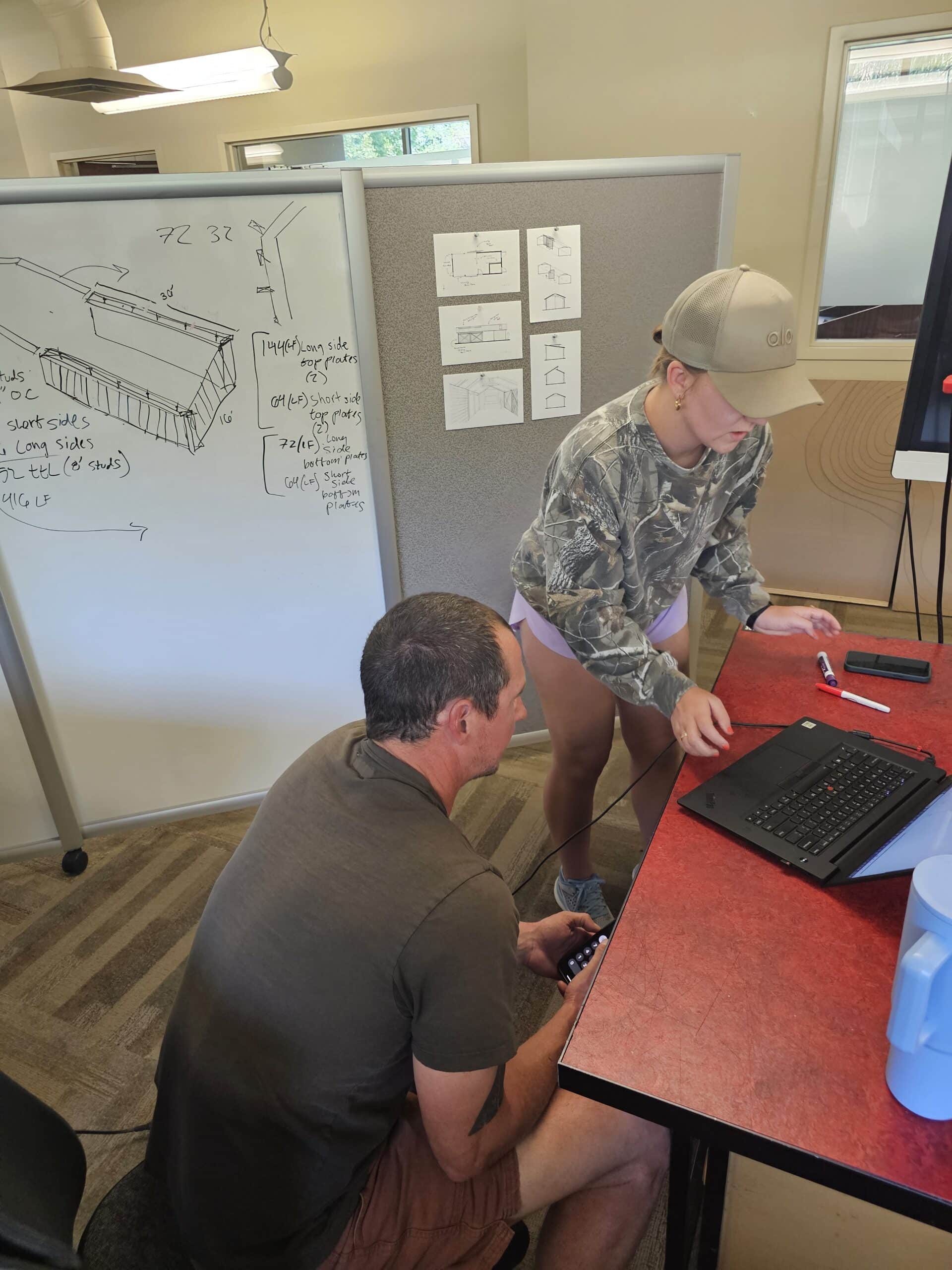
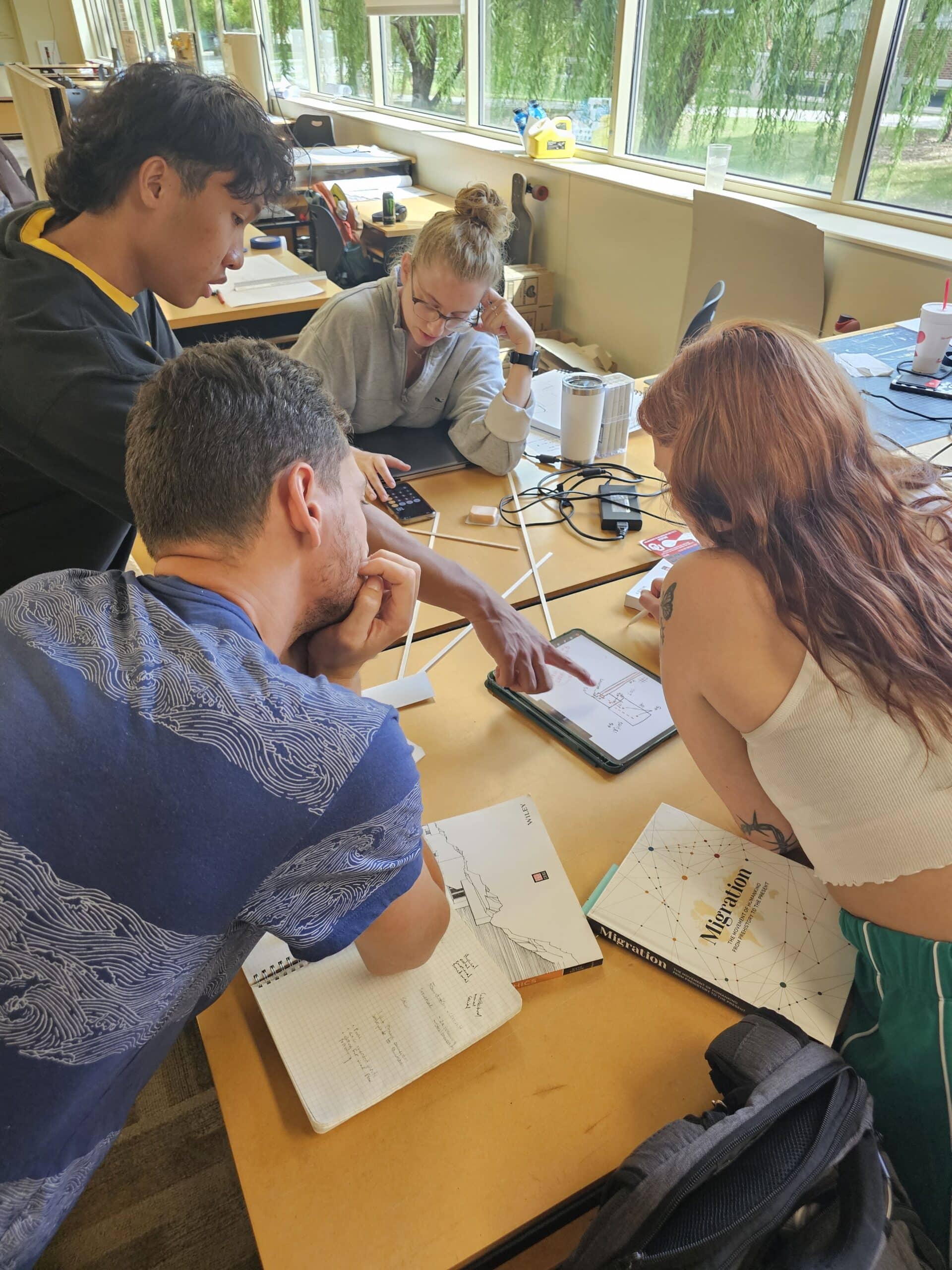
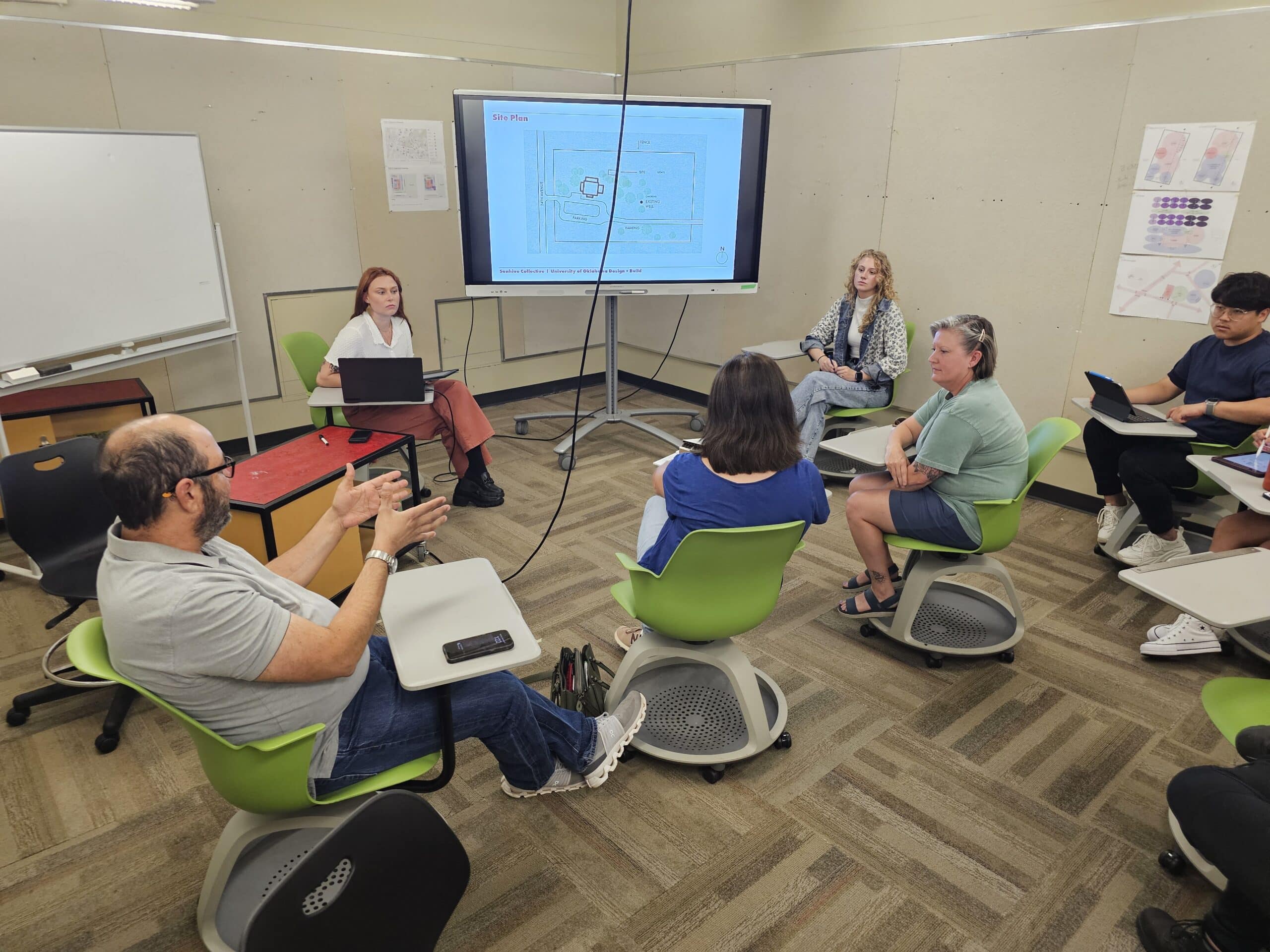
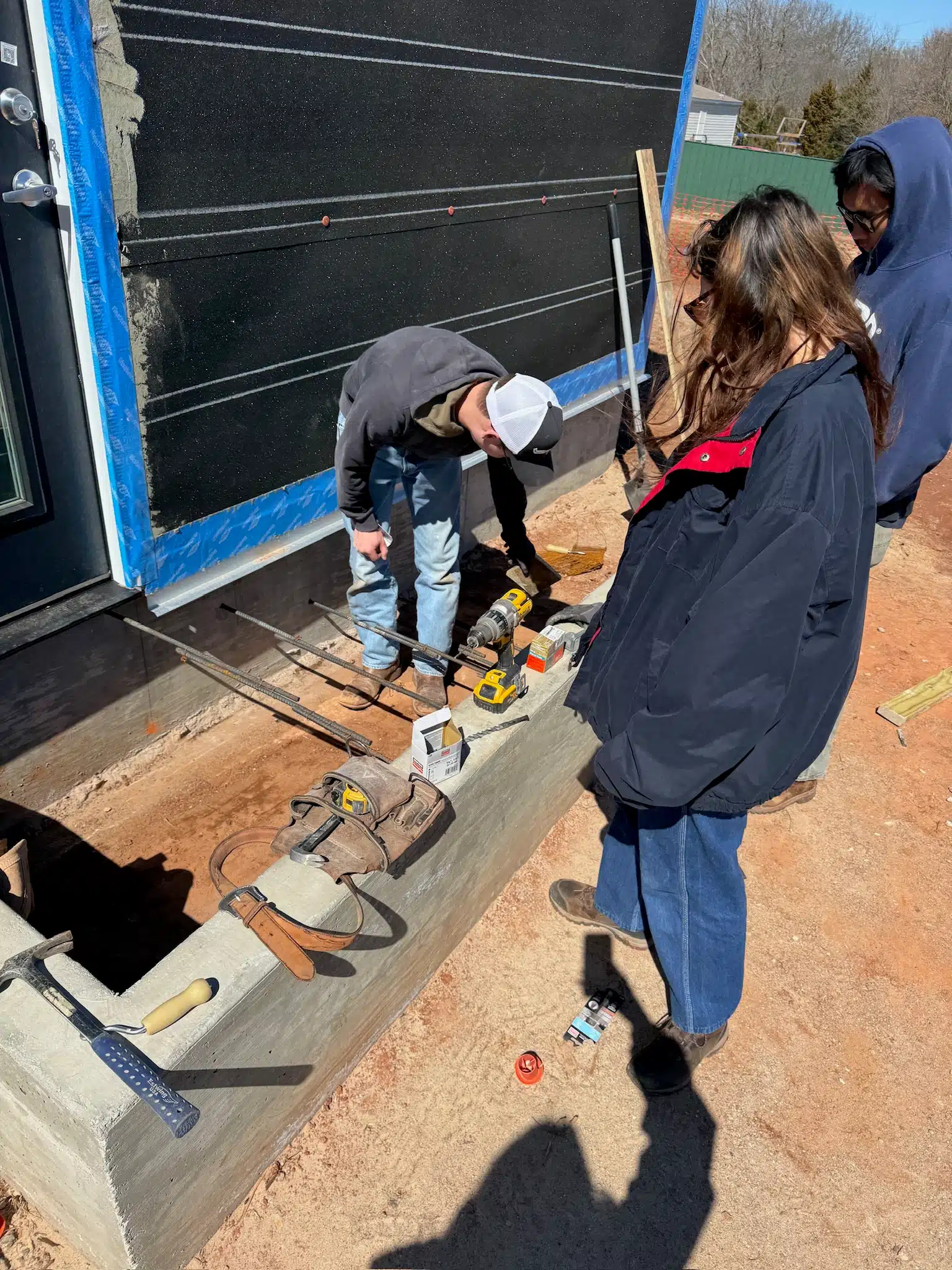
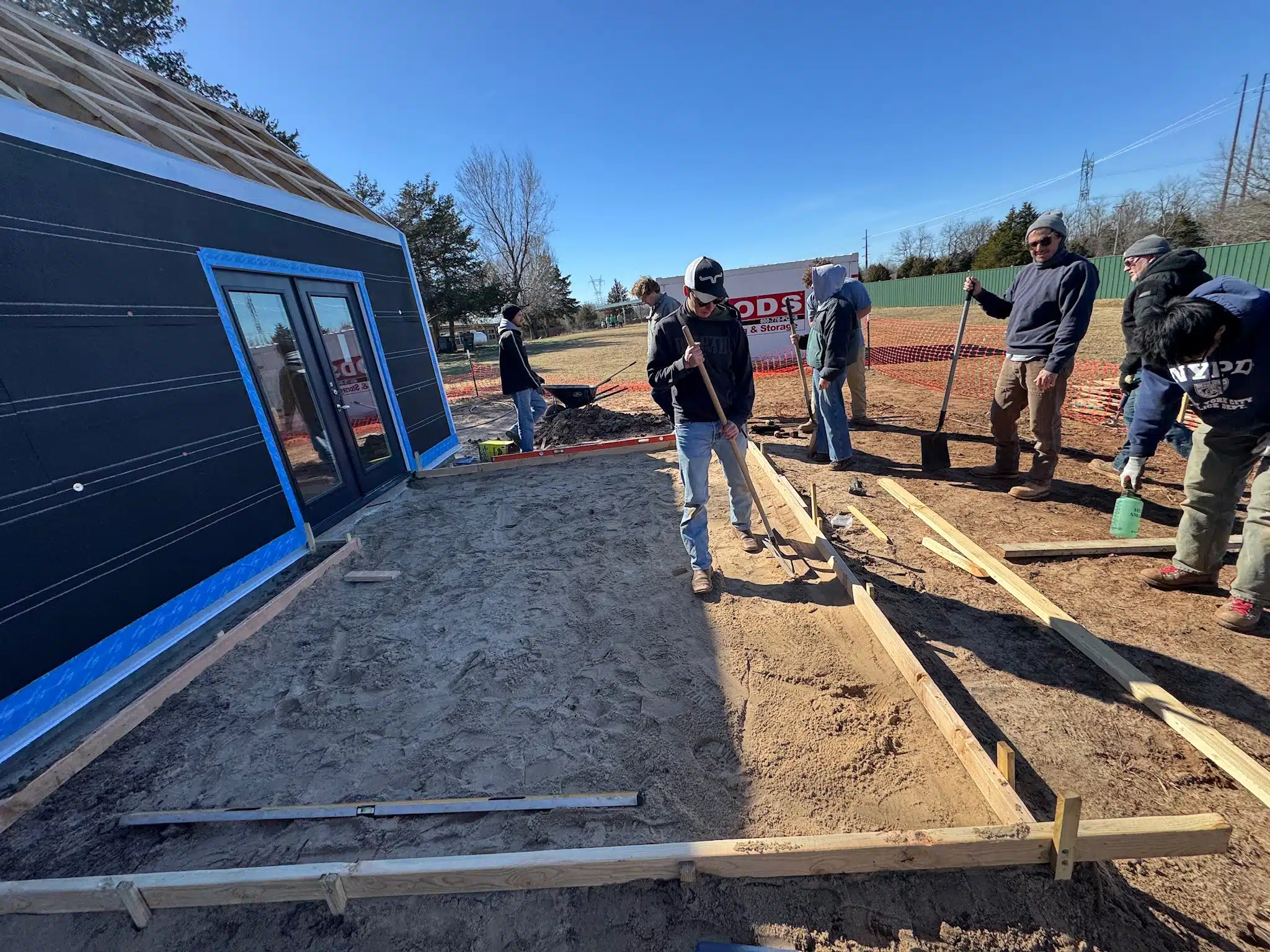
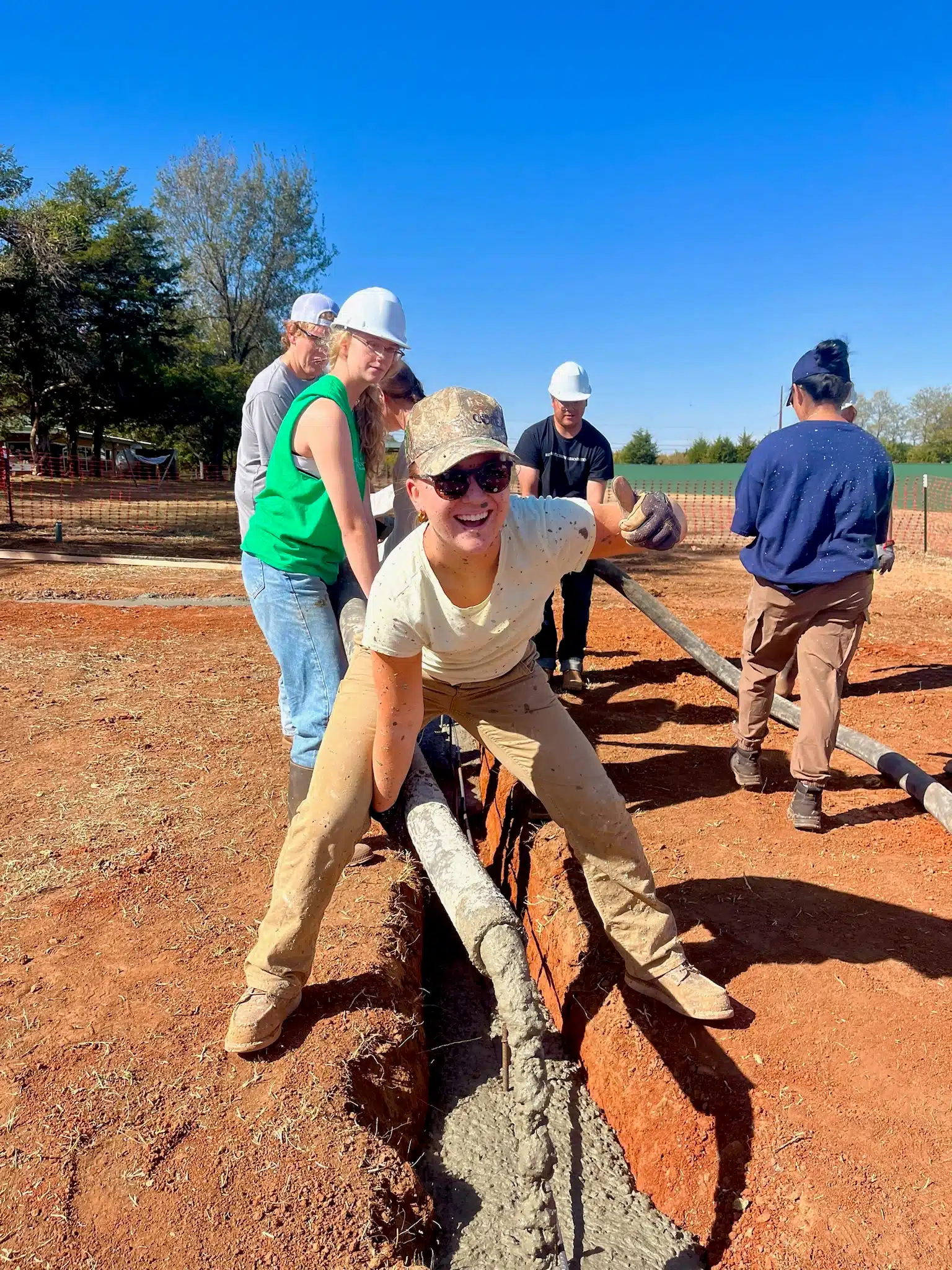
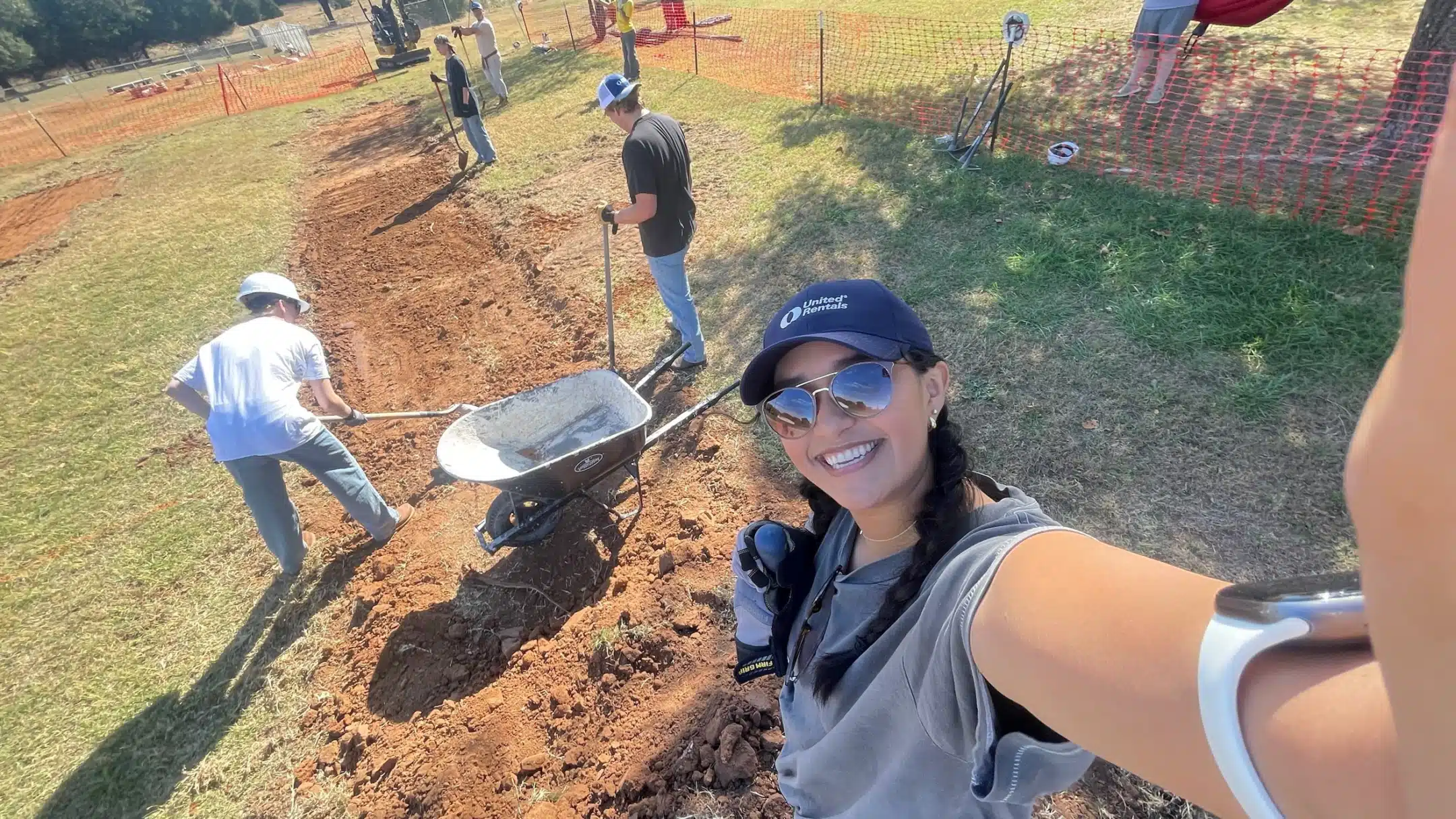
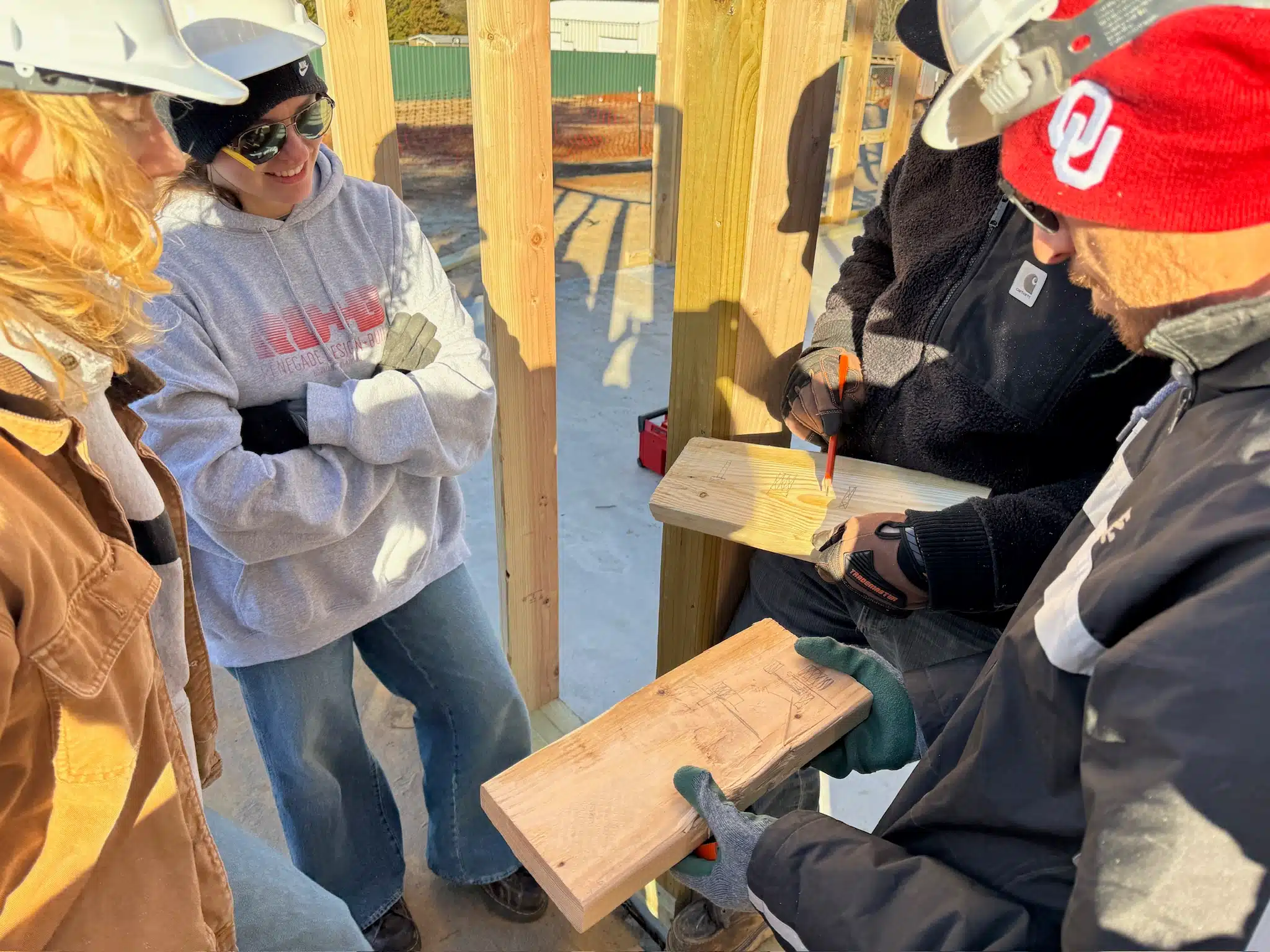
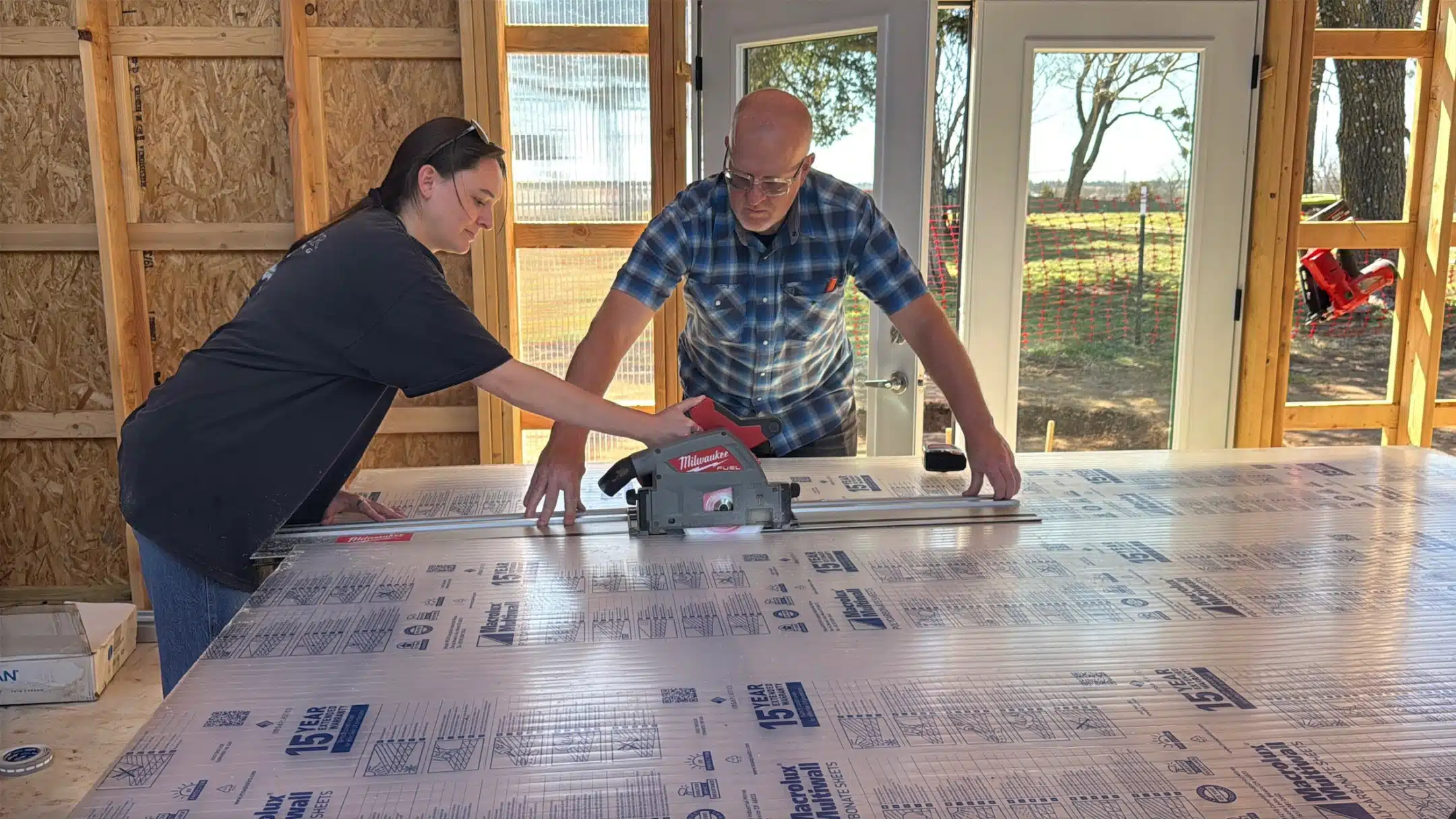
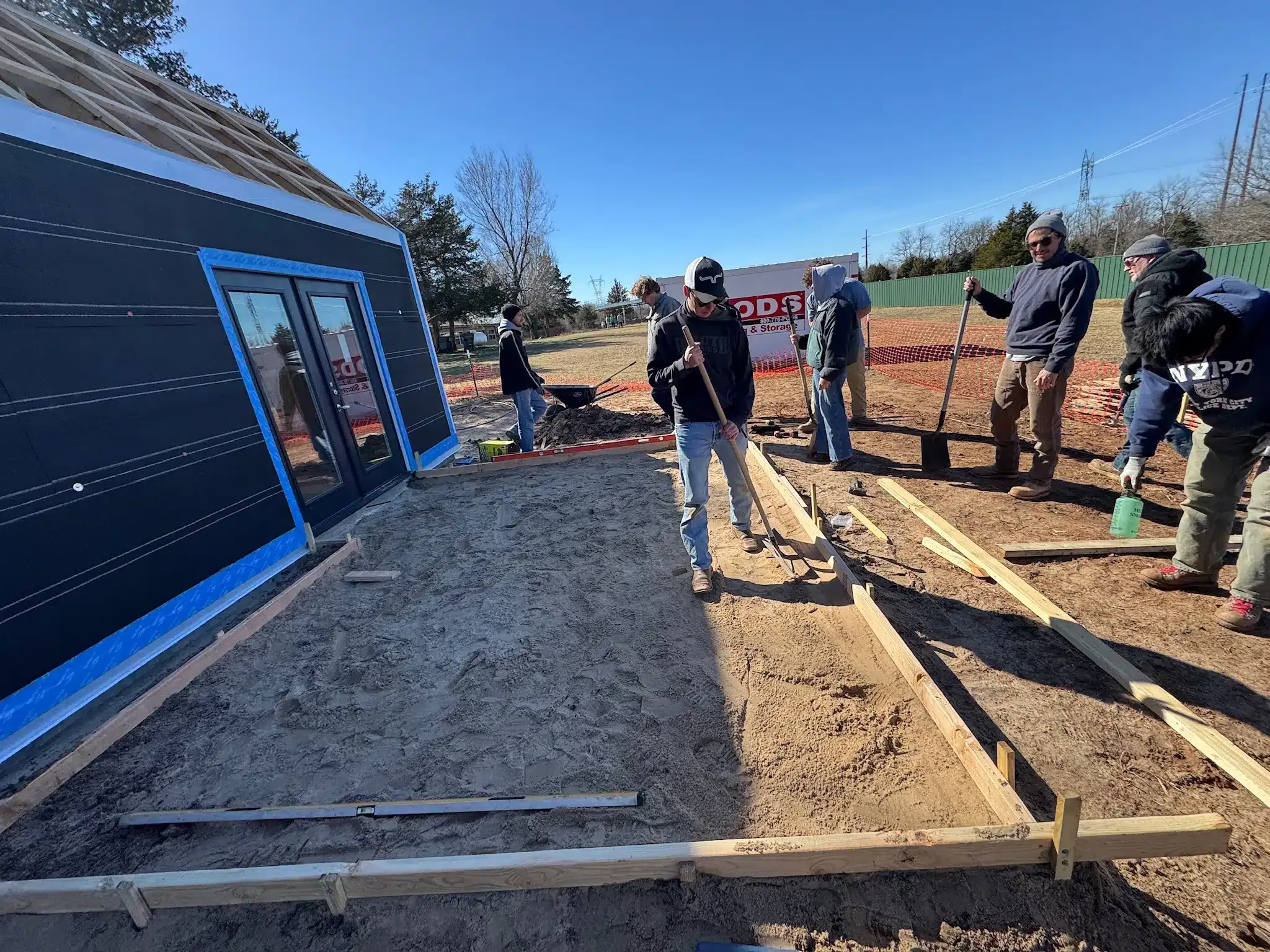
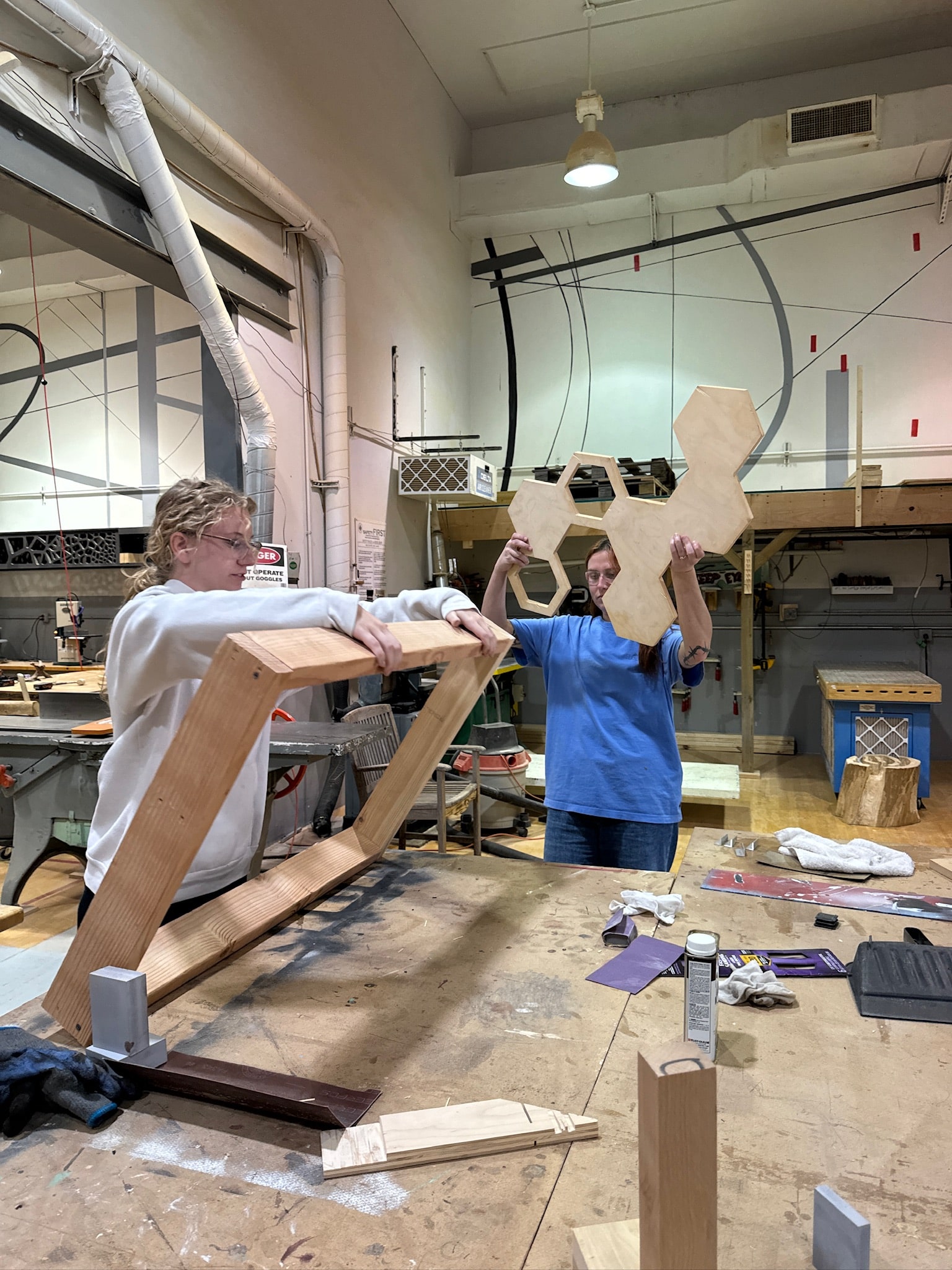
The build process emphasized local engagement and educational collaboration, echoing the ethos of the American School Design Build program. From early schematic design to on-site construction, the project involved iterative decision-making, collaborative problem-solving, and resourceful material use. This process created not only a building but also a learning opportunity, students, community members, and tradespeople worked side by side, each contributing their expertise to a space that would serve others for decades.

Strategically, the design-build approach allowed for flexibility and adaptation on site. As materials arrived and community needs evolved, details were fine-tuned to enhance accessibility, maximize natural light, and integrate features that would support SunHive’s unique programming, from gardening projects to group workshops.

Sustainability & Material Strategy

The SunHive Collective Community Space embodies a practical yet intentional approach to sustainability, using materials and systems that align with both budget realities and long-term stewardship. The corrugated galvanized steel siding and roofing provide exceptional durability and weather resistance, ensuring the building’s longevity with minimal maintenance. These robust exterior elements are paired with locally sourced framing lumber, reducing transportation impacts and supporting regional supply chains.

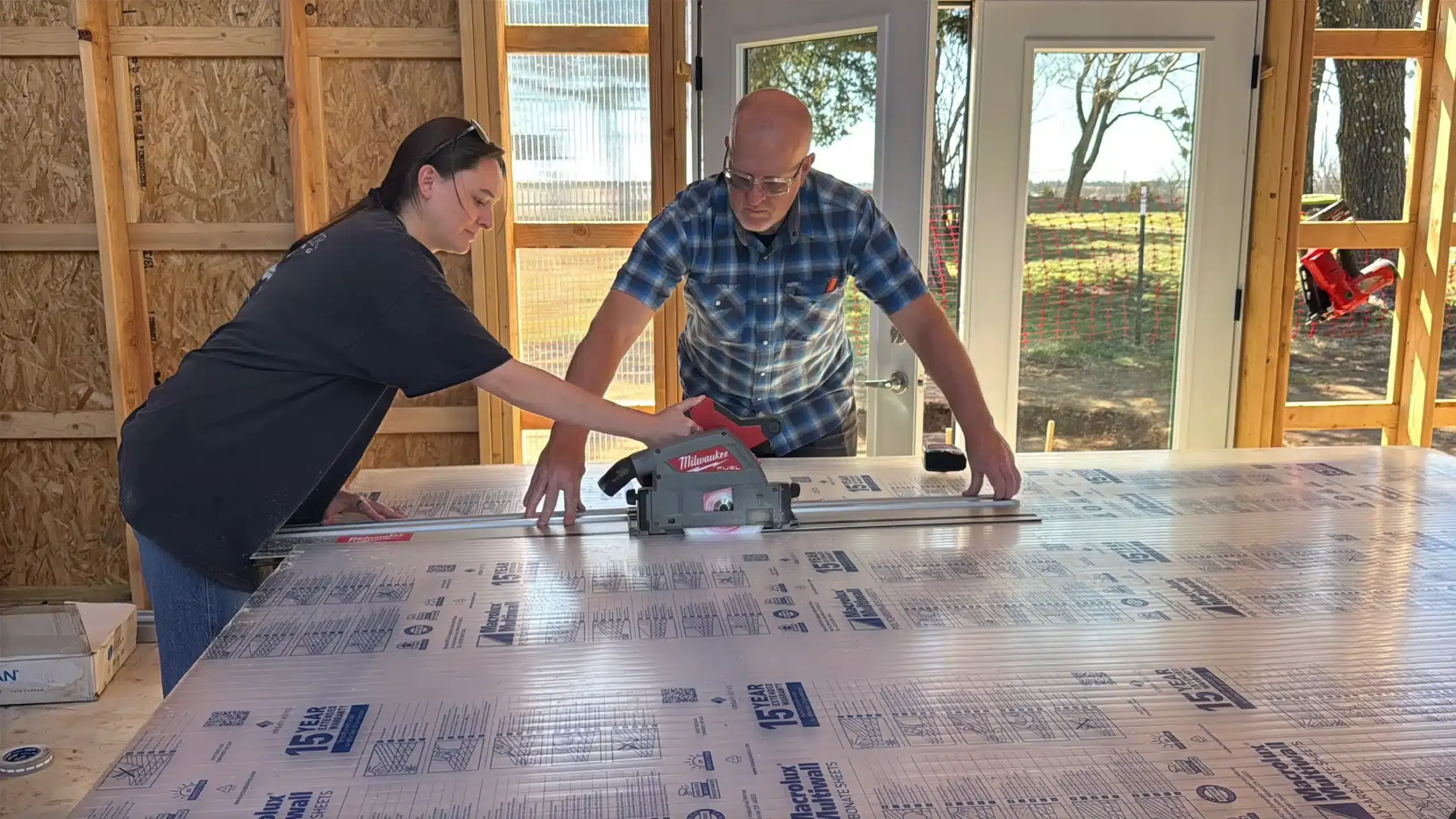
Daylight is carefully optimized through multiple strategies. A north-facing, full-length polycarbonate skylight spans the ridge of the building, delivering consistent, diffuse daylight without the harsh glare or overheating associated with direct southern exposure. This orientation allows natural light to wash evenly across the interior, reducing the need for artificial lighting throughout the day while creating a bright, uplifting environment that supports focus, comfort, and well-being.

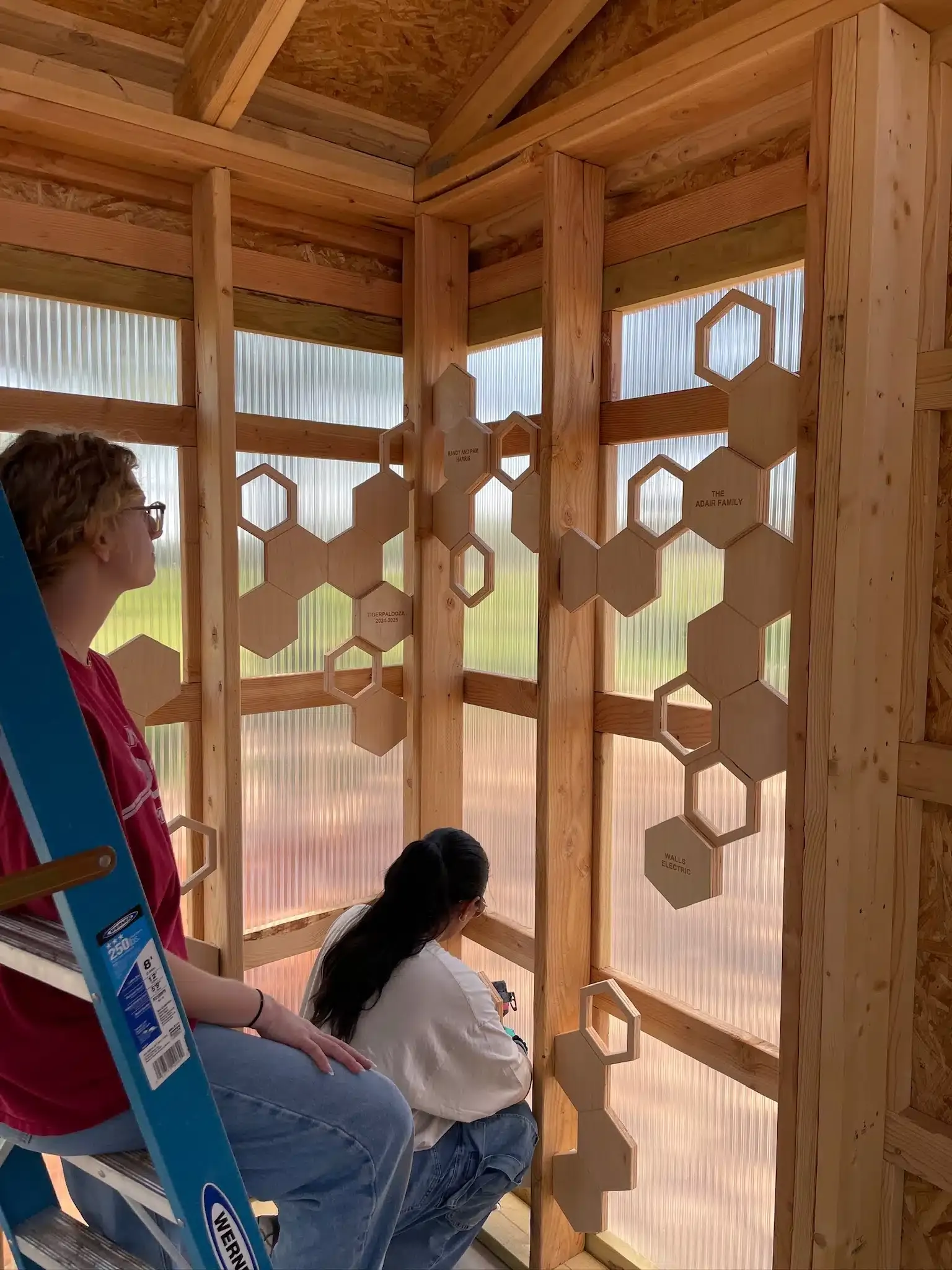
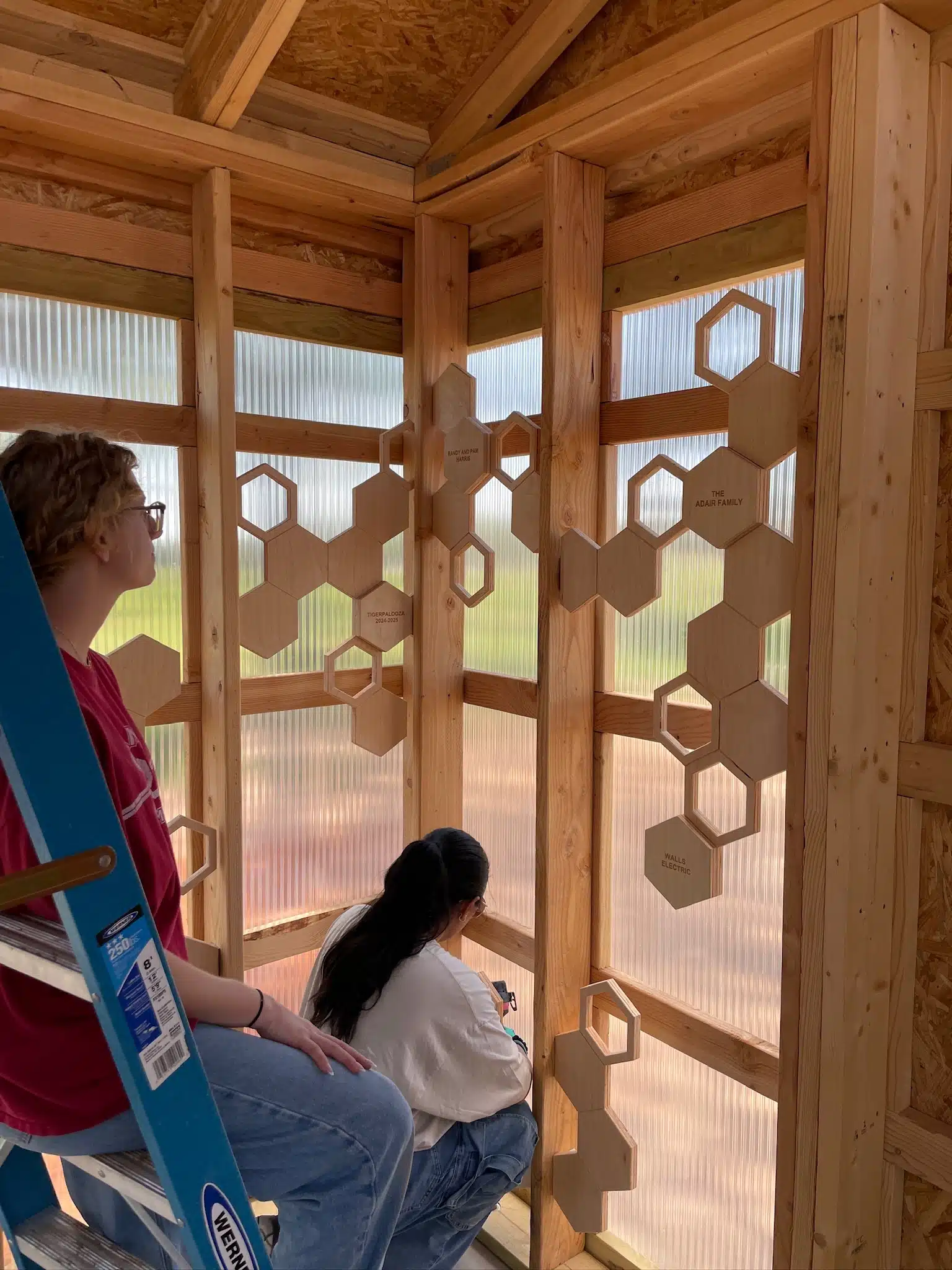
At the building’s entry, translucent polycarbonate wall panels add an inviting glow and extend daylighting deeper into the space. Alongside these passive design benefits, the site integrates a rainwater collection system that captures runoff from the roof, supplying irrigation for adjacent garden areas. This closed-loop approach connects the building to SunHive’s outdoor programs, reinforcing lessons in environmental care and self-sufficiency for its members.

A custom garden wall flanks the entry, functioning as both a welcoming gesture and a living teaching tool. Designed to support climbing plants and seasonal growth, it offers opportunities for members to engage in planting, harvesting, and hands-on horticultural learning. Together, these strategies ensure the building is not just a shelter but a living extension of SunHive’s mission, rooted in resilience, connection to place, and environmental responsibility.

Community Impact

At its heart, the SunHive Collective Community Space is a catalyst for belonging and empowerment. For many young adults with disabilities, the transition out of high school can mean the loss of structured daily support. SunHive bridges that gap by offering an environment where members can develop life skills, foster friendships, and engage meaningfully with the world around them.
The building is more than a physical shelter—it is a platform for growth. Its openness encourages social interaction, its durability supports active use, and its connection to the outdoors invites programming in gardening, animal care, and environmental stewardship. The generous interior space accommodates everything from art studios to community meetings, ensuring adaptability for evolving needs.
Since opening, the SunHive program has grown significantly, now serving over thirty participants daily. Partnerships with local businesses, volunteers, and organizations amplify its reach, creating a network of support that extends far beyond the building’s walls. The space has become a celebrated community landmark—a place where families, neighbors, and local partners come together to invest in the future of individuals whose potential is too often overlooked.

In its design, construction, and purpose, the SunHive Collective Community Space demonstrates how architecture can be both functional infrastructure and a powerful social instrument—shaping not only how people gather but also how they see themselves and their place in the community.

Behind the Build

Built Works

Contact us to learn more!