
Behind the Build: Schematic Design Progress

September 20, 2025

The second week of the American School Design Build studio has been dedicated to schematic design development. Energy in the studio has been high, as Architecture and Construction Science students continue to define what the Bat and Swift Rehabilitation Facility will become. The week has been a balance of design exploration, physical testing, and collaborative dialogue, with every sketch and model contributing to the bigger picture.

What makes this phase so engaging is its sense of possibility. The project is still flexible, and students can test out ideas rapidly, discard what doesn’t work, and refine what shows promise. The work happening in studio now lays the foundation for the decisions that will carry forward into design development and, eventually, full-scale construction.

About WildCare Oklahoma

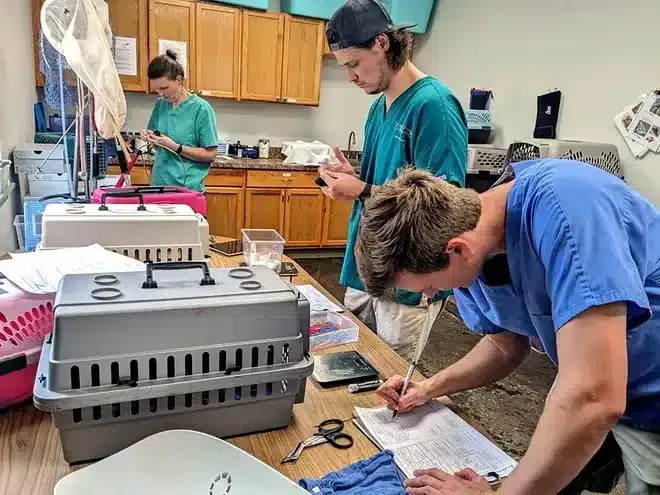
WildCare Oklahoma, based in Noble, is one of the state’s leading nonprofit wildlife rehabilitation organizations. Each year, WildCare provides medical treatment, safe enclosures, and expert care for thousands of injured and orphaned animals. Their mission extends beyond rescue and rehabilitation: WildCare works to educate the public about wildlife coexistence and to promote stewardship of Oklahoma’s ecosystems. With the support of staff, veterinarians, and volunteers, the organization helps preserve biodiversity while strengthening connections between communities and the natural world.

Learn more at www.wildcareoklahoma.org.

Project Partners

Model making has taken on new meaning, knowing that the design will soon be realized at full scale.

Hands-On Design Process

Throughout the week, students relied on a mix of physical and digital tools to shape ideas. Sketching allowed concepts to emerge quickly, while model making turned those ideas into three-dimensional tests that the entire team could study together. Working with chipboard, basswood, and layered paper, students created multiple study models that explored form, proportion, and spatial organization.

This hands-on approach helped the team visualize possibilities more clearly than drawings alone could provide. Students gathered around the models, pointing out opportunities and limitations, and making adjustments in real time. For some, this was the first time they had seen their ideas leave the page and become a physical object that others could critique and build upon.

Equally important was the iterative pace of the work. The studio environment encouraged trial and error, reinforcing that models were tools for thinking, not precious objects. This culture of experimentation allowed the team to test new configurations, refine spatial layouts, and consider how their designs might be built at full scale on site.


Collaboration Around the Red Table

If model making and sketching provided the tools, the red table sessions provided the forum. At the start of each in-class studio session, students gather at the center of the studio for conversations that set the tone for the day’s work. These discussions give everyone a voice and encourage students to explain the reasoning behind their ideas — whether they’re proposing a structural system, adjusting the enclosure, or considering site orientation.

What emerges is more than a check-in; it has become a ritual of collaboration. Students debate, challenge assumptions, and defend ideas, but always with the shared goal of making the design stronger. This rhythm of discussion is shaping the studio’s culture, where progress is measured by how well the group aligns around shared priorities.

Architecture and Construction Science students each bring distinct perspectives to these sessions. Architecture students consider aesthetics, spatial flow, and materiality, while Construction Science students raise questions of sequencing, feasibility, and constructability. Together, these voices make the conversations richer, demonstrating how interdisciplinary work strengthens both design and execution.

By the time the red table session ends, students have a clearer direction and renewed energy, ready to return to their sketches, diagrams, and models with a collective sense of purpose.

Red table sessions have become a ritual that sets the tone for each studio class.


Laying the Groundwork

These early days are not only about refining design concepts but also about strengthening the team dynamic. For many students, this is the first time they have worked in such a deeply collaborative studio environment. The process requires listening, compromise, and trust, and Week 2 has shown how quickly the group is adapting to those demands.

The schematic design process is shaping both the project and the studio culture. Students are discovering how to communicate across disciplines, balancing the creative drive of design with the pragmatic concerns of construction. They are also recognizing the importance of pacing — knowing when to test a broad set of ideas and when to start narrowing decisions to move forward.

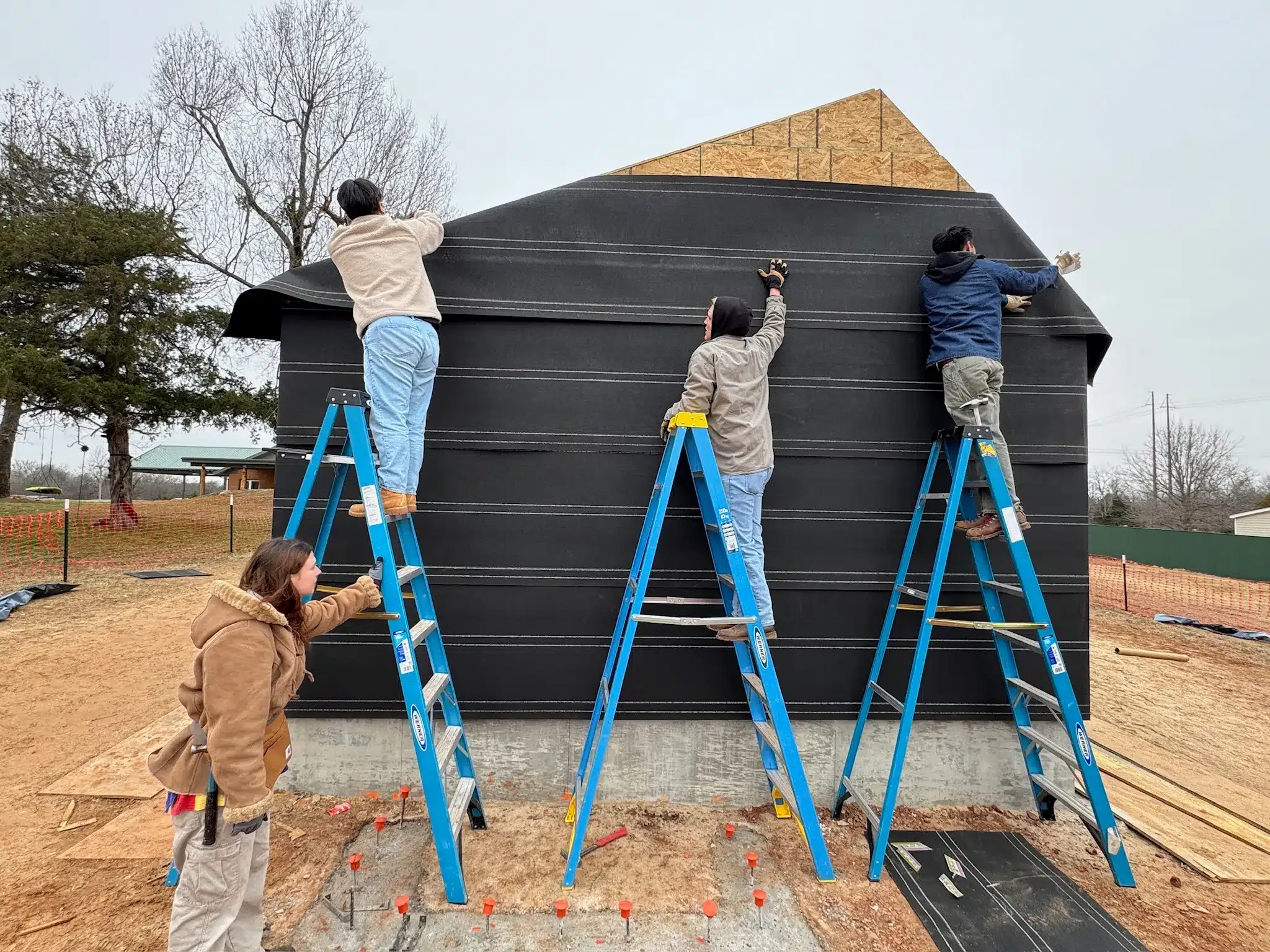
Looking ahead, the next challenge will be to commit to key design directions. Over the next week or two, the team will focus on clarifying major moves such as structural systems, spatial layout, and site placement. These decisions will be the springboard for the next phase of work: preparing to take ideas from the studio and test them on the site itself.

The progress of Week 2 has been a reminder that strong projects come not just from great ideas, but from shared effort, conversation, and collaboration. The groundwork laid in these early weeks will carry the studio into the next stage of design and, ultimately, into construction with confidence.

These early weeks are the foundation for both the design and the studio itself.


Behind the Build

Built Works

Contact us to learn more!