
The first week of the American School Design Build studio was filled with momentum, discovery, and collaboration. Our students in Architecture and Construction Science began their journey not in isolation, but in direct engagement with the community partner whose mission will shape this year’s project: WildCare Oklahoma. Through site visits, client conversations, and in-studio reflections, the team gained a shared understanding of both the opportunities and responsibilities ahead. This opening week not only introduced the project but also set the tone for the semester, reminding students that design-build education is about learning through real-world service and teamwork.

About WildCare Oklahoma
WildCare Oklahoma, based in Noble, is one of the state’s leading nonprofit wildlife rehabilitation organizations. Each year, WildCare provides medical treatment, safe enclosures, and expert care for thousands of injured and orphaned animals. Their mission extends beyond rescue and rehabilitation: WildCare works to educate the public about wildlife coexistence and to promote stewardship of Oklahoma’s ecosystems. With the support of staff, veterinarians, and volunteers, the organization helps preserve biodiversity while strengthening connections between communities and the natural world.
Learn more at www.wildcareoklahoma.org.
Project Partners

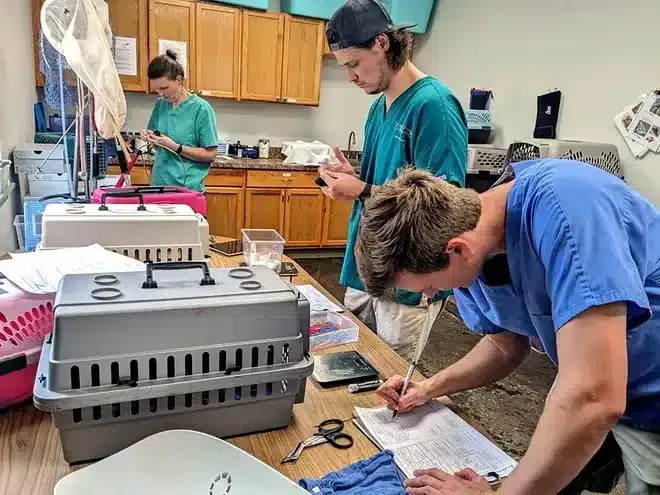
The week began with an important meeting with WildCare’s executive director and caretakers. This conversation gave students the chance to hear directly about the organization’s needs, values, and long-term goals. The dialogue was open and collaborative, focusing on how the facility could better support caretakers in their daily responsibilities while also improving conditions for the animals.
Students learned that priorities extend beyond enclosure design to include workflow, safety, and efficiency for staff. The caretakers emphasized that successful design would need to address practical realities: how spaces are cleaned, how animals are accessed, and how the facility fits into the broader rhythm of WildCare’s operations.
Equally valuable was hearing about WildCare’s larger masterplan for growth. The Bat and Swift Rehabilitation Facility is envisioned as part of a wider expansion that will strengthen the organization’s capacity to care for Oklahoma’s wildlife. Understanding this context helped students situate their work as both a targeted response to specific needs and a contribution to a bigger vision for the future.
Chimney swifts are known for their constant flight, they feed on mosquitoes and other small insects, helping regulate pest populations. Once reliant on hollow trees for nesting, they adapted to chimneys and man-made structures. But with modern building practices that reduce or cap chimneys, swift populations are rapidly declining.
The new facility will allow WildCare to provide safe rehabilitation spaces and release strategies for these species. It also gives ASDB students a chance to design a building that demonstrates how thoughtful architecture and construction can contribute to ecological solutions.


Following the client meeting, the students toured WildCare’s facility in Noble, Oklahoma. Seeing the grounds firsthand gave them insights that no set of drawings could provide. Students walked through existing animal enclosures, watched the daily routines of caretakers, and observed how staff and animals interact within the current setup.
The tour highlighted the diversity of WildCare’s work. Students saw a wide range of species in recovery, including birds of prey, small mammals, reptiles, and songbirds. They also gained a deeper understanding of the needs of bats and chimney swifts, whose rehabilitation will be directly supported by this year’s project.
Attention to detail was critical. Students noted the conditions of current structures, the flow of staff movement, and the challenges of maintaining enclosures over time. These observations reinforced how design and construction choices impact long-term durability and usability.