
Preparing and Presenting Schematic Designs to WildCare

September 20, 2025

Our third week in American School Design Build moved from preparation to presentation. With clear weather and a freshly cleared site, the team balanced field verification, studio coordination, and a client-facing review that sharpened the project’s direction. Architecture and Construction Science students worked as one studio to align drawings, models, and narrative—then carried that work to WildCare for feedback that will immediately inform next steps. The week underscored a core lesson of design-build: the quality of live reviews depends on the quality of prep, and the strength of prep comes from coordinated teams aligned around a shared story.

About WildCare Oklahoma

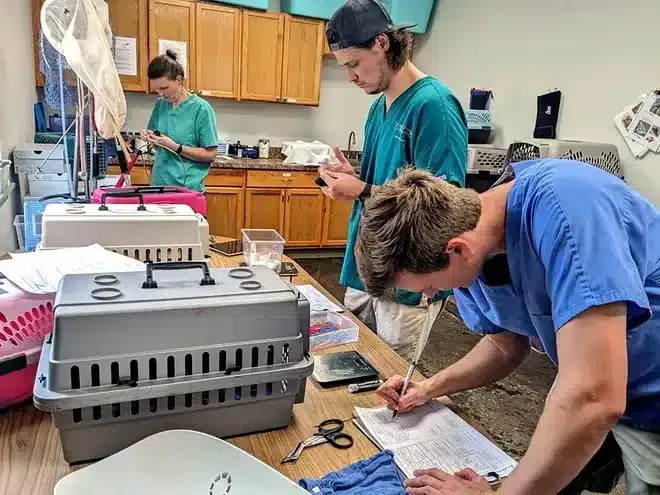
WildCare Oklahoma, based in Noble, is one of the state’s leading nonprofit wildlife rehabilitation organizations. Each year, WildCare provides medical treatment, safe enclosures, and expert care for thousands of injured and orphaned animals. Their mission extends beyond rescue and rehabilitation: WildCare works to educate the public about wildlife coexistence and to promote stewardship of Oklahoma’s ecosystems. With the support of staff, veterinarians, and volunteers, the organization helps preserve biodiversity while strengthening connections between communities and the natural world.

Learn more at www.wildcareoklahoma.org.

Project Partners

Preparation met presentation this week—turning models, drawings, and narrative into a shared vision.

Fieldwork: Reading the Site After Clearing

We began on site to ground our presentation in current, accurate conditions. With clearing complete, the team collected additional measurements, verified key offsets, and practiced shooting elevations with a rotary laser level to confirm anticipated grade changes. These checks helped us validate slope assumptions, reconcile small discrepancies between earlier notes and real conditions, and fine-tune how circulation routes meet the enclosure. We also tested a rough stake layout to sense how the footprint sits relative to approach paths and service access, noting pinch points, wind exposure, and drainage cues we want to respect.

Seeing the terrain post-clearing made the scheme more tangible. Students could now read sunlight and shade at the actual scale, hear site noise at different edges, and compare view corridors we intend to preserve for caretakers. The fieldwork gave us confidence that what we would show to WildCare reflected the land as it is now—not as we assumed it weeks ago.

Community Boost: Site Prep Support from A&B Construction and Hauling

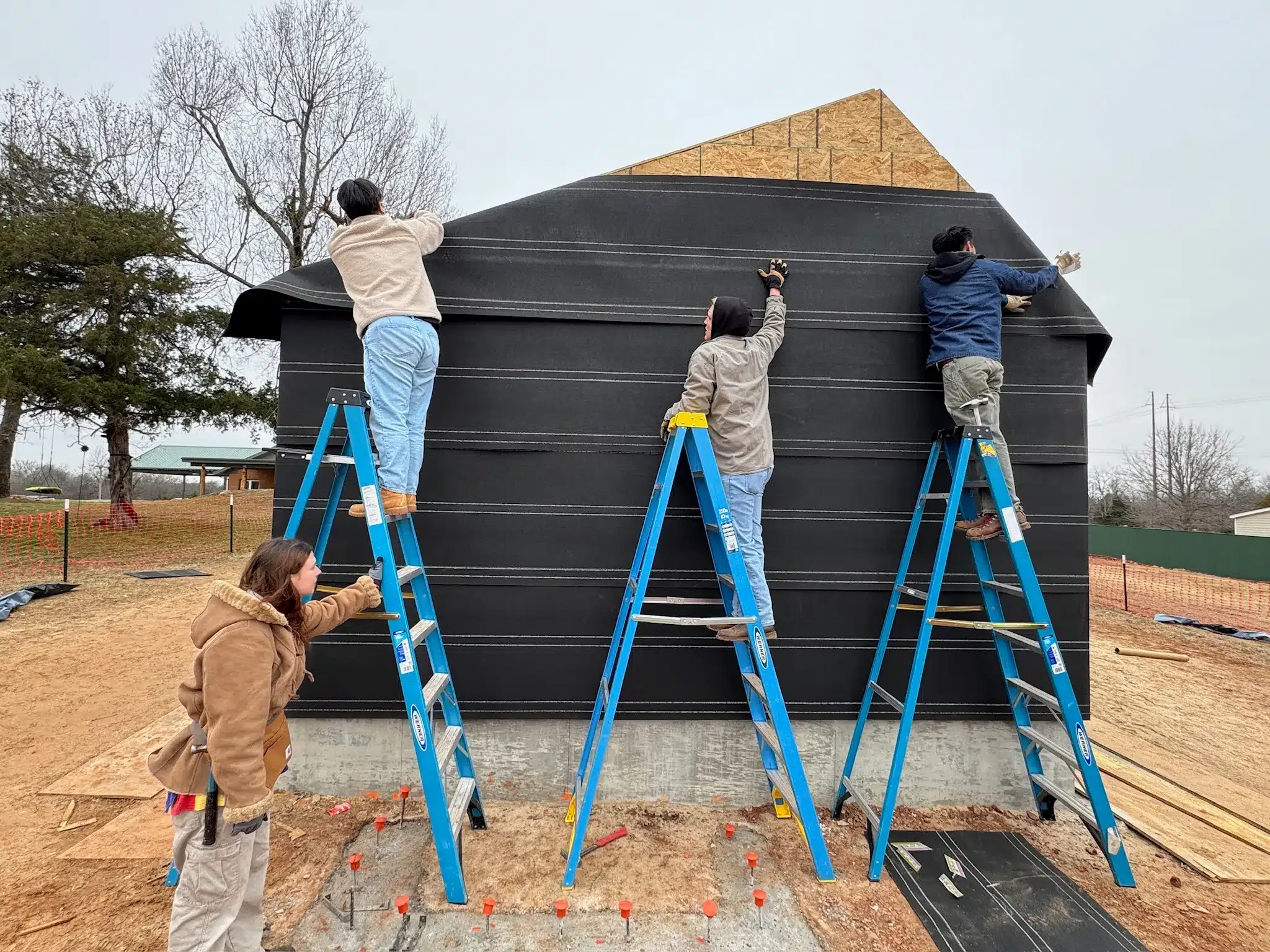
A huge thank-you to A&B Construction and Hauling for donating their time on Saturday to clear and construct a beautifully crafted pad—the perfect platform to begin next week’s foundation dig. Their generosity accelerates our ability to mobilize responsibly and keeps momentum strong as we align design decisions with field realities. We’re grateful for partners who roll up their sleeves with us.

Thanks to A&B Construction and Hauling, we’re standing on a ready pad—ready to dig.


Studio Prep: Red Table Rituals & Sub-Team Coordination

Back in studio, we opened each in-class session at the red table to establish priorities, hand off tasks, and align the story. From there, sub-teams pushed toward a unified deck and boards with tight handoffs and frequent micro-crits:

  • Digital Modeling matured a clean, lightweight model that could drive plans, sections, and early render studies without bogging down iteration.

  • Physical Modeling produced a tactile study clients could read kinesthetically—roof pitch, enclosure height, and openings became understandable in seconds; material stand-ins helped preview materiality and transparency.

  • Presentation shaped a cohesive visual language, blending our studio aesthetic with WildCare’s identity; the team rehearsed transitions, tightened timing, and pressure-tested the narrative so every artifact answered a specific client question.

This cadence—align → produce → review → refine—kept workstreams synchronized and surfaced conflicts early so fixes happened in prep, not in the room.

Red table sessions set the tone—then teams execute, refine, and align.


Client Review: Feedback, Reality, and a Timeline Pivot

On presentation day, we finalized the deck order (drawings → model → render studies), confirmed speaking roles, and met WildCare ready to listen. Feedback was specific and actionable: refine materiality (new shingle wood), confirm bird-safe transparency, and add upper-level openings for views and ventilation. The comments strengthened performance goals and clarified user experience priorities.

Then came a real-world constraint: an impacted deer release compressed the schedule. The choice—postpone foundation to mid-October or accelerate to complete it within ten days. We moved outside together, spray-painted the outline, and walked the footprint, using scale to align decisions on sequence, staging, and safe access. We closed with a revised task map and goal list for the week ahead.

Our schematic set balanced readability and depth: core drawings for organization, render studies for light and enclosure character, and a physical model that accelerated understanding. The model became a catalyst—clients could point, trace, and test ideas in seconds—yielding precise guidance on material choices, bird-safe glazing/mesh, and upper-level apertures.

Clear feedback sharpened the design; a timeline pivot sharpened our focus.


Next Steps: Aligning Design with Delivery

This week we’re translating feedback into coordinated updates (material swaps, bird-safe transparency specs, refined openings) and mapping an operations-ready sequence should the accelerated window proceed. That includes staging and access plans, inspection checkpoints, and safety coordination—so every move on the ground is backed by drawings, procurement, and clear roles.

The objective is simple: keep the design legible and buildable, keep the team aligned, and leverage partner support to move decisively.


Behind the Build

Built Works

Contact us to learn more!